Disclosure: The Bridge is reader-supported. When you buy through links on our site, we may earn a commission at no extra cost to you. Learn more.
The Osprey Atmos AG 65 and the Gregory Baltoro 65 are the two default answers to “I need a pack that carries 40+ pounds comfortably.” Both hold 65 liters, both cost around $330, and both have fanatical owners – but they carry weight in fundamentally different ways: the Atmos floats it on ventilated mesh, the Baltoro wraps it in a dynamic, body-hugging suspension.
This comparison breaks down fit, suspension, ventilation, organization, and real-world hauling to help you pick the right one for your back and your trips.
Quick Verdict
Bottom line: For loads over 40 lbs, the Gregory Baltoro 65 carries more comfortably – its Response A3 suspension moves with your hips instead of fighting them, and the wraparound fit keeps heavy loads planted. The Osprey Atmos AG 65 wins on ventilation and agility: the AntiGravity mesh backpanel is the coolest-riding frame here, and the pack feels lighter and livelier on the trail. Choose the Baltoro for expedition-weight hauling; choose the Atmos for hot-weather backpacking and day-to-day comfort under 40 lbs.
Side-by-Side Comparison
| Osprey Atmos AG 65 | Gregory Baltoro 65 | |
|---|---|---|
| Price | ~$330 | ~$330 |
| Volume | 65 L | 65 L |
| Weight | ~4.6 lb (2.1 kg) | ~4.8 lb (2.2 kg) |
| Torso fit | S/M, M/L; adjustable | S, M, L; adjustable |
| Suspension | AntiGravity mesh (ventilated) | Response A3 + FreeFloat (dynamic) |
| Hipbelt | Fit-on-the-Fly, ventilated | Custom-molded, wraparound |
| Main access | Top loader + sleeping bag compartment | Top loader + front U-zip panel |
| Max comfortable load | ~40 lb | ~50 lb |
| Best for | Hot-weather hauling, agility | Heavy loads, expedition comfort |
Prices are approximate street prices and shift with sales – check current pricing before you buy.
Fit & Suspension: Two Philosophies
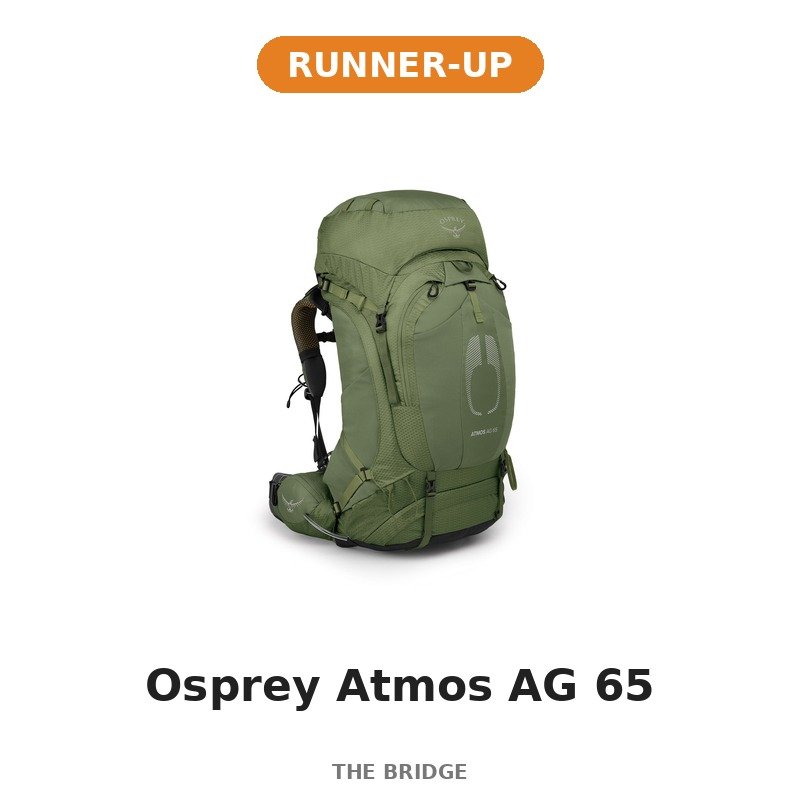
The Atmos AG’s AntiGravity system is a single tensioned mesh panel running from the top of the back to the hipbelt – your back never touches foam, and the frame is a continuous peripheral hoop. Under 40 lbs it feels almost weightless: the load transfers cleanly and the pack sways naturally with your stride.
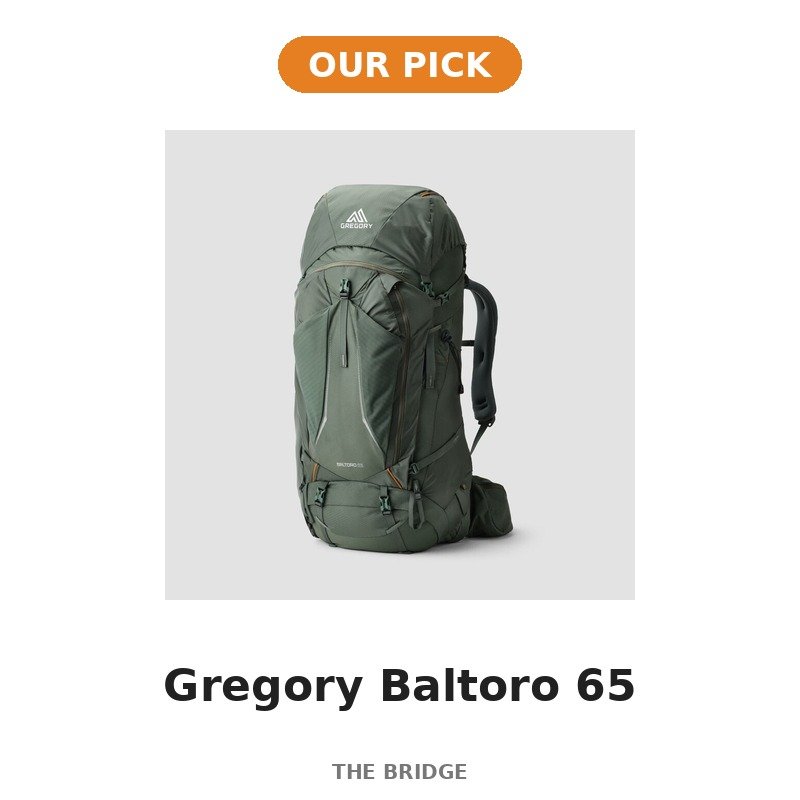
The Baltoro’s Response A3 is the opposite idea: instead of isolating you from the load, it moves with you. The shoulder harness and hipbelt pivot independently on the frame, so when your hips rotate on a climb, the pack follows instead of lagging a half-step behind. FreeFloat dynamic suspension adds give at the hipbelt, absorbing the bounce of a heavy load. At 45-50 lbs the Baltoro stays planted and quiet where the Atmos starts to feel like it’s steering you.
[AFFILIATE LINK: Osprey Atmos AG 65]
[AFFILIATE LINK: Gregory Baltoro 65]
Winner: Baltoro 65 for heavy loads (40+ lbs); Atmos AG 65 for agility under 40 lbs.
Ventilation: Atmos by a Mile
This is the Atmos’s home turf. The full-length suspended mesh backpanel creates a genuine air gap along your entire back – on a 90°F climb, it’s the difference between a damp shirt and a soaked one. Gregory’s FreeFloat system ventilates the hipbelt and lumbar well, and the backpanel has airflow channels, but your back still rests against foam. If you run hot or hike in the Southeast, the desert Southwest, or humid summer mountains, ventilation alone can decide this.
Winner: Atmos AG 65 – the coolest-riding 65L pack in its class.
Weight: Atmos Edges It
Neither is light – these are load-haulers, not ultralight packs – but the Atmos comes in ~4.6 lb versus the Baltoro’s ~4.8 lb. Four ounces won’t decide a trip, though the Atmos feels lighter than the scale suggests because the mesh suspension makes the load ride higher and closer. If you’re chasing a lighter baseweight, neither pack is the answer – but the Atmos penalizes you slightly less.
Winner: Atmos AG 65 (marginal).
Organization & Access: Baltoro’s Front Door
Both are top-loaders with sleeping-bag compartments and stretch front pockets. The difference: the Baltoro adds a full U-shaped front panel zip – duffel-style access to the main compartment without unpacking from the top. For photographers, climbers, or anyone who digs through their pack mid-day, it’s a genuine quality-of-life feature the Atmos lacks. The Atmos counters with slightly better external pocket layout (its hipbelt pockets are bigger and the trekking-pole carry is simpler), but panel access is the bigger deal for most users.
Winner: Baltoro 65.
Durability & Weather: Even, Slightly Baltoro
Both use high-denier nylons in high-wear zones and lighter fabrics elsewhere; both ship with integrated rain covers. The Baltoro’s fabrics skew slightly burlier and its construction has a reputation for surviving years of expedition abuse. The Atmos’s mesh backpanel is the one vulnerability – it’s tough, but a sharp branch can snag mesh where it would glance off foam. Treat both as 5+ year packs with normal care.
Winner: Baltoro 65 (slight edge on fabric toughness).
Price & Value: A Wash
Both list around $330 and both go on 20-25% sale a few times a year (REI anniversary, Black Friday). At equal price, value comes down to fit: whichever suspension matches your body and load is the better value. Neither includes anything extra to tip the scales – both come with rain covers.
Winner: Tie.
Who Should Buy Which?
Buy the Osprey Atmos AG 65 if you:
-
Run hot and hike in warm or humid climates
-
Rarely exceed 40 lbs total pack weight
-
Want the liveliest, most agile-feeling 65L pack
-
Prefer Osprey’s All Mighty Guarantee warranty
Buy the Gregory Baltoro 65 if you:
-
Regularly carry 40-50 lbs (expeditions, winter, photography, kids’ gear)
-
Want front-panel access to the main compartment
-
Prioritize planted, sway-free hauling over ventilation
-
Have had hipbelt fit issues – the wraparound belt fits more body types
Head-to-Head in Real Scenarios
Weeklong summer backpacking, ~35 lb: Atmos. The ventilation gap is real at that weight, and the pack feels livelier on long mile days.
Late-season elk hunt / winter expedition, ~48 lb: Baltoro, no contest. The Response A3 suspension keeps a brutal load stable on uneven ground.
Travel + trail hybrid (flying to a trek): Baltoro – the front panel zip makes airport-to-trail transitions far less annoying.
Humid Appalachian Trail section: Atmos. When the air is soup, the mesh backpanel is worth more than any feature.
The Bottom Line
For most heavy-load backpackers, the Gregory Baltoro 65 (~$330) is the better pick: it carries 40-50 lbs more comfortably than anything in its class, the front-panel access is genuinely useful, and the dynamic suspension keeps big loads planted on rough ground.
But if your loads stay under 40 lbs and you hike where heat matters, the Osprey Atmos AG 65 (~$330) is the more pleasant pack to live with – cooler, livelier, and backed by the best warranty in the business.
Either way: get fitted with weight in the pack before you buy. These two feel completely different loaded, and thirty minutes in a shop will tell you more than any review.
Related reading on The Bridge: best backpacking backpack for beginners under $200 · best backpacking tents for tall people