Price scope: the budget is in US dollars and excludes the rest of the kit. Older prices in the comparison are reference figures; check the exact current model, size and price before ordering.
Start with the backpack and carrying guides. This shortlist is for carrying overnight gear on foot; airline luggage is a different use case.
Disclosure: The Bridge is reader-supported. When you buy through links on our site, we may earn a commission at no extra cost to you. Learn more Finding the best backpacking backpack for beginners under $200 is one of the highest-value gear decisions you’ll make starting out. The right pack carries 30+ pounds comfortably for miles; the wrong one turns every uphill into a negotiation with your shoulders. The good news: you don’t need to spend $300+ to get a pack that fits well and lasts. Several excellent beginner-friendly packs sit comfortably under the $200 mark. We put this guide together by comparing manufacturer specs, long-term owner reviews, and feedback from hiking communities – not by parroting marketing copy. Every pack below is a proven performer in the budget-to-midrange category, with real tradeoffs spelled out honestly.Table of Contents
Quick Comparison
| Backpack | Price | Capacity | Weight | Best For |
|---|---|---|---|---|
| REI Co-op Flash 55 | ~$189 | 55L | 2 lbs 11 oz | Best overall for beginners |
| REI Co-op Trailmade 60 | ~$160 | 60L | 3 lbs 5 oz | Best organization & adjustability |
| Osprey Kestrel 48 | ~$190 | 48L | 3 lbs 8 oz | Best all-rounder from a major brand |
| Gregory Paragon 58 | ~$200 | 58L | 3 lbs 9 oz | Best for heavier loads |
| Granite Gear Crown 3 60 | ~$200 | 60L | 2 lbs 5 oz | Best lightweight value |
| TETON Sports Scout 3400 | ~$80 | 55L | 4 lbs 6 oz | Best budget pick |
1. REI Co-op Flash 55 – Best Overall for Beginners
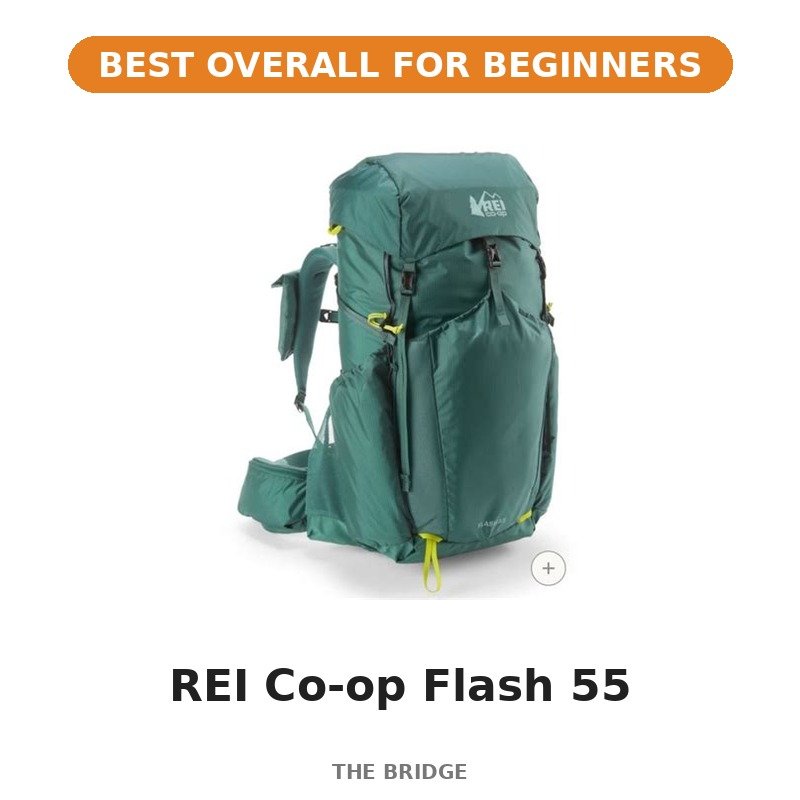 The Flash 55 is the pack we recommend most often to new backpackers, and for good reason. It performs nearly as well as packs costing $100+ more, weighs under 3 pounds, and its highly adjustable suspension fits a wide range of torso lengths – critical when you’re buying your first pack and aren’t sure of your exact measurements yet.
Value for money
9
Beginner-friendliness
10
Performance
9
Result
9.3
Excellent
Plus & Minus
Pros
Excellent comfort-to-weight ratio for the price
Very adjustable torso — forgiving if you're between sizes
Modular features (lid, straps) can be removed to save weight
REI's return policy and in-store fitting help
Cons
Less comfortable above ~30 lbs — better for weekend trips than week-long hauls
Minimalist hip belt pockets compared to pricier packs
- Capacity: 55L
- Weight: 2 lbs 11 oz
- Torso fit: Highly adjustable
- Frame: Lightweight internal frame
- Access: Top loader with removable lid
2. REI Co-op Trailmade 60 – Best Organization
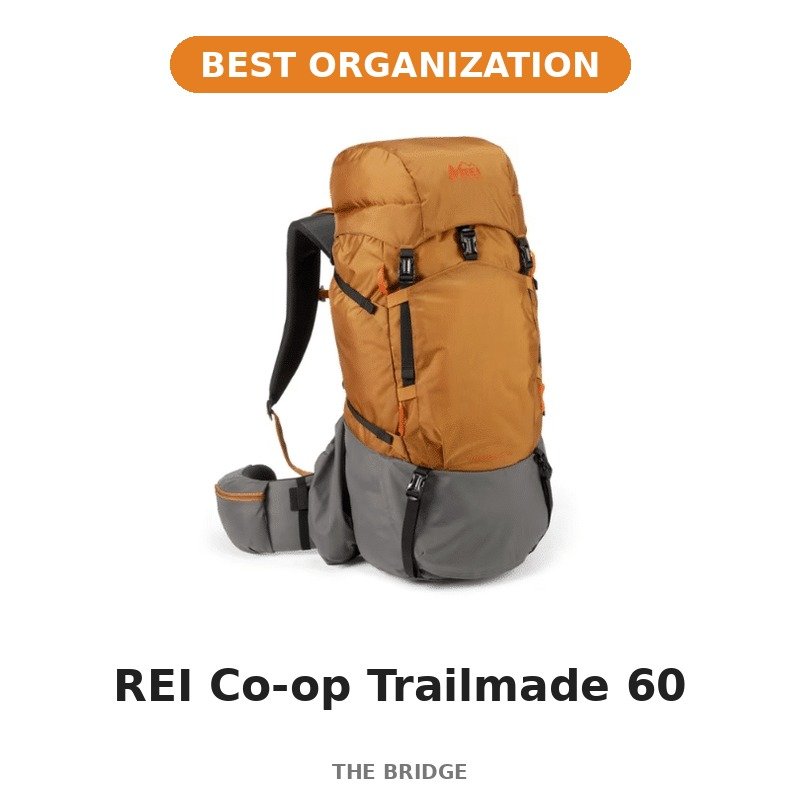 If the Flash 55 is the sporty option, the Trailmade 60 is the practical one. Multiple external pockets, U-zip front-panel access (so you don’t have to unpack from the top to reach buried gear), and one of the widest size ranges on the market – including fits for up to a 52-inch waist. For beginners who value being able to find their stuff, this is the pick.
Value for money
9
Beginner-friendliness
9
Performance
8
Result
8.7
Excellent
Plus & Minus
Pros
Outstanding organization for the price
Huge size range accommodates more body types than most packs
Front-panel access is genuinely useful, not a gimmick
Padded suspension handles moderate loads well
Cons
Heavier than the Flash 55 by over half a pound
No rain cover included (buy one separately or use a pack liner)
Newer model with less long-term durability history
- Capacity: 60L
- Weight: 3 lbs 5 oz
- Torso fit: 17-21 inches, adjustable
- Comfort rating: Up to ~35 lbs
- Access: U-zip front panel + top loader
3. Osprey Kestrel 48 – Best All-Rounder
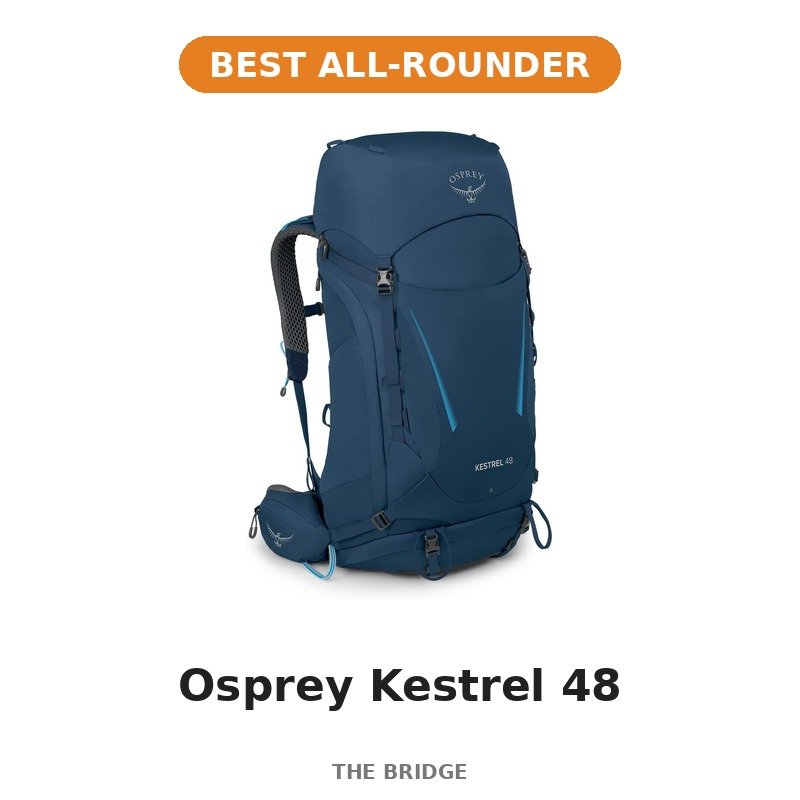 Osprey’s reputation exists for a reason, and the Kestrel 48 is the brand’s most beginner-accessible backpacking pack. It’s built like a tank, carries well, and comes with Osprey’s legendary All Mighty Guarantee (they’ll repair or replace damaged packs). At 48L it’s slightly smaller than others here, which is actually a feature: it discourages overpacking, the #1 beginner mistake.
Value for money
8
Beginner-friendliness
8
Performance
9
Result
8.3
Very good
Plus & Minus
Pros
Bombproof construction — this pack will outlast your beginner phase
Integrated rain cover (rare at this price)
Excellent ventilation on the back panel
Osprey's warranty is the best in the business
Cons
Heavier than the REI options
48L may feel tight for bulky cold-weather gear
Slightly more expensive per liter than competitors
- Capacity: 48L
- Weight: 3 lbs 8 oz
- Torso fit: Adjustable (S/M and M/L sizes)
- Frame: LightWire internal frame
- Extras: Integrated rain cover included
4. Gregory Paragon 58 – Best for Heavier Loads
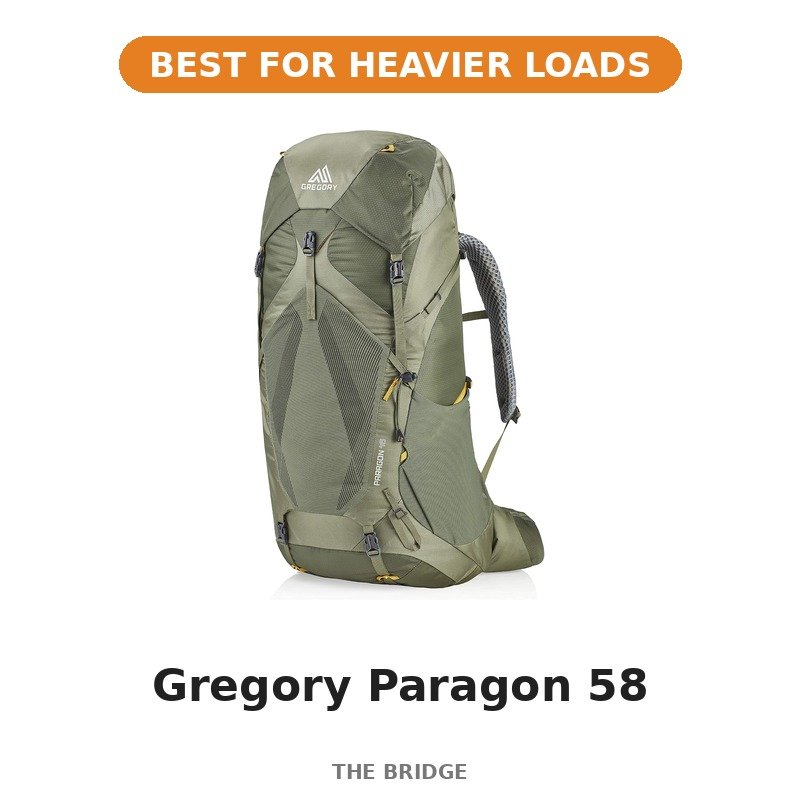 Beginners often carry heavier kits – older sleeping bags, budget tents, extra “just in case” layers. The Gregory Paragon 58 is built for exactly that reality. Its FreeFloat 360 suspension moves with your hips, and it stays comfortable at loads where lighter packs start to sag. If you know your total pack weight will push 35-40 lbs, start here.
Value for money
8
Beginner-friendliness
8
Performance
8
Result
8
Very good
Plus & Minus
Pros
Carries heavy loads better than anything else under $200
Dynamic hip belt reduces hot spots on long days
Rain cover included
Very durable fabrics
Cons
Heaviest suspension here — overkill if your kit is light
Less ventilated back panel than Osprey
Sits right at the $200 ceiling; rarely discounted deeply
- Capacity: 58L
- Weight: 3 lbs 9 oz
- Torso fit: Adjustable
- Frame: FreeFloat 360 dynamic suspension
- Extras: Rain cover included
5. Granite Gear Crown 3 60 – Best Lightweight Value
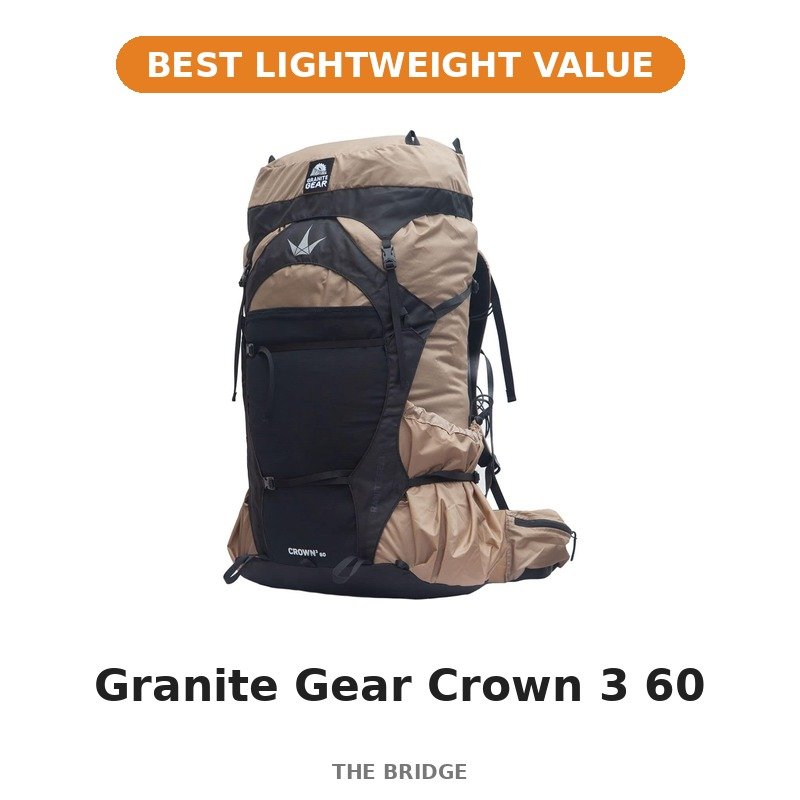 The Crown 3 is the pack that convinces people lightweight backpacking isn’t just for ultralight zealots. At 2 lbs 5 oz for 60 liters, it’s the lightest full-size pack under $200 by a clear margin, yet it still has a real frame and hip belt. Granite Gear has a cult following among thru-hikers for making simple, tough, no-nonsense packs.
Value for money
9
Beginner-friendliness
7
Performance
8
Result
8
Very good
Plus & Minus
Pros
Lightest 60L pack anywhere near this price
Removable frame lets you strip it down further as your kit lightens
Simple, durable, repairable design
Huge main compartment swallows bulky budget gear
Cons
Minimalist feature set — fewer pockets and less structure
Hip belt is adequate, not plush
Less comfortable than the Gregory or Osprey above ~32 lbs
- Capacity: 60L
- Weight: 2 lbs 5 oz
- Torso fit: Adjustable (short/regular/long)
- Frame: Removable internal frame
- Fabric: 100D/210D nylon
6. TETON Sports Scout 3400 – Best Budget Pick
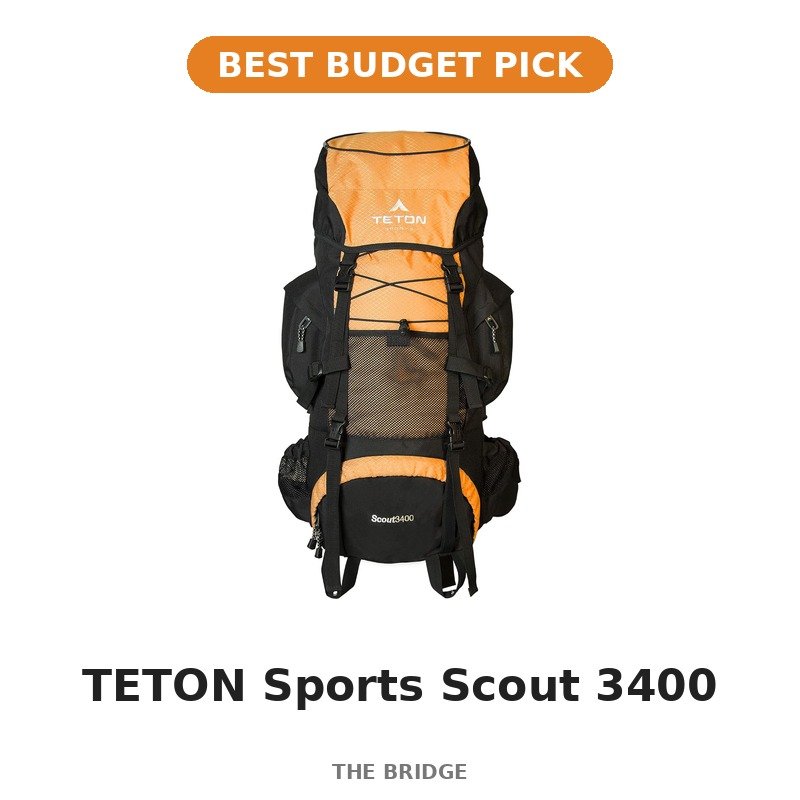 At around $80, the Scout 3400 costs less than half of everything else on this list – and it’s a legitimate backpacking pack, not a school bag with delusions of grandeur. It’s heavier (4+ lbs) and less refined, but thousands of beginners have done their first trips with it. If you’re not sure backpacking is for you and want minimum financial commitment, this is the honest entry point.
Value for money
10
Beginner-friendliness
8
Performance
6
Result
8
Very good
Plus & Minus
Pros
Unbeatable price — less than a pair of hiking boots
Surprisingly adjustable and feature-rich for $80
Rain fly included
Fine for 1–2 night trips while you learn
Cons
Heavy — you'll feel every ounce on climbs
Durability and stitching are a step below the others
You'll outgrow it if you get serious (which is the point — it's a starter)
- Capacity: 55L (3400 cu in)
- Weight: 4 lbs 6 oz
- Torso fit: Adjustable
- Frame: Internal frame
- Extras: Rain fly included
Backpacking Pack Buying Guide: What Beginners Should Know
What size pack do you need?
For most beginners doing 2-4 day trips: 50-65 liters. Smaller forces discipline but risks not fitting bulky budget gear; larger tempts overpacking. When in doubt, go 55-60L – it’s the sweet spot this entire list targets.Fit matters more than features
A perfectly fitted $160 pack beats a poorly fitted $300 pack every time. Measure your torso (C7 vertebra to iliac crest) and match it to the pack’s torso range. All six packs above have adjustable suspensions, which is exactly what beginners need.Weight vs. comfort: the real tradeoff
Every ounce on your back matters, but a 2.5-lb pack that carries 35 lbs comfortably beats a 2-lb pack that collapses under the same load. Be honest about your total pack weight: if you’re carrying budget gear (heavier sleeping bag, tent), prioritize suspension over shaving ounces.Frequently Asked Questions
What size backpack do I need for a 3-day trip?
Are cheap backpacking backpacks worth it?
How should a backpacking pack fit?
Do I need a rain cover for my backpack?
The Bottom Line
The REI Co-op Flash 55 is our top pick for most beginners: light, adjustable, comfortable, and priced well under $200. If you carry heavier loads, step up to the Gregory Paragon 58; if budget is the priority, the TETON Sports Scout 3400 gets you on the trail for $80. Whatever you choose, get fitted if you can (REI stores do it free), load it with 25-30 lbs, and walk around the store for 15 minutes. Your shoulders will tell you the truth that no spec sheet can.Related reading on The Bridge: best trekking poles for beginners, Sawyer Squeeze vs Katadyn BeFree, and best sleeping pads for side sleepers.
Which backpack would you pick?
REI Co-op Flash 55
0%
REI Co-op Trailmade 60
0%
Osprey Kestrel 48
0%
Gregory Paragon 58
0%
Granite Gear Crown 3 60
0%
TETON Sports Scout 3400
100%
Choose your next step
- Compare Atmos AG 65 and Baltoro 65 — Review two larger carrying systems if their fit and current price suit your needs.
- Check the shelter’s packed size — Your tent and sleep kit help determine the pack volume you need.
- Compare travel-focused backpacks — Choose a travel layout when airport and city use dominate.