Disclosure: The Bridge is reader-supported. When you buy through links on our site, we may earn a commission at no extra cost to you.
If you sleep on your side, you know the drill: you roll onto your hip on a new ultralight pad, and within minutes your hip bone is pressing straight through to the ground. Finding the best sleeping pad for side sleepers isn’t about grams or R-value bragging rights — it’s about enough loft and a smart baffle layout that keeps your hips and shoulders suspended instead of bottoming out.
Side sleepers concentrate body weight on a much smaller area than back sleepers, so thin or narrow pads punish them first. The latest generation of air pads has figured this out, with thicker profiles, quieter fabrics, and horizontal baffles that spread point loads.
Our picks come from comparing manufacturer specs, long-term owner reviews, and hiking-community feedback — ranked on thickness and hip support first, then baffle design, R-value, noise, weight, and width. These recommendations reflect what the data and experienced backpackers consistently report.
Quick Comparison
| Pad | Price | Thickness | R-Value | Weight | Best For |
|---|---|---|---|---|---|
| Nemo Tensor Insulated (Wide) | ~$200 | 3.5″ | 4.2 | ~1 lb 3 oz | Best overall for side sleepers |
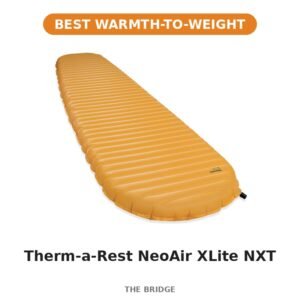
| Therm-a-Rest NeoAir XLite NXT | ~$220 | 3″ | 4.5 | ~13 oz | Best warmth-to-weight |
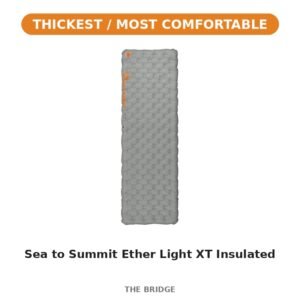
| Sea to Summit Ether Light XT Insulated | ~$200 | 4″ | 3.2 | ~1 lb 1 oz | Thickest / most comfortable |
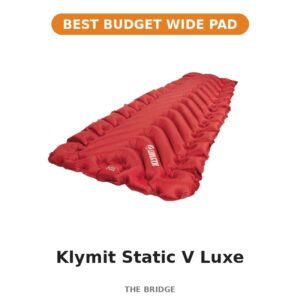
| Klymit Static V Luxe | ~$100 | 3″ | 1.3 | ~1 lb 11 oz | Best budget wide pad |
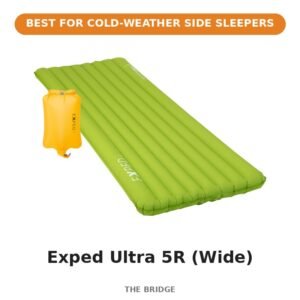
| Exped Ultra 5R (Wide) | ~$160 | 3″ | 4.8 | ~1 lb 7 oz | Best for cold-weather side sleepers |
| Therm-a-Rest Z Lite Sol | ~$60 | 0.75″ | 2.0 | 14 oz | Bombproof durability backup |
Prices are approximate street prices and shift with sales — check current pricing before you buy.
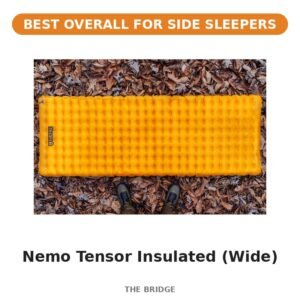
1. Nemo Tensor Insulated (Wide) — Best Overall for Side Sleepers
[AFFILIATE LINK: Nemo Tensor Insulated Sleeping Pad]
The pad side sleepers keep coming back to. 3.5 inches of Spaceframe-baffled loft keeps hips off the ground without waterbed bounce, and it’s one of the quietest insulated pads in a shared tent. A 4.2 R-value and 25-inch Wide option cover three-season trips with room to roll.
Specs:
- Thickness: 3.5″ | R-value: 4.2 (ASTM)
- Weight: ~1 lb 3 oz (Regular Wide)
- Dimensions (RW): 72 x 25 inches
- Insulation: Thermal Mirror reflective film
- Laylow valve; Vortex pump sack included
Who it’s for: Side sleepers who want the best balance of comfort, warmth, and quiet for three-season backpacking — worth a few extra ounces.
2. Therm-a-Rest NeoAir XLite NXT — Best Warmth-to-Weight
[AFFILIATE LINK: Therm-a-Rest NeoAir XLite NXT]
A 4.5 R-value at just 13 ounces is still an unmatched warmth-to-weight ratio. The NXT matters for side sleepers because Therm-a-Rest bumped thickness to 3 inches and cut noise 83% versus the original XLite. The Triangular Core Matrix is firm and stable under point loads — exactly what a hip demands.
Specs:
- Thickness: 3″ | R-value: 4.5 (ASTM)
- Weight: ~13 oz (Regular)
- Dimensions (Regular): 72 x 20 inches
- Construction: Triangular Core Matrix with ThermaCapture
- WingLock valve; pump sack, stuff sack, repair kit included
Who it’s for: Ultralight backpackers who sleep on their side and want four-season warmth without four-season weight — go Wide.
3. Sea to Summit Ether Light XT Insulated — Thickest / Most Comfortable
[AFFILIATE LINK: Sea to Summit Ether Light XT Insulated]
A full 4 inches thick — the closest thing to a backcountry mattress here. Sea to Summit’s Air Sprung Cells spread pressure like a spring mattress, so your hip sinks into support instead of through it. The 3.2 R-value is strictly three-season, and the regular size runs narrow at 21.7 inches — side sleepers should consider the Large (25 inches wide).
Specs:
- Thickness: 4″ | R-value: 3.2 (ASTM)
- Weight: ~1 lb 1 oz (Regular)
- Dimensions: 72 x 21.7″ (Regular); 77 x 25″ (Large)
- Airstream pump/stuff sack, repair kit, PillowLock
Who it’s for: Comfort-first backpackers and car campers who want the thickest, most mattress-like pad for warm-weather trips.
4. Klymit Static V Luxe — Best Budget Wide Pad
[AFFILIATE LINK: Klymit Static V Luxe]
Proof you don’t need $200 to sleep comfortably on your side. Around $100 buys a 30-inch-wide pad with 3 inches of loft and Klymit’s V-chamber design for stable support, plus side rails that keep you centered. The 1.3 R-value means summer-only — layer a foam pad underneath for shoulder seasons.
Specs:
- Thickness: 3″ | R-value: 1.3 (ASTM)
- Weight: ~1 lb 11 oz
- Dimensions: 76 x 30 inches
- Construction: V-chamber with side rails
- 75D polyester; stuff sack and patch kit included
Who it’s for: Side sleepers on a budget who prioritize width and comfort — ideal for car camping and short summer trips.
5. Exped Ultra 5R (Wide) — Best for Cold-Weather Side Sleepers
[AFFILIATE LINK: Exped Ultra 5R Sleeping Pad]
A 4.8 R-value — the highest here — in 160 g/m² Texpedloft microfiber that stays put under concentrated hip weight. Head-to-toe baffles with side rails cradle you in the center, ideal if you drift toward the edge overnight. Schnozzel pump bag included for moisture-free inflation. Heavier than the ultralight picks, but deep warmth always costs weight.
Specs:
- Thickness: 3″ | R-value: 4.8 (ASTM)
- Weight: ~1 lb 7 oz (Medium Wide)
- Dimensions (MW): 72 x 25.6 inches
- Insulation: 160 g/m² Texpedloft microfiber
- Schnozzel pump bag, repair kit included
Who it’s for: Side sleepers who camp into late fall, early spring, or at altitude and need real warmth under their hips.
6. Therm-a-Rest Z Lite Sol — Bombproof Durability Backup
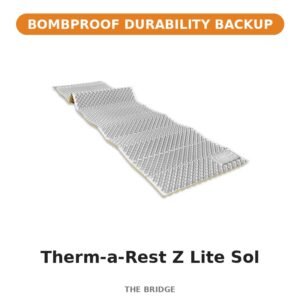
[AFFILIATE LINK: Therm-a-Rest Z Lite Sol]
Closed-cell foam can’t pop, can’t delaminate, and doesn’t care about cactus spines — and the Z Lite Sol is the gold standard. At 14 ounces and ~$60, it’s the durability king: a standalone summer pad or a boost layer under any air pad here. The limitation: 0.75 inches won’t cradle hips like a 3.5-inch air pad. Foam is a backup, not a primary side-sleeping solution — but layered under the Static V Luxe it’s a cheap, warm, indestructible system.
Specs:
- Thickness: 0.75″ | R-value: 2.0 (ASTM)
- Weight: 14 oz
- Dimensions: 72 x 20 inches (folds to 20 x 5 x 5.5)
- Construction: Molded closed-cell foam, reflective coating
- No inflation, no valves, nothing to fail
Who it’s for: Durability-focused campers who want zero-maintenance gear, or anyone layering under an air pad for warmth and puncture protection.
Sleeping Pad Buying Guide: What Side Sleepers Need
Thickness: 3.5 Inches Is the Magic Number for Hips
Side sleepers load all their weight onto the shoulder and the hip. Under 3 inches of loft, those pressure points compress the air column straight to the ground — pain plus cold spots. Everything in our top five is 3 inches or thicker; heavier sleepers and hard-ground campers should target 3.5 inches or more. Don’t fully inflate — slightly under-firm lets your hip sink into support.
Width: Go Wide or Go Home
Regular pads are 20 inches wide — fine for back sleepers, cramped for rollers. Side sleepers do best at 25 inches or wider. The penalty for 20″ → 25″ is typically 3–5 ounces, and it dramatically reduces rolling off or hanging a hip.
R-Value and Baffle Design
Buy more R-value than the season seems to require: a compressed hip zone has less insulation working for it. Rule of thumb: R-2+ for summer, R-3 to R-4.5 for three-season, R-4.8+ for real cold. Baffle design matters as much — horizontal baffles (Tensor, XLite NXT) and air-sprung cells (Ether Light XT) spread point loads better than simple vertical tubes, keeping you elevated instead of folded.
The Bottom Line
The Nemo Tensor Insulated (Wide) is our top pick for most side sleepers — 3.5 inches of quiet, stable support with a 4.2 R-value for real three-season camping. For weight and warmth, the Therm-a-Rest NeoAir XLite NXT has the best warmth-to-weight ratio here. On a budget, the Klymit Static V Luxe gives you 30 inches of width for ~$100 (know its limits in cold weather).
One tip: dial in inflation at home before the trail. Most side sleepers run the pad slightly softer than the packaging suggests — firm enough to keep your hip off the ground, soft enough to let your shoulder sink in. That one adjustment matters more than any spec on the box.