Browse the sleep-system guides to match your pad, bag and pillow. This shortlist focuses on support and usable sleeping space for side sleepers. Start with our guide on how to choose a sleeping pad if you need to establish insulation, size and carrying priorities first.
The best sleeping pad for a side sleeper is one that supports your hip and shoulder, leaves enough usable width and provides insulation for the trip. Thickness alone cannot establish any of those outcomes. Try the pad in your actual sleeping position before choosing by a specification or a best-overall label. For the separate insulation check, see what sleeping pad R-value tells you.
This is a research-based shortlist of different designs, checked against current manufacturer information in November 2026. The Bridge has not conducted comparative sleep, noise or thermal tests. Product names below identify specific generations; figures from an older Tensor or Ether Light model should not be transferred to a newer one.
If you are still deciding on construction, compare foam, air and self-inflating sleeping pads before narrowing the model shortlist.
A shortlist by design, not a universal comfort score
| Option | Reason to try it | Reason to reconsider |
|---|---|---|
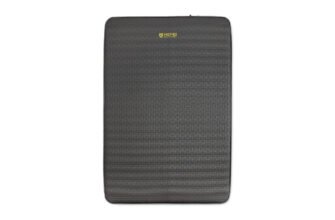
| NEMO Tensor All-Season | An insulated air pad offered in different shapes and widths. | The chosen size or firmness does not support your hip comfortably. |
| Therm-a-Rest NeoAir XLite NXT | An insulated air-pad design for carrying on foot. | You prefer a different chamber feel or need more usable width than the selected size. |
| Sea to Summit Ether Light XR Insulated | A different air-cell layout to compare in your side-sleeping position. | The packed kit or the size you need exceeds your space or weight priorities. |
| Therm-a-Rest BaseCamp | A self-inflating foam-and-air alternative to try when packed bulk is less important. | You need the packed volume of a compact backpacking air pad. |
| Therm-a-Rest Z Lite SOL | A closed-cell foam option to assess for simple setup or as part of a layered system. | You need more cushioning than a thin foam mat provides. |
Insulated air pads: compare how the support feels
The NEMO Tensor All-Season uses the brand’s Spaceframe construction and is available in different shapes and widths. Its published R-value is 5.4. Those are reasons to shortlist the exact size, not evidence that its feel suits every side sleeper. Try turning from one side to the other and check the supported area under your hip.
The NeoAir XLite NXT is a separate insulated air-pad design. Compare the regular and wider options using the current size-specific dimensions and weights. The smallest or lightest variant is not automatically the right choice if your shoulder or knees move beyond its usable surface.
The Ether Light XR Insulated uses Air Sprung Cells and publishes an ASTM-tested R-value of 4.1. The current XR and earlier XT are different generations. Use the current chart for the exact shape and length rather than mixing a review’s old weight with a new product’s insulation figure.
Self-inflating pads: consider them when bulk matters less
A self-inflating pad combines open-cell foam with an airtight shell and valve. The foam draws in air as it expands; final firmness can still need adjustment according to the instructions. This is a different support feel to compare, especially for car camping.
The Therm-a-Rest BaseCamp is one example. Inspect its current dimensions and packed volume before deciding whether it belongs in a backpack or a vehicle-based kit. A foam core does not by itself prove greater comfort for your body.
Closed-cell foam: know the cushioning tradeoff
The Z Lite SOL does not need inflation. Its listed R-value is 2.0, and the brand describes it as an option for warmer conditions or layering with another pad. Its simplicity is useful, but it should not be called the most comfortable choice for side sleepers without a personal fit check.
If you add a foam mat underneath an air pad, count the weight and packed volume of both pieces. Check how the combination fits inside your tent. A layered setup is a system decision, not free insulation with no carrying cost.
Try this fit check before buying
- Inflate or set up the pad according to its instructions on a clean, appropriate surface.
- Lie on your usual side with your arms and knees in a normal position.
- Check whether your hip touches the ground and whether your shoulder feels supported.
- Adjust firmness within the manufacturer’s instructions, then turn and check again.
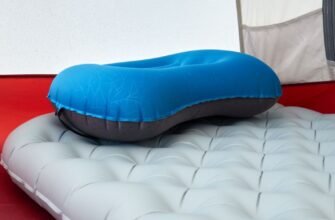
- Try your intended pillow and sleeping bag. A different pad height can change how both feel.
- Measure the complete setup inside the tent, including space near sloping walls.
There is no universal minimum thickness or inflation pressure that guarantees comfort. A published width also does not describe every pad’s shape in the same way, so compare the usable surface where your body rests.
Choose insulation separately from softness
R-value describes resistance to heat flow through the pad. It is not a comfort score, a direct air-temperature rating or a substitute for your sleeping bag and clothing. Use comparable model-specific ratings and the expected conditions when planning the sleep system.
REI’s construction and R-value guide provides background. The ASTM F3340 test-method description explains why a repeatable laboratory comparison still has limits in actual use. Do not turn a season label into a promise that every person will remain warm.
What to decide next
Narrow the list to the construction, width and insulation that fit your trip, then compare price and packed size for those exact variants. If comfort remains uncertain, prioritize an opportunity to try the pad and understand the seller’s current return conditions.
Sources and approach
The manufacturer links establish product identity and published features. The checklist is an editorial way to assess fit. We have not invented hip-support scores, measured noise levels or treated user reviews as controlled sleep tests.
Choose your next step
- Match the pad with a sleeping bag — Check turning room without losing the required insulation.
- Choose pillow height on your actual pad — Pillow loft feels different once your shoulder sinks into the mattress.
- Check shelter clearance — Fit your full pad and sleeping bag inside the tent.