
Disclosure: The Bridge is reader-supported. When you buy through links on our site, we may earn a commission at no extra cost to you. Learn more.
Clothing & Layers / Rain Shell Buying Guide | Updated October 16, 2026
Best Waterproof Jackets of 2026: 12 Rain Shells Compared by Use Case
You need a waterproof jacket that matches the rain you face, the distance you walk, and how hot you run. Here is how to choose without paying for features you will never use or ending up sweaty inside a supposedly breathable shell.
Quick answer: Choose the Patagonia Torrentshell 3L for balanced all-around protection, the REI Co-op Rainier for value, the Outdoor Research Foray 3L for high-output ventilation, and the 2026 Montbell Versalite when pack weight is decisive.
Instead of ranking shells on waterproof buzzwords alone, this guide compares 12 different models using verified weights where published, layer construction, mechanical ventilation, pack compatibility, and a specific reason to reject each. Our scores are editorial assessments based on documented product features, not first-hand field-test results.
How to Choose the Best Waterproof Jacket
Start with a job description, not a fabric trademark. A jacket for 20-minute city walks can prioritize comfort and price. A shell worn beneath a full backpack through wet weather needs abrasion awareness, reliable adjustments, and usable vents. For hiking-specific choices at a lower price ceiling, compare our guide to rain jackets for hiking.
The four criteria behind every score
- Protection: published waterproof construction, seam sealing, weather-facing adjustments, and hood design, not invented rain-test performance.
- Ventilation: the presence and usefulness of pit zips, side vents, and front-opening options.
- Mobility/Fit: articulated or stretch construction, hood and cuff adjustment, room for layers, and pocket placement.
- Packability: published garment weight where available, pocket packing, and how much bulk is needed for the intended use.
Score note: All four are editorial 1-10 feature-fit ratings applied consistently across the jackets below. They are not measured leak pressure, breathability laboratory results, or performance claims from our own testing. If a weight is not published for the linked version, we say so.
Choose the right layer construction
2-layer jackets bond a membrane or coating to the face fabric and generally use a separate hanging lining. The Columbia Watertight II represents this quieter, casual-oriented approach. 2.5-layer jackets use a thin protective finish on the inside and can be light and economical, but some wearers notice clamminess against bare skin. 3-layer construction bonds an inner backer to the membrane and outer shell, which is often a better match for frequent wet use and sustained backpack wear. Layer count is a design description, not a promise that every 3-layer jacket is automatically better than every 2.5-layer jacket.
Understand GORE-TEX, H2No, DWR and hydrostatic head
GORE-TEX ePE, Patagonia H2No, Pertex Shield, BD.dry, and other branded systems solve the same broad problem using different fabric assemblies. A hydrostatic head rating describes resistance to a laboratory water column: Rab publishes 20,000 mm for the Downpour and Black Diamond publishes 10,000 mm for the Fineline. Treat these as manufacturer-stated properties, not directly comparable real-world minutes in the rain. Breathability numbers such as MVTR also depend on test method.
A durable water repellent (DWR) coating helps water bead and roll off the face fabric. It is not the waterproof membrane. If rain darkens the fabric, the shell may be wetting out without leaking through. Nonfluorinated, often labeled PFC-free or “made without intentionally added PFAS,” finishes still need care; the labels describe chemistry claims, not zero maintenance.
Seam taping, zips, the hood, and pack fit matter more than you think
Even a waterproof fabric can admit water at stitch holes unless critical seams are taped or otherwise sealed. Look for a clear fully seam-taped claim, protected zip construction, adjustable cuffs, a hem that stays down, and a hood brim that does not collapse into your vision. Waterproof-looking zipper coatings are not an invitation to leave zips half open in a downpour.
Try the jacket over the fleece or insulated layer you will actually wear. Reach both arms forward and overhead, look left and right with the hood up, and put on your real pack. Make sure shoulder straps do not drag the hem up or trap hand pockets under the hipbelt. If you overheat easily, pit zips or long side vents should be a deciding factor, not a bonus.
Fast rejection filters before you buy
- Run hot on climbs? Reject jackets without reliable vents, even if the membrane is described as breathable.
- Carry a heavy pack often? Be cautious with ultra-thin 7D or 17D faces and prioritize pocket access and abrasion management.
- Need a shell over a thick puffy? Reject a trim size that binds at the shoulders and hem.
- Want something that lives in your pack? Reject a heavier model if you genuinely need an emergency-only shell.
- Shop old sale listings? Reject a deal when the model number, fabric generation, or size cannot be confirmed.
Comparison: 12 Waterproof Jackets at a Glance
Specification scope: weights refer to manufacturer or retailer-listed men’s versions unless noted, and may differ by size, color, or year. “Not listed” means the linked source does not verify that number. No fabricated ratings or laboratory data have been added.
| Jacket / pick | Construction | Listed weight | Ventilation | Key reason to skip |
|---|---|---|---|---|
| Patagonia Torrentshell 3L BEST OVERALL |
3L H2No, 50D recycled nylon | 14.1 oz (400 g) | Pit zips | Skip if your first priority is a sub-10 oz emergency shell or a very soft drape. |
| REI Co-op Rainier BEST VALUE |
2.5L HydroWall recycled ripstop nylon | 11.3 oz (320 g) | Pit zips | Skip if you expect to wear your rain shell for hours every day under a heavy pack. |
| Outdoor Research Foray 3L BEST VENTILATION |
3L AscentShell Dry, 40D recycled nylon | 13.7 oz (388 g), selected US listing | TorsoFlo hem-to-bicep side vents | Skip if you need the simplest possible zipper layout or cannot confirm the exact current SKU. |
| Arc'teryx Beta SL BEST PREMIUM TECHNICAL |
3L GORE-TEX ePE with C-KNIT backer | 12.0 oz (340 g) | Pit zips | Skip if you want a roomy streetwear fit or use a shell only a few days a year. |
| Rab Downpour BEST PUBLISHED RAIN RATING |
2.5L Pertex Shield, 50D face | 13.3 oz (377 g) | Underarm vents | Skip if you demand a fully bonded 3-layer backer or high, harness-clear hand pockets. |
| Black Diamond Fineline Stretch Shell BEST FOR SCRAMBLING |
2.5L BD.dry stretch nylon | 11.3 oz (320 g) | Pit zips | Skip if your priority is a robust everyday work shell rather than freedom of movement. |
| Columbia Watertight II BEST BASIC COMMUTER |
2L Omni-Tech nylon with mesh liner | Not published in linked listing | No dedicated pit zips listed | Skip if you run warm or need deliberate ventilation on climbs. |
| The North Face Alta Vista BEST LIGHTWEIGHT WITH VENTS |
2.5L DryVent, 70D recycled nylon | 9.2 oz (260 g) | Pit zips | Skip if you need long-hem coverage for constant rain under a hipbelt. |
| Patagonia Granite Crest BEST FOR BACKPACK ACCESS |
3L H2No, 30D NetPlus nylon | 14.1 oz (400 g) | Two-way pit zips | Skip if you do not need waistbelt-clear pockets or the specific hood and vent layout. |
| Montbell Versalite (2026 version) BEST ULTRALIGHT |
Montbell DRYTEC, 7D face | 5.9 oz (167 g), medium | Pit zips | Skip if the jacket will double as daily workwear or face repeated scraping against rough surfaces. |
| Helly Hansen Loke 2.0 BEST ADJUSTABLE EVERYDAY FIT |
2.5L HELLY TECH Performance | Not published in linked 2.0 listing | Underarm vents | Skip if you require a verified packed weight before buying. |
| Black Diamond Strataline Stretch Shell BEST LIGHT 3-LAYER STRETCH |
3L BD.dry, 17D stretch nylon face | 12.4 oz (352 g) | Underarm vents | Skip if you need sizes outside the published range or prioritize a thicker face fabric. |
The 12 Best Waterproof Jackets by Use Case
1. Patagonia Torrentshell 3L
BEST OVERALL
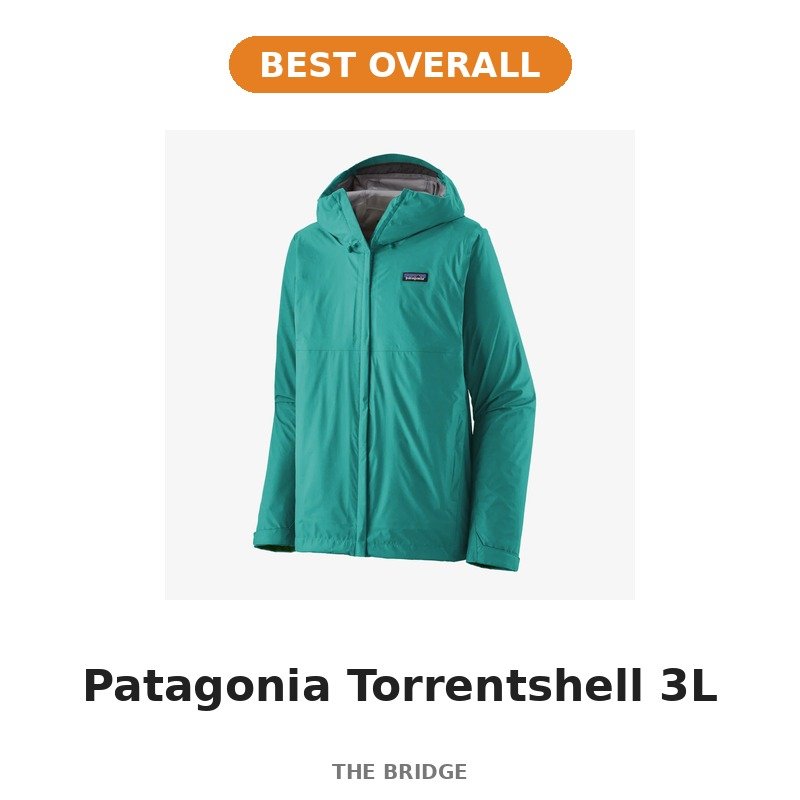
If you need one waterproof jacket for a commute, weekend hikes, and rainy travel, start with the Torrentshell 3L. Its three-layer H2No construction combines a 50-denier recycled nylon face, waterproof membrane, and bonded tricot backer. This is a practical choice when you value dependable coverage and a comparatively accessible three-layer shell over saving every ounce.
Its pit zips give you an escape route for body heat, while the adjustable hood, storm-flap-protected front zip, cuffs, and hem help you close gaps in wind-driven rain. The catch is feel: the fabric can be noisy and less pliable than a soft, stretch-oriented shell. The 14.1 oz weight also makes it an unremarkable choice for someone counting grams.
Under sustained uphill effort, do not expect any waterproof membrane to eliminate sweat accumulation. Vent early, manage layers, and check that the hood still seals around your face when you turn your head.
Pros
- Three-layer H2No shell with a published 50D face fabric
- Pit zips, stowable hood, and pocket-stow packing
- Fabric, membrane, and DWR made without intentionally added PFAS
Cons
- 14.1 oz is notably heavier than minimalist options
- Crisper fabric may be a deal-breaker for quiet daily wear
Skip this if: Skip if your first priority is a sub-10 oz emergency shell or a very soft drape.
Verified key specs: 3L H2No, 50D recycled nylon; 14.1 oz (400 g); ventilation: Pit zips; Manufacturer does not publish a comparable HH value. 50-denier face fabric; Packs into left hand pocket.
| Protection | 9/10 |
|---|---|
| Ventilation | 8/10 |
| Mobility/Fit | 8/10 |
| Packability | 7/10 |
Specification source: Patagonia Torrentshell 3L manufacturer / authorized product listing. Scores are our feature-based editorial judgments, not hands-on test measurements.
2. REI Co-op Rainier
BEST VALUE
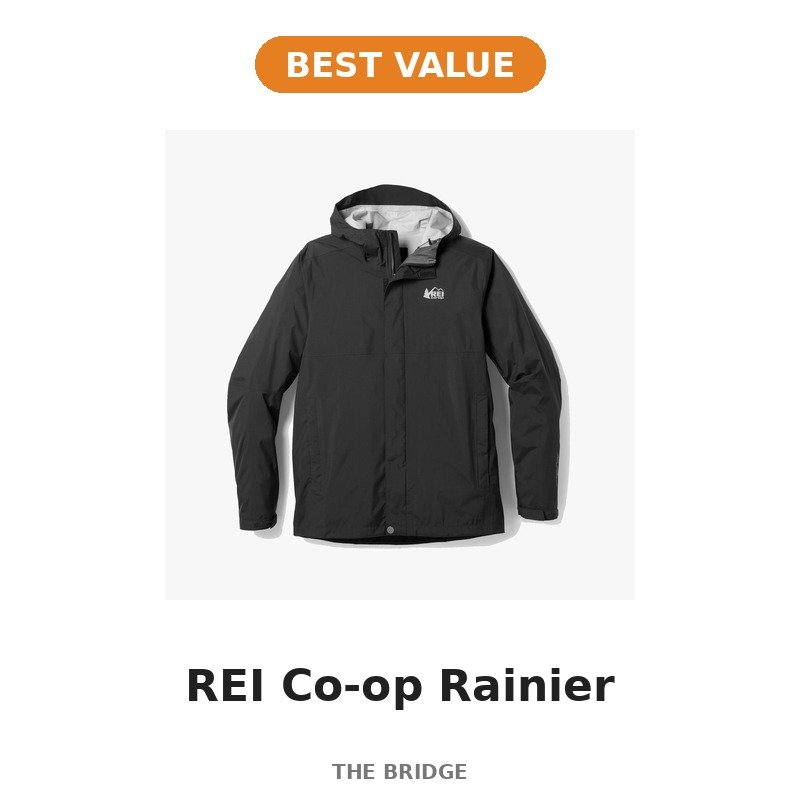
The Rainier is for buyers who want actual rain-shell construction and useful vents without paying for a premium alpine label. REI specifies a 2.5-layer HydroWall membrane, fully sealed seams, pit zips, adjustable hood, and a fabric treatment made without PFAS. At 11.3 oz for the referenced men's version, it is also manageable in a daypack.
The trade-off is the inside feel associated with a 2.5-layer jacket: against bare arms in humid weather it can become sticky, especially if you move hard with the vents closed. That is a comfort limitation, not evidence that the shell membrane has failed.
Check your local size options and wear it with the midlayer you actually plan to use. REI lists a 31 in back length for size M, but that number alone does not show whether the hem remains covered when you reach overhead.
Pros
- Pit zips and fully sealed seams at a budget-friendly tier
- 11.3 oz published weight and packs into its own pocket
- Adjustable hood, cuffs, and hem
Cons
- 2.5-layer interior can feel clammy in humidity
- Less suitable than a robust 3-layer shell for constant pack abrasion
Skip this if: Skip if you expect to wear your rain shell for hours every day under a heavy pack.
Verified key specs: 2.5L HydroWall recycled ripstop nylon; 11.3 oz (320 g); ventilation: Pit zips; Manufacturer does not publish a comparable HH value. Size M center-back length 31 in (79 cm); Packs into left pocket.
| Protection | 7/10 |
|---|---|
| Ventilation | 8/10 |
| Mobility/Fit | 8/10 |
| Packability | 8/10 |
Specification source: REI Co-op Rainier manufacturer / authorized product listing. Scores are our feature-based editorial judgments, not hands-on test measurements.
3. Outdoor Research Foray 3L
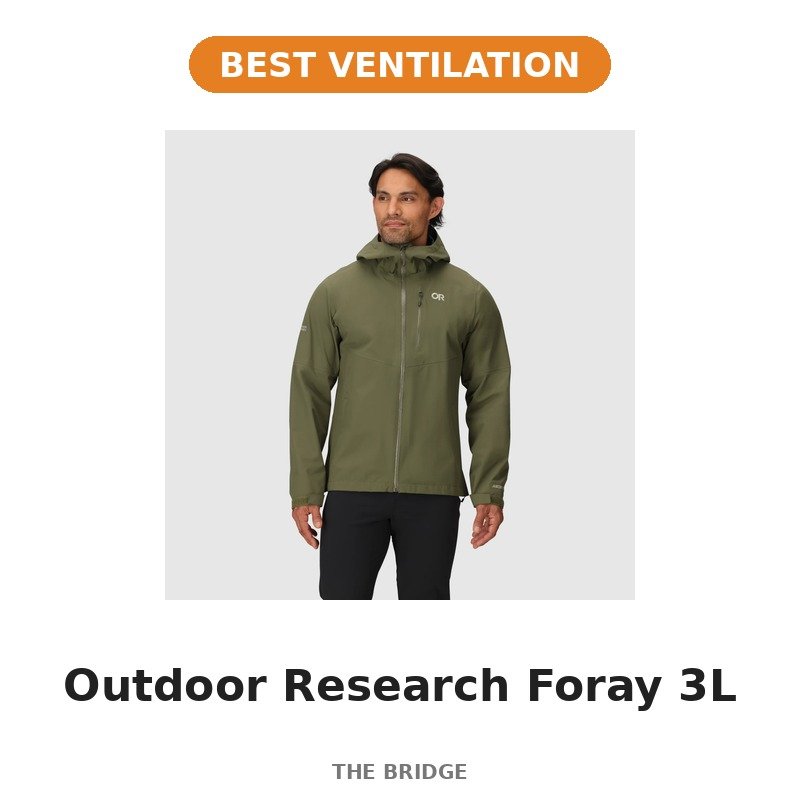
BEST VENTILATION
Choose the Foray 3L when heat buildup matters as much as rain exposure. Its defining advantage is TorsoFlo venting: a long side opening running from near the hem toward the bicep. That is substantially more mechanical ventilation area than a short conventional pit zip, making the design attractive for steep hikes with a backpack.
The fabric is a three-layer AscentShell Dry laminate with mechanical stretch and fully taped seams. A hood with bonded brim, chest pocket, and hand pockets give it more technical utility than a stripped-down travel shell. The side-zip architecture is also more to manage in a wind-driven storm: open the vents strategically, because an unzipped opening can admit weather.
The brand has published different weights across product variants, including 13.7 and 15.34 oz. Our table uses the linked US listing; confirm the exact SKU and size. Some location-specific listings also display shipping restrictions for certain variants, so verify the current product details before buying.
Pros
- Full-length TorsoFlo side ventilation
- 40D, fully seam-taped 3-layer construction
- Stretch-oriented shell and adjustable hood
Cons
- Large side openings require attention in sideways rain
- Manufacturer listings vary by version on weight and regional restrictions
Skip this if: Skip if you need the simplest possible zipper layout or cannot confirm the exact current SKU.
Verified key specs: 3L AscentShell Dry, 40D recycled nylon; 13.7 oz (388 g), selected US listing; ventilation: TorsoFlo hem-to-bicep side vents; Manufacturer does not publish a comparable HH value. Linked US version lists 388 g; other manufacturer variants list 435 g; Center back length 29.5 in (75 cm).
| Protection | 9/10 |
|---|---|
| Ventilation | 10/10 |
| Mobility/Fit | 9/10 |
| Packability | 7/10 |
Specification source: Outdoor Research Foray 3L manufacturer / authorized product listing. Scores are our feature-based editorial judgments, not hands-on test measurements.
4. Arc'teryx Beta SL
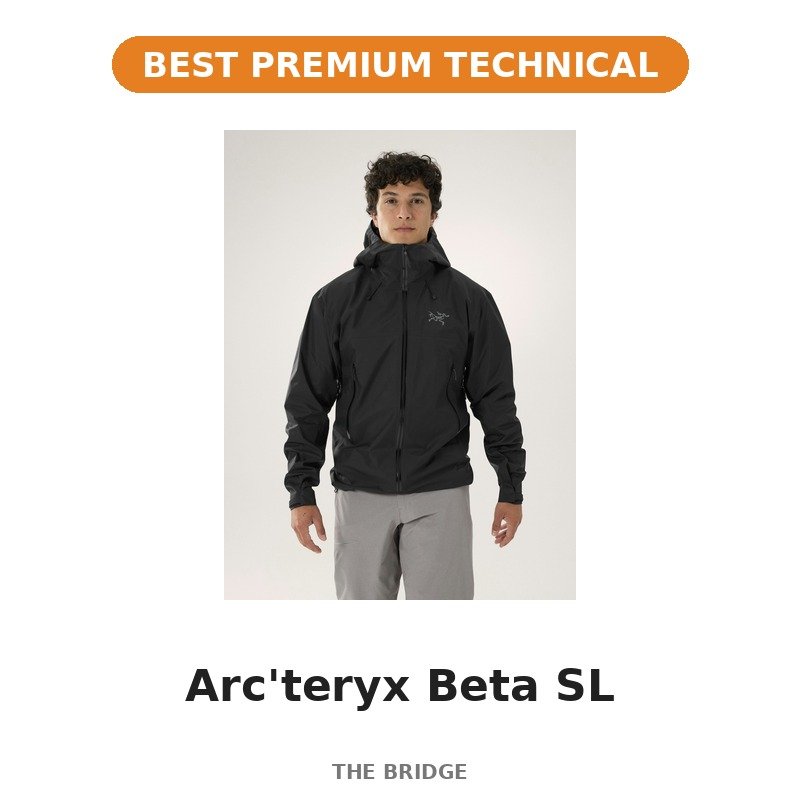
BEST PREMIUM TECHNICAL
The Beta SL is aimed at people who want a light technical jacket that can move from hiking to exposed mountain terrain. Its 3-layer GORE-TEX ePE laminate, C-KNIT backer, helmet-compatible StormHood, pit zips, and RECCO reflector make it a feature-driven premium option rather than a basic town coat.
The published men's weight is 12.0 oz. That is attractive for a 3-layer shell, but the fitted cut is the first thing to test: if you wear a thick fleece or insulating layer, moving up in size may alter hood and hem coverage. This is a jacket to try over your real layering system rather than buying solely by chest measurement.
Newer ePE shells can show face-fabric wetting out despite an intact waterproof membrane, as Arc'teryx itself explains. Maintain the DWR and do not confuse darkened face fabric with a guaranteed leak. The main disqualifier is simple: a far less expensive jacket may cover all your actual needs.
Pros
- 12 oz published weight with 3-layer GORE-TEX ePE
- C-KNIT backer, helmet-compatible hood, and pit zips
- RECCO reflector for supplementary search support
Cons
- High purchase cost relative to occasional use
- Fitted cut leaves less margin for bulky insulation
Skip this if: Skip if you want a roomy streetwear fit or use a shell only a few days a year.
Verified key specs: 3L GORE-TEX ePE with C-KNIT backer; 12.0 oz (340 g); ventilation: Pit zips; Manufacturer does not publish a comparable HH value. Body uses 40D by 70D fabric; RECCO is not a substitute for emergency planning.
| Protection | 9/10 |
|---|---|
| Ventilation | 8/10 |
| Mobility/Fit | 9/10 |
| Packability | 9/10 |
Specification source: Arc'teryx Beta SL manufacturer / authorized product listing. Scores are our feature-based editorial judgments, not hands-on test measurements.
5. Rab Downpour
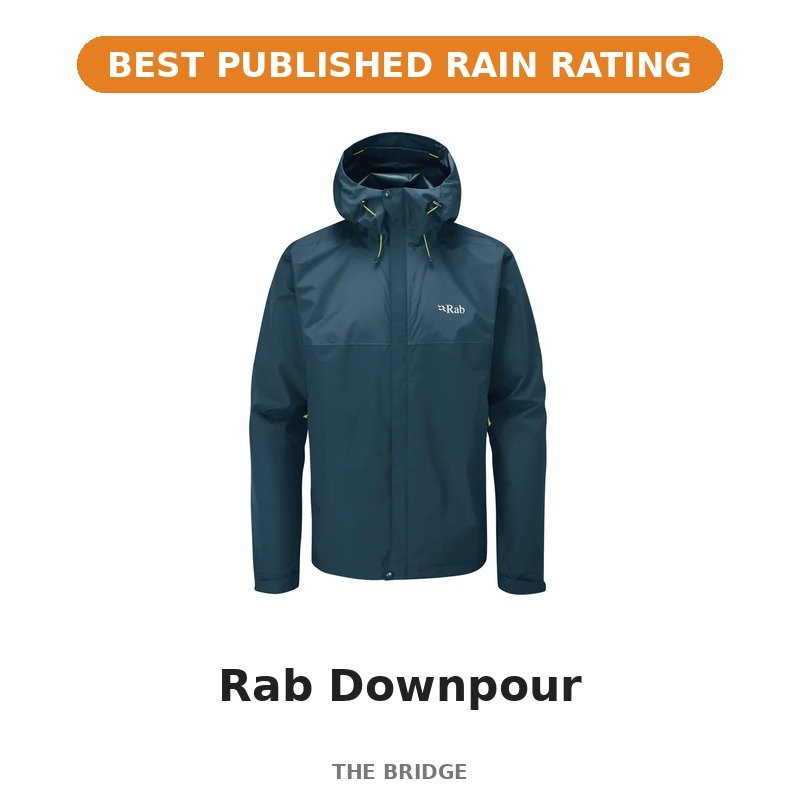
BEST PUBLISHED RAIN RATING
The Rab Downpour gives spec-focused shoppers two rare numbers in one easy-to-reference listing: a 20,000 mm hydrostatic-head rating and a 20,000 g/m²/24 h moisture-vapor transmission rating. Its 50D Pertex Shield 2.5-layer fabric, underarm vents, and well-adjusted hood make it a rational option for wet hill walks and everyday hiking.
Those published ratings help describe the fabric, but they cannot predict how comfortable you will feel during a climb. Breathability lab methods differ by brand, and real comfort depends on humidity, temperature, workload, layers, and airflow. Its 13.3 oz men's size M weight is also not especially low for a 2.5-layer design.
The soft-touch lining is a selling point in this category, but do not mistake it for a bonded 3-layer protective backer. A backpack waistbelt can interfere with lower hand pockets, so verify access while wearing your pack.
Pros
- Verified 20,000 mm hydrostatic head and 20,000 MVTR specs
- 50D Pertex Shield fabric with underarm ventilation
- Stiffened hood peak and adjustable cuffs
Cons
- 13.3 oz is relatively heavy for a 2.5-layer rain shell
- Lab breathability numbers cannot be compared directly across all brands
Skip this if: Skip if you demand a fully bonded 3-layer backer or high, harness-clear hand pockets.
Verified key specs: 2.5L Pertex Shield, 50D face; 13.3 oz (377 g); ventilation: Underarm vents; 20,000 mm hydrostatic head; 20,000 g/m²/24 h MVTR. Center back length 29.5 in (75 cm) in size M; Fluorocarbon-free DWR.
| Protection | 8/10 |
|---|---|
| Ventilation | 8/10 |
| Mobility/Fit | 8/10 |
| Packability | 7/10 |
Specification source: Rab Downpour manufacturer / authorized product listing. Scores are our feature-based editorial judgments, not hands-on test measurements.
6. Black Diamond Fineline Stretch Shell
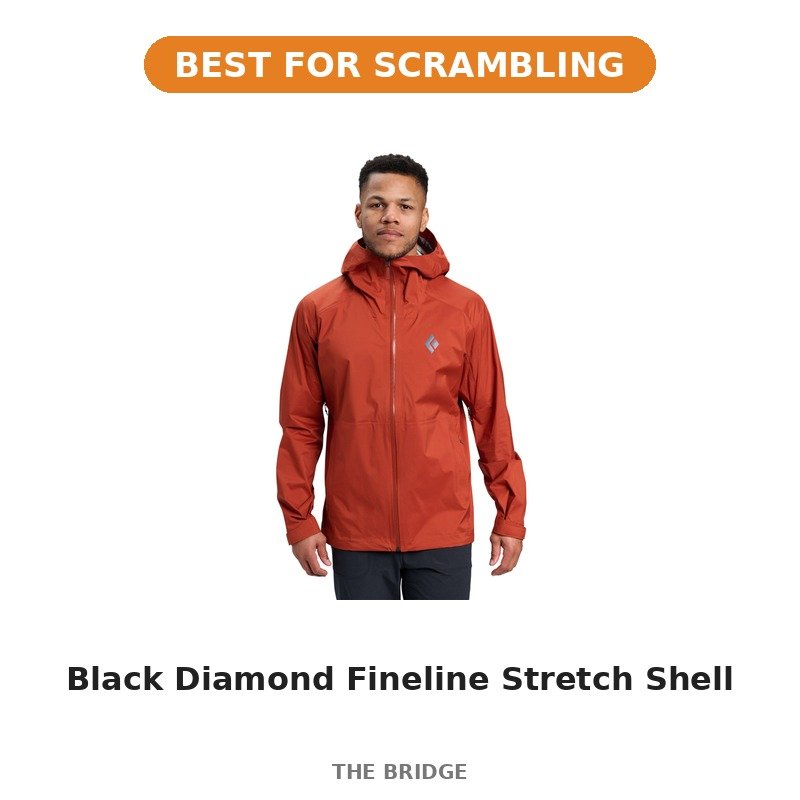
BEST FOR SCRAMBLING
The Fineline is a useful answer to a different question: what if the rain jacket restricts reaching for holds? Black Diamond builds the shell with two-way stretch, gusseted underarms, an adjustable climbing-helmet-compatible hood, and pit zips. It also packs into a pocket with a clip loop.
The manufacturer lists 10,000 mm waterproof and 10,000 g/m²/24 h breathability ratings. Those do not automatically make the jacket half as protective as a 20,000 mm shell under field conditions, but they provide a concrete specification for comparing its stated fabric target. At 11.3 oz, it lands in a lightweight, movement-focused category.
The mobility features do not cancel out the typical disadvantages of 2.5-layer construction. Abrasion and prolonged high-exposure storm use still argue for careful handling and, depending on the trip, a sturdier shell.
Pros
- Stretch fabric, gussets, and helmet-compatible hood
- Published 10,000 mm waterproof rating
- Pit zips and pocket packing at 11.3 oz
Cons
- 2.5-layer build is not our first choice for constant rough-pack use
- Published waterproof rating is below Rab Downpour's, without proving an equal-method field difference
Skip this if: Skip if your priority is a robust everyday work shell rather than freedom of movement.
Verified key specs: 2.5L BD.dry stretch nylon; 11.3 oz (320 g); ventilation: Pit zips; 10,000 mm hydrostatic head; 10,000 g/m²/24 h breathability. BD.dry 2.5L; Center back measurement 30.25 in (77 cm).
| Protection | 7/10 |
|---|---|
| Ventilation | 8/10 |
| Mobility/Fit | 9/10 |
| Packability | 9/10 |
Specification source: Black Diamond Fineline Stretch Shell manufacturer / authorized product listing. Scores are our feature-based editorial judgments, not hands-on test measurements.
7. Columbia Watertight II
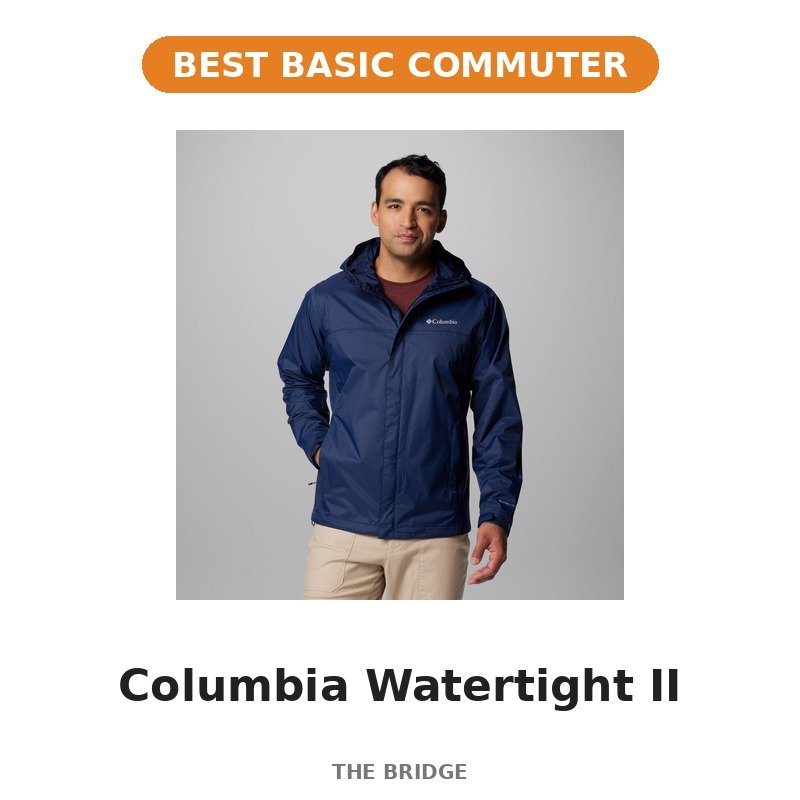
BEST BASIC COMMUTER
The Watertight II is a practical raincoat for walking to a bus stop, taking a dog out, or packing for a trip where rain is possible but high-output activity is not the core mission. Columbia confirms two-layer Omni-Tech fabric, a hanging mesh lining, fully sealed seams, adjustable hood and cuffs, and a pocket-stow design.
That hanging liner gives a different against-skin experience from a minimal 2.5-layer coating. The catch is heat release: Columbia does not list dedicated pit zips on the referenced version. If you habitually overheat after ten minutes of uphill walking, that missing vent is a significant disqualifier even if the jacket blocks rain.
Columbia publishes a 29.0 in center-back length but does not provide a comparable product weight on the linked product page. We therefore leave weight unlisted rather than inventing a number.
Pros
- Fully seam-sealed 2-layer Omni-Tech construction
- Mesh lining, adjustable cuffs, and hood
- Packs into hand pocket
Cons
- No dedicated pit zips identified in manufacturer features
- Published weight not available for this exact listing
Skip this if: Skip if you run warm or need deliberate ventilation on climbs.
Verified key specs: 2L Omni-Tech nylon with mesh liner; Not published in linked listing; ventilation: No dedicated pit zips listed; Manufacturer does not publish a comparable HH value. Center back length 29.0 in (74 cm); Weight omitted intentionally.
| Protection | 7/10 |
|---|---|
| Ventilation | 4/10 |
| Mobility/Fit | 7/10 |
| Packability | 6/10 |
Specification source: Columbia Watertight II manufacturer / authorized product listing. Scores are our feature-based editorial judgments, not hands-on test measurements.
8. The North Face Alta Vista
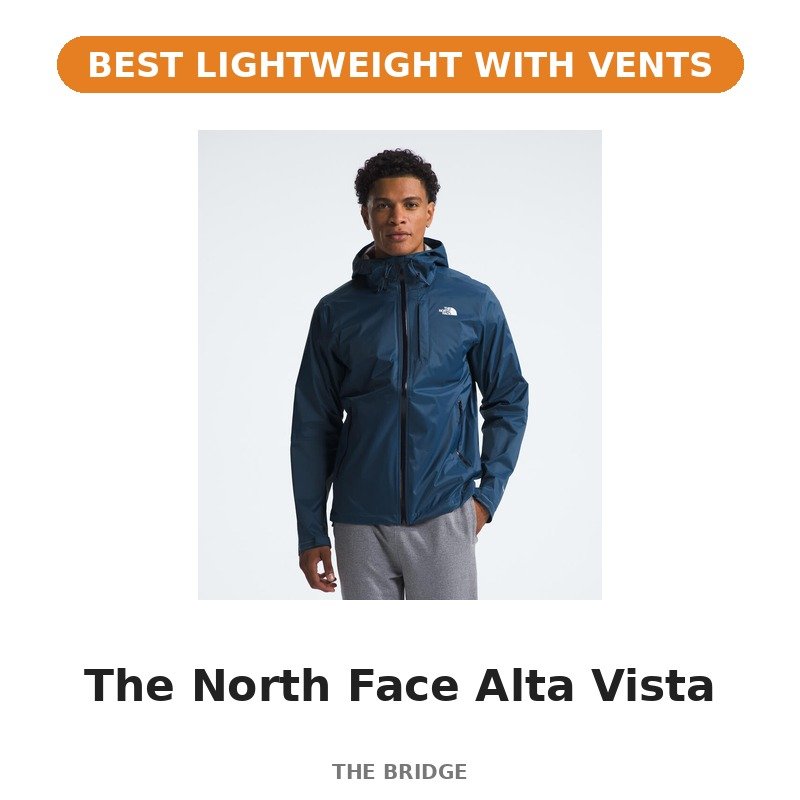
BEST LIGHTWEIGHT WITH VENTS
The Alta Vista stands out because the listed average weight is just 9.2 oz while it still includes pit zips. Many light packable rain shells remove vents to cut weight; this design keeps them. It also has a three-piece adjustable hood, cuff tabs, hem cinch, and a chest pocket that doubles as its storage pouch.
The 2.5-layer DryVent construction uses a published 70D recycled nylon face, which is a useful counterpoint to ultralight options built from much thinner face fabrics. It is a reasonable day-hike shell if weight and heat dumping matter more than a bonded 3-layer interior.
Two fit cautions matter: the listed center-back length is 27.75 in, shorter than some jackets here, and the exposed water-repellent front zip should be kept fully seated. Test the rear hem when crouching or reaching while wearing your pack.
Pros
- 9.2 oz average weight with pit zips
- 70D recycled nylon face fabric
- Chest-pocket storage and adjustable hood
Cons
- 27.75 in back length may not cover long torsos well
- 2.5-layer inner finish instead of a full protective backer
Skip this if: Skip if you need long-hem coverage for constant rain under a hipbelt.
Verified key specs: 2.5L DryVent, 70D recycled nylon; 9.2 oz (260 g); ventilation: Pit zips; Manufacturer does not publish a comparable HH value. Center back length 27.75 in (70 cm); US manufacturer lists sizes S through 3XL; verify local stock.
| Protection | 7/10 |
|---|---|
| Ventilation | 8/10 |
| Mobility/Fit | 8/10 |
| Packability | 9/10 |
Specification source: The North Face Alta Vista manufacturer / authorized product listing. Scores are our feature-based editorial judgments, not hands-on test measurements.
9. Patagonia Granite Crest
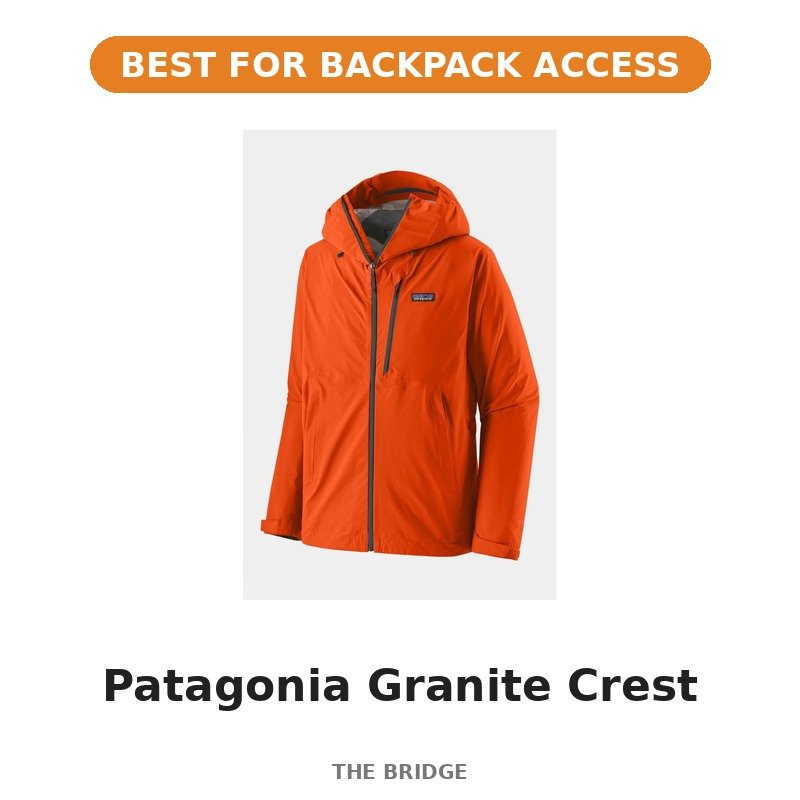
BEST FOR BACKPACK ACCESS
Choose the Granite Crest over Patagonia's Torrentshell if you care specifically about pocket access with a hipbelt or climbing harness. Its hand pockets sit to clear a waistbelt, and the two-way pit zips let you fine-tune ventilation without fully opening the jacket. The 3-layer H2No fabric uses 30D NetPlus nylon made from recycled fishing nets.
At 14.1 oz, the Granite Crest does not save weight over the Torrentshell. Instead, its selling points are its pocket layout, two-way ventilation, helmet-compatible hood, and jacket feel. There is no good reason to pay extra purely because both jackets say H2No; compare the functional details that solve a problem for you.
The softer, lighter-denier outer face makes careful handling around coarse rock and pack hardware sensible. Even good pack-friendly pocket placement should be checked with your own hipbelt, since belt height differs.
Pros
- High hand pockets designed to clear a backpack waistbelt
- 30D three-layer H2No fabric and two-way pit zips
- Packs into chest pocket; helmet-compatible hood
Cons
- Same listed 14.1 oz as Torrentshell, not an ultralight upgrade
- 30D face needs reasonable care against scraping
Skip this if: Skip if you do not need waistbelt-clear pockets or the specific hood and vent layout.
Verified key specs: 3L H2No, 30D NetPlus nylon; 14.1 oz (400 g); ventilation: Two-way pit zips; Manufacturer does not publish a comparable HH value. 30-denier NetPlus face fabric; Fabric, membrane, and DWR made without intentionally added PFAS.
| Protection | 9/10 |
|---|---|
| Ventilation | 9/10 |
| Mobility/Fit | 9/10 |
| Packability | 7/10 |
Specification source: Patagonia Granite Crest manufacturer / authorized product listing. Scores are our feature-based editorial judgments, not hands-on test measurements.
10. Montbell Versalite (2026 version)
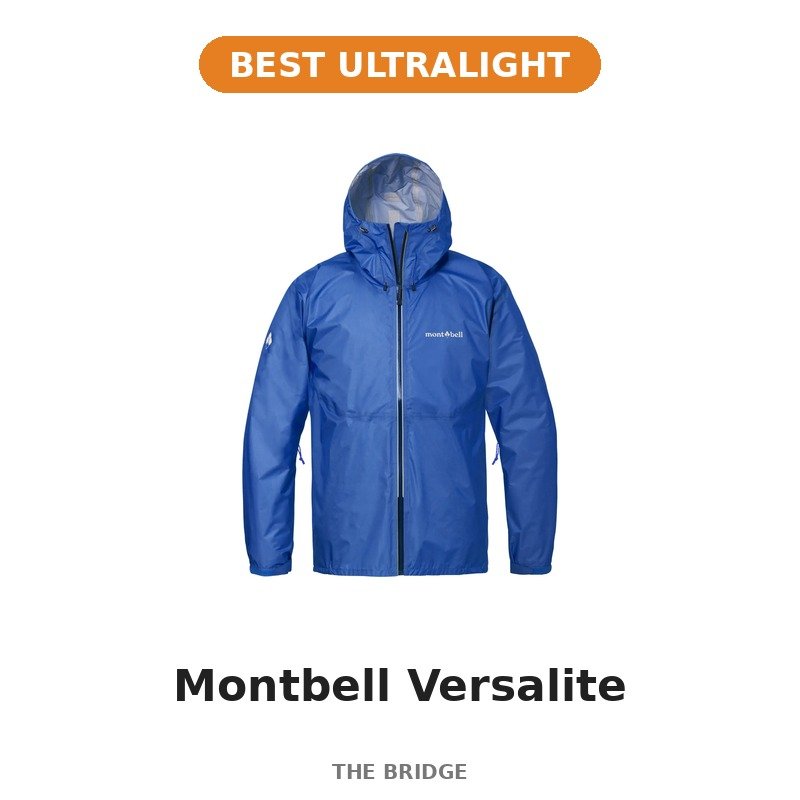
BEST ULTRALIGHT
The 2026 Versalite is the clear weight-first selection for fast-and-light backpackers. Montbell states just 5.9 oz in size medium and describes a 7-denier face fabric bonded to its proprietary DRYTEC waterproof/breathable system. Crucially, this minimal shell still includes pit zips, an adjustable hood, cuffs, and hem adjustment.
At that fabric weight, your main concern should be abrasion exposure rather than saving another ounce. Wear it thoughtfully under pack straps, avoid snagging it on branches, and do not expect the same abuse tolerance as a 40D or 70D everyday rain shell. The lower weight is a real benefit only if you routinely carry the jacket for many miles.
Be careful shopping by name alone. Older Versalite versions used different membranes and published weights. The specs in this roundup come from Montbell's April 2026 announcement, not a leftover older-season listing.
Pros
- 2026 manufacturer-stated 5.9 oz size M weight
- 7D face with retained pit zips
- Adjustable hood, cuffs, and hem
Cons
- 7D fabric warrants added caution around abrasive pack hardware
- Older models called Versalite have different specifications
Skip this if: Skip if the jacket will double as daily workwear or face repeated scraping against rough surfaces.
Verified key specs: Montbell DRYTEC, 7D face; 5.9 oz (167 g), medium; ventilation: Pit zips; Manufacturer does not publish a comparable HH value. Montbell 2026 version, not the older WINDSTOPPER version; 5.9 oz in men's size medium.
| Protection | 7/10 |
|---|---|
| Ventilation | 8/10 |
| Mobility/Fit | 8/10 |
| Packability | 10/10 |
Specification source: Montbell Versalite (2026 version) manufacturer / authorized product listing. Scores are our feature-based editorial judgments, not hands-on test measurements.
11. Helly Hansen Loke 2.0
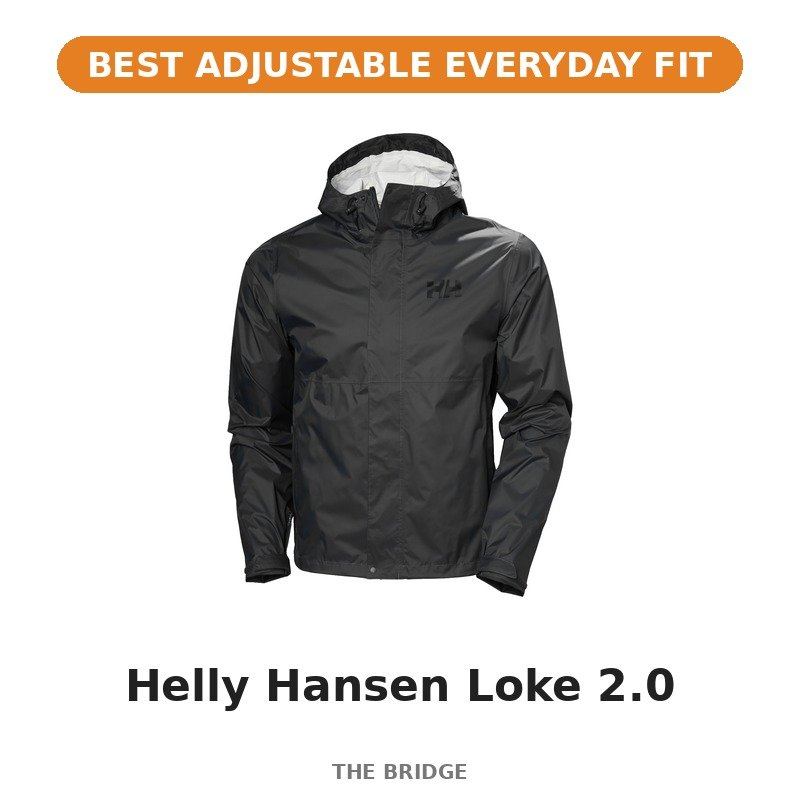
BEST ADJUSTABLE EVERYDAY FIT
The updated Loke is for hikers and travelers who want a straightforward seam-sealed shell with actual underarm ventilation. Helly Hansen specifies 2.5-layer HELLY TECH Performance, an adjustable hood and cuffs, hem adjustment, a front storm placket, and RECCO. Its repairable front zipper is especially relevant if you intend to keep the jacket for years.
It is not a three-layer shell, and the brand does not state a weight in the linked US listing. We do not substitute the old Loke model's weight: that earlier style used a different product number and fabric technology. If measured packed weight is essential for your setup, ask the manufacturer to confirm the 2.0 version before purchase.
Check whether the hood drawcords can be adjusted with gloves and whether the cuffs cover your wrists when extending hiking poles. The features are promising on paper, but the best fit is still the one that works with your preferred layers.
Pros
- 2.5-layer HELLY TECH Performance and fully sealed seams
- Underarm vents, adjustability, and a repairable zip
- RECCO reflector on the updated model
Cons
- Manufacturer does not provide weight on linked 2.0 US page
- Not a 3-layer choice for persistent abrasive use
Skip this if: Skip if you require a verified packed weight before buying.
Verified key specs: 2.5L HELLY TECH Performance; Not published in linked 2.0 listing; ventilation: Underarm vents; Manufacturer does not publish a comparable HH value. Updated style number 63396; Old model 62252 weight should not be reused.
| Protection | 8/10 |
|---|---|
| Ventilation | 8/10 |
| Mobility/Fit | 8/10 |
| Packability | 7/10 |
Specification source: Helly Hansen Loke 2.0 manufacturer / authorized product listing. Scores are our feature-based editorial judgments, not hands-on test measurements.
12. Black Diamond Strataline Stretch Shell
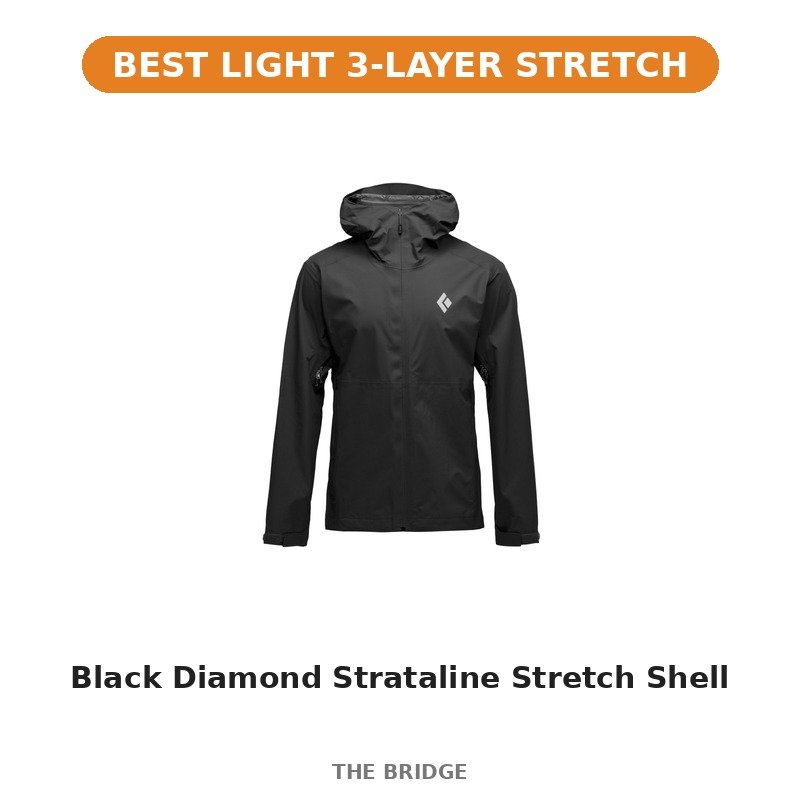
BEST LIGHT 3-LAYER STRETCH
The Strataline offers a third path between the Fineline's lightweight 2.5-layer construction and the heavier-duty 3-layer shells. Black Diamond specifies a 3-layer BD.dry system with a 17-denier stretch nylon face, bonded jersey backer, fully taped seams, and underarm vent zips. The weight is 352 g, or about 12.4 oz.
The climbing-helmet-compatible hood and stretch cut are useful for scrambling and layered movement, while the three-layer backer is preferable to a minimal printed interior when the shell stays on for long periods. But the 17D face remains thin compared with the 50D and 70D options on this list; layer count does not erase abrasion risk.
The range is also listed only in sizes S to XL on the manufacturer page. That can immediately rule it out for readers who need a different cut or size, even if the specifications otherwise look right.
Pros
- 3-layer bonded backer at about 12.4 oz
- Stretch fabric and fully taped seams
- Underarm vents and helmet-ready hood
Cons
- 17D face is comparatively thin for heavy abrasion
- Manufacturer lists only S through XL size range
Skip this if: Skip if you need sizes outside the published range or prioritize a thicker face fabric.
Verified key specs: 3L BD.dry, 17D stretch nylon face; 12.4 oz (352 g); ventilation: Underarm vents; Manufacturer does not publish a comparable HH value. 17-denier outer face; Manufacturer-listed center back 30.5 in (77 cm).
| Protection | 8/10 |
|---|---|
| Ventilation | 8/10 |
| Mobility/Fit | 9/10 |
| Packability | 9/10 |
Specification source: Black Diamond Strataline Stretch Shell manufacturer / authorized product listing. Scores are our feature-based editorial judgments, not hands-on test measurements.
What Can Go Wrong After You Buy a Rain Jacket?
1. The fabric wets out, but the waterproof layer may still work
The darkening outer fabric is often the first sign that DWR needs care. It can slow vapor transfer and feel cold even when the membrane is intact. Inspect the location of any internal moisture before treating every damp patch as a leak. Follow the garment care label, wash when dirty, dry as instructed, and restore DWR only when necessary.
2. Sweat condensation feels like rain leakage
Wet shoulders beneath a pack, damp elbows during a climb, or a soaked base layer after a sprint can come from perspiration trapped inside. Start the walk with vents open, remove surplus insulation, and take breaks when conditions permit. A membrane does not eliminate the need to manage output and ventilation.
3. Seams and zippers become the weak points
Waterproof fabric alone is not enough. Inspect seam tape if the garment is old or peeling, keep zippers fully shut in sustained rain, and repair punctures and tape failures with the maker’s recommended process. Do not assume a coated pocket zip will protect electronics like a waterproof dry bag.
4. You discover the hood, pockets, or hem fail your real setup
A jacket can look perfect in a store yet leave the lower back exposed when you bend, hide pockets beneath a hipbelt, or obstruct your view with a hood over a helmet. Run those exact movement tests before removing tags. This is especially important if the shell will be used for technical scrambling or wet backpacking.
5. Light fabric is not the same thing as long-term toughness
The 2026 Montbell Versalite uses a 7D face while the Columbia Watertight II uses a more substantial 2-layer lined design. Neither construction is inherently wrong, but the usage pattern must match. Do not treat ultralight pack weight as a free durability upgrade.
The Bottom Line: Which Waterproof Jacket Should You Buy?
For most people: the Patagonia Torrentshell 3L is the first model to compare because it combines a bonded three-layer design, vents, adjustability, and a documented 50D face without pushing into the most expensive shell category.
For occasional hiking and price discipline: choose the REI Rainier if its 2.5-layer inner feel works for you. For hot, wet climbs: start with the Foray 3L and its long TorsoFlo vents. For a 5.9 oz pack-first shell: choose the 2026 Montbell Versalite if you accept its thin 7D fabric.
For premium technical use: the Beta SL offers 3-layer GORE-TEX ePE and a fitted technical cut. For pack-hipbelt pocket access: compare the Granite Crest against the Torrentshell before paying more. Your best jacket is the first one that passes your weather, heat, fit, and durability tests, not the one with the largest price tag.
Research disclosure: This is a specification-checked editorial buying guide, not a claim that The Bridge ARP personally wore or laboratory-tested all 12 models. Product designs, weights, availability, and regional restrictions may change. Check the linked manufacturer listing for the exact SKU before purchasing.
Related reading on The Bridge: rain jackets for hiking under $150