Disclosure: The Bridge is reader-supported. When you buy through links on our site, we may earn a commission at no extra cost to you. Learn more
Here’s the good news about backpacking stoves: unlike tents or sleeping bags, you don’t need to spend much to get excellent performance. The difference between a $17 stove and a $70 stove is real — wind resistance, simmer control, build quality — but the difference between a $70 stove and a $170 stove is mostly weight savings measured in fractions of an ounce and features most beginners never use. Under $100 sits the sweet spot where every dollar still buys you something.
We built this guide by comparing boil times, wind resistance, simmer control, and long-term owner feedback across the most recommended sub-$100 canister stoves — the category that covers the vast majority of three-season backpackers.
Quick Comparison
| Camping Stove | Price | Weight | 1L Boil Time* | Best For |
|---|---|---|---|---|
| Soto WindMaster | ~$70 | 3.0 oz | ~4 min | Best overall |
| MSR PocketRocket 2 | ~$50 | 2.6 oz | ~3.5 min | Best classic value |
| MSR PocketRocket Deluxe | ~$85 | 3.0 oz | ~3.5 min | Best simmer control |
| Soto Amicus | ~$50 | 2.9 oz | ~4 min | Best budget reliability |
| Snow Peak LiteMax | ~$45 | 1.9 oz | ~4.5 min | Best ultralight |
| BRS-3000T | ~$17 | 0.9 oz | ~4 min | Best ultra-budget |
Boil times are manufacturer-claimed for 1 liter in calm conditions; real-world times run higher, especially in wind. Prices are approximate street prices and shift with sales.
How to Choose a Backpacking Stove: The 60-Second Version
Four things that actually matter for beginners:
- Wind resistance matters more than boil time. Every stove on this list boils water fast enough. What separates them is whether they keep burning when the wind picks up on an exposed ridge — that’s where cheap stoves fail and good ones earn their price.
- Simmer control = real cooking. If you only boil water for freeze-dried meals, any stove works. If you want to actually cook — simmer sauces, fry, avoid scorching — you need fine flame adjustment, which is the main thing the pricier picks buy you.
- Piezo igniters are convenient, not essential. Built-in push-button ignition is nice until it breaks (usually after a hard drop). Always carry a mini lighter regardless — it weighs nothing and never fails.
- Canister stoves rule three-season hiking. All picks here screw onto standard threaded isobutane-propane canisters. They’re simple, reliable, and allowed where alcohol stoves are banned. Cold weather (well below freezing) degrades canister performance — that’s a different stove category.
1. Soto WindMaster — Best Overall
[AFFILIATE LINK: Soto WindMaster Stove]
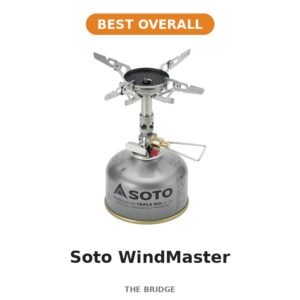
The WindMaster is the stove that made “windproof-ish” affordable. Its concave burner head sits close to the pot, shielding the flame in a way that keeps it burning in gusts that kill exposed-flame competitors — independent testing consistently ranks it at or near the top for wind resistance among canister stoves. Add genuinely excellent simmer control, a built-in piezo igniter, and stable 4Flex pot supports that handle larger pots confidently, and you get the best all-around performer under $100. It’s the stove we’d hand a beginner who wants one purchase to last years.
Specs:
- Price: ~$65-75
- Weight: ~3.0 oz (87 g)
- Boil time: ~4 min / 1L (claimed); ~2.5 min / 0.5L (tested)
- Igniter: Built-in piezo
- Pot supports: Removable 4Flex (supports wide pots)
Who it’s for: The beginner who wants the best-performing stove under $100 and doesn’t obsess over every gram.
2. MSR PocketRocket 2 — Best Classic Value
[AFFILIATE LINK: MSR PocketRocket 2 Stove]
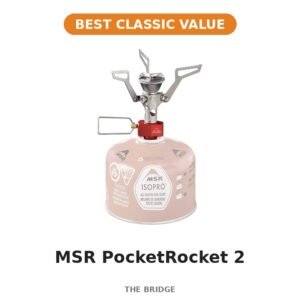
The PocketRocket is the Toyota Corolla of backpacking stoves: not exciting, absurdly reliable, and everywhere for a reason. At 2.6 oz it disappears into your cook kit, setup is foolproof (screw on, open valve, light), and MSR’s build quality means it survives years of abuse. It boils fast in calm conditions and costs about $50. Its weakness is the one thing the WindMaster solves: the exposed flame struggles in wind, and simmer control is merely adequate.
Specs:
- Price: ~$45-55
- Weight: 2.6 oz (74 g)
- Boil time: ~3.5 min / 1L (claimed)
- Igniter: None (carry a lighter)
- Pot supports: Folding serrated (good grip, small footprint)
Who it’s for: Boil-water backpackers who want the lightest reliable stove for the least money. The safe default.
3. MSR PocketRocket Deluxe — Best Simmer Control
[AFFILIATE LINK: MSR PocketRocket Deluxe Stove]
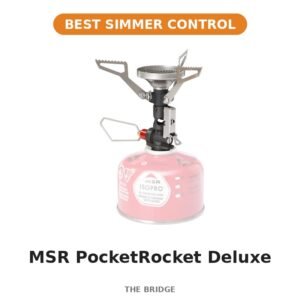
The Deluxe is MSR’s answer to everyone who loved the PocketRocket 2 but wanted to actually cook. A pressure regulator keeps flame output consistent as the canister empties and temperatures drop, and the refined valve delivers the finest simmer adjustment of any stove near this price — genuinely capable of low, even heat for sauces and careful cooking. It keeps the PocketRocket’s compact form and adds a piezo igniter. At ~$85 it’s the priciest pick here, but it’s the one for hikers who plan to cook rather than just rehydrate.
Specs:
- Price: ~$80-90
- Weight: ~3.0 oz (85 g)
- Boil time: ~3.5 min / 1L (claimed); ~3.4 min / 0.5L (tested)
- Igniter: Built-in piezo
- Regulator: Pressure-regulated for consistent output
Who it’s for: Backpackers who cook real meals — simmering, sautéing, and caring about flame control.
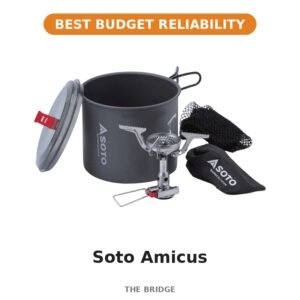
4. Soto Amicus — Best Budget Reliability
[AFFILIATE LINK: Soto Amicus Stove]
The Amicus is Soto’s quiet achiever: most of the WindMaster’s engineering DNA — including the excellent burner design and solid simmer control — at about $50. It lacks the WindMaster’s concave wind-shielding burner and micro-regulator, so it’s a step behind in gusts and cold, but in normal three-season conditions it’s a superb stove. Build quality is a clear notch above the ultra-budget options, and Soto’s reputation for durability is well earned.
Specs:
- Price: ~$45-55
- Weight: ~2.9 oz (82 g)
- Boil time: ~4 min / 1L (claimed); ~3.7 min / 0.5L (tested)
- Igniter: Built-in piezo (versions with igniter)
- Pot supports: Fixed, stable design
Who it’s for: The value hunter who wants a stove that feels premium without the premium price. Arguably the best dollar-for-dollar pick here.
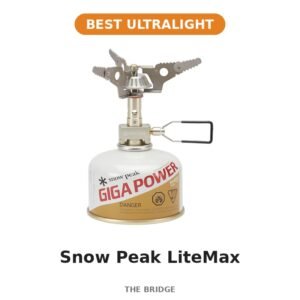
5. Snow Peak LiteMax — Best Ultralight
[AFFILIATE LINK: Snow Peak LiteMax Stove]
At 1.9 oz, the LiteMax is the lightest stove from a major manufacturer — a full ounce lighter than the PocketRocket 2 — and it’s beautifully made, with the precise machining Snow Peak is known for. The tradeoff for the weight savings is wind performance: the tiny burner is easily disturbed, and simmer control is basic. But for ultralight hikers who count every gram and mostly boil water in sheltered spots, it’s the refined choice.
Specs:
- Price: ~$40-50
- Weight: 1.9 oz (54 g)
- Boil time: ~4.5 min / 1L (claimed)
- Igniter: None
- Pot supports: Folding, minimalist
Who it’s for: Ultralight backpackers who’ve already cut weight everywhere else and want the lightest reputable stove.
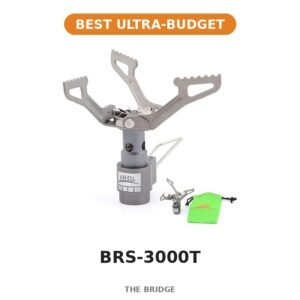
6. BRS-3000T — Best Ultra-Budget
[AFFILIATE LINK: BRS-3000T Stove]
The BRS-3000T is a phenomenon: 0.9 oz — lighter than most car keys — for about $17. It’s a favorite of thru-hikers who need a stove that essentially doesn’t exist in their pack. The compromises are real: thin pot supports that flex under heavy pots, poor wind resistance, crude flame control, and spotty quality control (inspect yours on arrival and test before the trail). But as a backup stove, a first experiment, or the choice of a hiker who genuinely only boils water, it’s astonishing value.
Specs:
- Price: ~$15-20
- Weight: 0.9 oz (25 g)
- Boil time: ~4 min / 1L (claimed)
- Igniter: None
- Pot supports: Thin folding wire
Who it’s for: Ultralight thru-hikers, budget-first beginners, and anyone who wants a backup stove that weighs nothing.
The Bottom Line
Under $100, you can’t really go wrong — but you can optimize. Want the best all-around performer? Soto WindMaster. Want the proven classic? MSR PocketRocket 2. Want to actually cook? MSR PocketRocket Deluxe. Want the smartest money spent? Soto Amicus. Counting grams? Snow Peak LiteMax — or the $17 BRS-3000T if you’re feeling adventurous.
Whichever you pick, grab a 110 g canister, a lighter, and a simple pot — and go boil water somewhere beautiful.
Related reading on The Bridge: Sawyer Squeeze vs Katadyn BeFree (your water system pairs with your cook system), and our backpacking gear guides in the Camp Kitchen & Water section.