
Disclosure: The Bridge is reader-supported. When you buy through links on our site, we may earn a commission at no extra cost to you. Learn more.
2026 outdoor gear buying guide · Clothing & Layers
Best Hiking Hats of 2026: 23 Sun Hats Compared for Shade, Heat and Wind
You need a hiking hat that shades your face and neck without overheating, blowing away, or colliding with your backpack. Here is how to choose by actual brim dimensions, UPF coverage, ventilation, chin straps, and packing rules, instead of shopping by a UPF label alone.
For exposed hiking and backpacking, our overall specification-based pick is the Sunday Afternoons Ultra Adventure Hat. If you mainly want a simple, reasonably priced boonie, start with the Columbia Bora Bora II. For windy ridges, compare the Patagonia Quandary Brimmer and Shelta Firebird V2. Each solves a different problem, and the wrong one can leave your neck exposed or your hat in the brush.
What makes this guide different: all 23 hats get the same four suitability scores, verified model-specific measurements where published, an explicit reason to skip, and a check for whether the maker’s UPF claim includes mesh. These are editorial comparisons from manufacturer specifications, not claims of independent field testing.
How to Choose a Hiking Hat Before You Buy
Four decisions matter more than style: sun coverage, heat management, wind security, and pack practicality. We score every hat from 1 to 10 on those same four dimensions. These numbers are editorial interpretations of published design features, not measurements collected from head-to-head testing.
1. Will it shade your neck and ears?
A UPF rating describes ultraviolet penetration through rated fabric, not the footprint of the shadow below the hat. A 2.25-inch (5.7 cm) bucket brim can leave much more skin exposed than a 4-inch (10.2 cm) brim or a 6 to 10-inch (15 to 25 cm) neck cape. Even the largest brim cannot block every reflected ray.
2. Will you keep it on when sweating?
Crown mesh, moisture-wicking sweatbands and lighter fabrics address different aspects of heat. Mesh may have a different UPF rating from the main body; some brands explicitly exclude it. A long cape increases shade but also changes airflow around your jaw and neck.
3. What happens in wind?
Check both a chin strap and a crown adjustment. A narrow brim generally presents less area to gusts than a broad canopy, while a stiff brim resists falling into your eyes. A secure cord helps prevent losing a hat, but does not make every brim stable in a crosswind.
4. Can you pack it the way you hike?
“Packable” is not the same as “crushable.” Some brims fold at a designed seam; others need to be laid flat and must not be creased. We record those distinctions and publish ounces (grams) only when the manufacturer supplies a weight.
Fit check before removing the tags
Measure around your head just above your brows and ears, where your hat sits. Convert to the brand’s size chart rather than assuming one-size-fits-most will stretch. Put on sunglasses, tighten the chin cord, wear your usual hairstyle, shoulder a loaded hiking pack, and look sharply up and down. If the rear brim hooks your pack’s top pocket, choose a flexible brim or a neck cape instead. Verify that a brim will not interfere with a helmet if you plan to wear one.
Reject the wrong silhouette quickly
- Long exposed route: reject a bare visor or baseball cap as your only head-and-neck protection unless you will add a sun hoodie, sunscreen, or other coverage.
- Humid, high-output trail: reject a cape that you find too hot even if it casts a big shadow.
- Constant wind: reject broad unrestrained hats lacking an effective chin or crown adjustment.
- Tall backpack: reject a rigid back brim that contacts your pack when you raise your head.
- Tiny pack pocket: reject brims marked “pack flat; do not crease.”
- UPF across every panel: reject models whose product page excludes mesh from the stated rating.
Sun protection works as clothing, not one magic accessory. A hat can pair with a sun hoodie, long-sleeve shirt and sunscreen; for a complete walking setup, consider sun protection layering alongside the moisture-management choices in the rest of your hiking clothing and socks. Footwear comfort is a separate job, so this page does not attempt to review it.
Hiking Hat Comparison Table: 23 Models
The table records published numbers for the named versions. “Not stated” means the manufacturer product page cited in the review did not give that measurement. UPF exceptions matter: the number does not automatically extend across mesh panels.
| Hat | UPF rating | Brim / cape | Published weight | Wind retention | Pack method |
|---|---|---|---|---|---|
| Sunday Afternoons Ultra Adventure Hat | UPF 50+ (including mesh) | 3.5 in brim; 6 in cape | 2.6 oz (74 g) | Adjustable | Folding split brim |
| Columbia Bora Bora II Booney | UPF 50 (mesh excluded) | 3 in (7.6 cm) | Not stated | Adjustable | Soft brim; packed shape not specified |
| Outdoor Research Helios Sun Hat (2026) | UPF 50+ | 2.75 in (7.0 cm) | 2.41 oz (68 g) | Detachable/adjustable | Not specified |
| Patagonia Quandary Brimmer | Not specified by maker on cited page | Wide, size not stated | 4.05 oz (115 g) | Adjustable | Semi-rigid buoyant brim |
| Sunday Afternoons Latitude Hat | UPF 50+ (mesh excluded) | 3.75 in front; 4 in side; 4.75 in rear | 4.3 oz (122 g) | Adjustable | Reverse Split Brim folds flat |
| Sunday Afternoons Adventure Hat | UPF 50+ (mesh excluded) | 3.75-4 in brim; 7.5 in cape | 3.0 oz (85 g) | Adjustable | Pack flat; do not crease brim |
| Outdoor Research Sun Runner Cap | UPF 40 | 2.75 in visor; 10.75 in cape | 2.98 oz (85 g) | Removable cord | Soft cap; manufacturer does not state fold type |
| Sunday Afternoons Sun Guide Cap | UPF 50+ (mesh excluded) | 3 in folding visor; 10 in cape | 3.3 oz (94 g) | No traditional under-chin strap confirmed | Clamshell brim folds |
| Tilley LTM6 Airflo Sun Hat | UPF 50+ | 3.5 in front/back; 2.5 in sides | 4.0 oz (113 g) | Tuck-away wind cord | Keeps shape; avoid hard creases |
| Shelta Firebird V2 | UPF 50+ | 3 in front; 2.75 in sides/back | 4.0 oz (113 g) M/L | Convertible cord | Do not crease brim |
| Sunday Afternoons Charter Hat | UPF 50+ (including mesh) | 3 in front/rear; 2.5 in sides | 3.6 oz (102 g) | Adjustable | Pack flat; do not crease brim |
| Sunday Afternoons Sundancer Hat | UPF 50+ | 4.5 in brim; 7.5 in cape | 2.9 oz (82 g) | Adjustable | Pack flat; do not crease brim |
| Sunday Afternoons Brushline Bucket | UPF 50+ (mesh excluded) | 2.5 in (6.4 cm) | 2.6 oz (74 g) | Not listed as included | Crushable |
| Sunday Afternoons Clear Creek Boonie | UPF 50+ | 3 in (7.6 cm) | 3.1 oz (88 g) | Removable | Crushable / packs flat |
| Sunday Afternoons Solar Bucket | UPF 50+ (mesh excluded) | 2.25 in (5.7 cm) | 2.5 oz (71 g) | Adjustable | Crushable |
| Sunday Afternoons Ultra Storm Bucket | UPF 50+ | 2.75 in (7.0 cm) | 2.5 oz (71 g) | Adjustable | Crushable |
| Sunday Afternoons Sun Tripper Cap | UPF 50+ | 2.25 in visor | 2.6 oz (74 g) | No chinstrap specified | Clamshell folding brim |
| Sunday Afternoons Sport Hat | UPF 50+ (mesh excluded) | 4 in crescent brim; 5 in cape | 2.2 oz (62 g) | Adjustable | Pack flat; do not crease brim |
| Sunday Afternoons VaporLite Stride Cap | UPF 50+ (mesh excluded) | 2.5 in visor | 1.3 oz (37 g) | No chinstrap specified | Crushable |
| Outdoor Research Swift Cap | UPF 40 | Curved visor, width not stated | 2.5 oz (71 g) | No chinstrap | Curved brim, compressibility not specified |
| Tilley T3 Classic | UPF 50+ | Flat brim; width not stated | 5.8 oz (164 g) | Tuck-away wind cord | Structured cotton brim |
| Columbia Coolhead II Zero Booney | UPF 50 | 3.5 in; stowable cape | Not stated | Adjustable | Packable cape |
| KAVU Chillba | UPF 50+ | Wide circular brim, size not stated | Not stated | Adjustable toggle | Roll gently; do not fold |
23 Best Hiking Hats for Different Trails and Conditions
These are use-case picks, not laboratory rankings. Product reviews are based on the cited manufacturer pages, with limitations called out for each model. The four editorial scores are relative shopping guidance rather than proof of temperature reduction, UV performance beyond fabric ratings, or durability in the field.
BEST OVERALL
1. Sunday Afternoons Ultra Adventure Hat
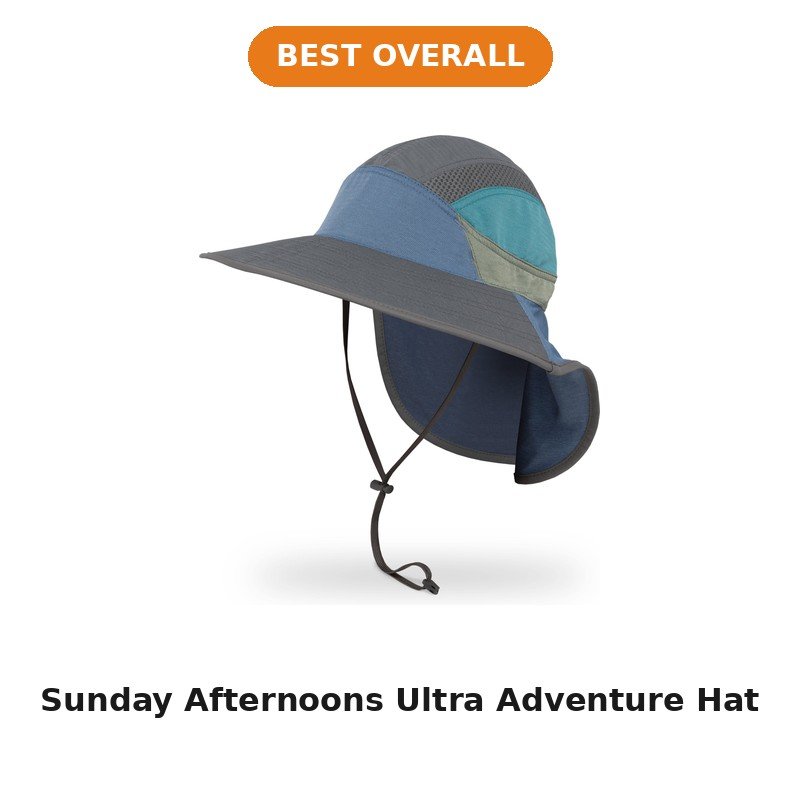
Choose the Ultra Adventure when your main job is hiking all day with a pack in exposed sun. The manufacturer specifies a 3.5-inch front brim, 6-inch rear neck cape, UPF 50+ protection that includes the mesh, a 2.6-ounce weight, and a folding split-brim design. The unusual rear shape is useful when a rigid, circular brim would press against a tall backpack. Its sweatband and crown ventilation address heat without dropping the protective cape.
The deciding limitation is personal tolerance of the cape. Fabric can feel close to your neck in humid weather, and the folded brim is not the same thing as a rigid visor in wind. Skip it if you insist on an uncovered neck, want a traditional round brim, or expect waterproof rain protection. The PFAS-free DWR sheds some moisture but is not a waterproof membrane.
BEST BUDGET
2. Columbia Bora Bora II Booney
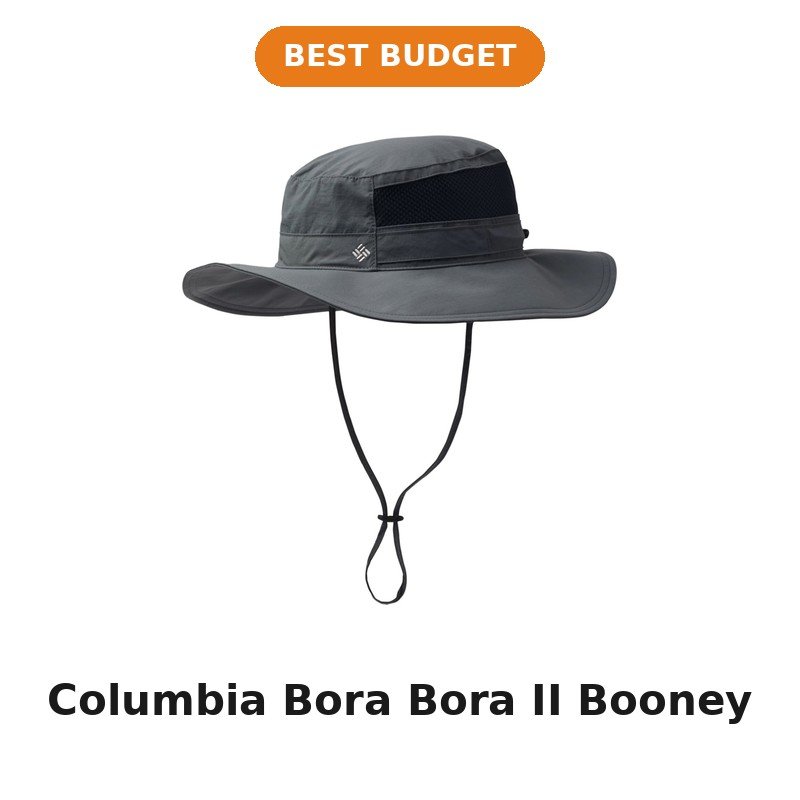
The Bora Bora II makes sense when you want a functional hiking hat without paying for a complex neck cape. Columbia publishes a 3-inch wraparound brim, Omni-Shade UPF 50 fabric, a moisture-wicking Omni-Wick sweatband, an adjustable chin strap, and a rear toggle. The vented side panel helps air move when you are carrying a daypack and climbing steadily.
This is not the same coverage as a cap with a 6-inch neck curtain. Columbia explicitly excludes its mesh section from the UPF rating, and the one-size fit gives less precision than numbered sizes. Reject it if you need verified protection across every panel, a wide neck drape, or a confirmed published weight before buying. Adjust it while walking to see whether the brim touches your backpack.
BEST LIGHT BOONIE
3. Outdoor Research Helios Sun Hat (2026)
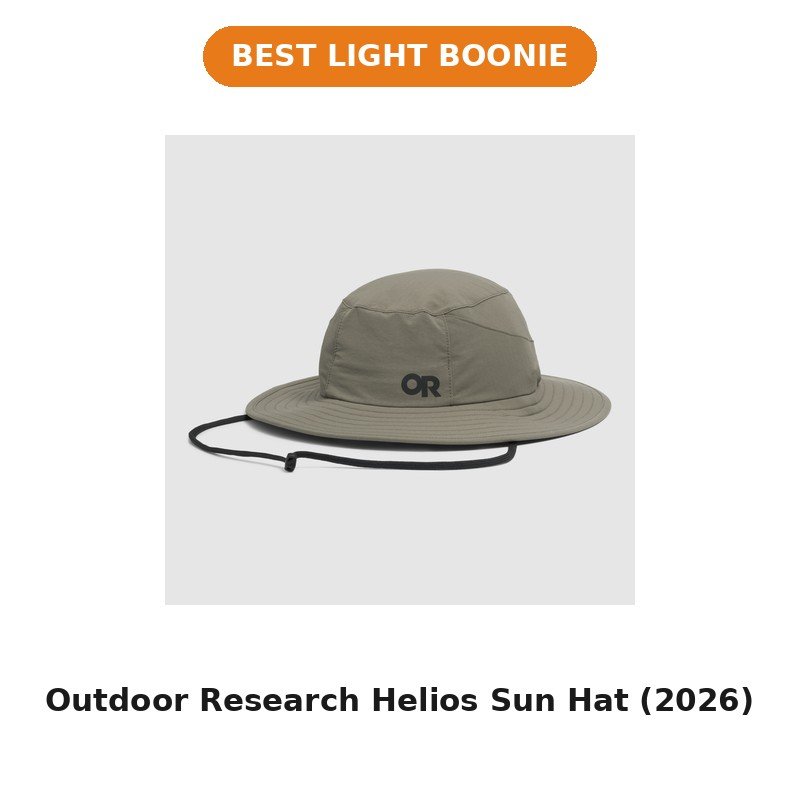
The updated Spring 2026 Helios is an easy pick for someone who wants a simple brim and low packed weight. Outdoor Research lists a 2.75-inch brim, 2.41-ounce weight, UPF 50+ nylon, crown-cinch adjustment, and a detachable chin cord. Those facts make it a clearer purchase than an older Helios listing with different specifications.
The brim is narrower than the 4-inch designs in this guide, so exposed necks may still require a collar or sunscreen. The manufacturer calls the material water resistant, not waterproof. Skip it if the top priority is maximum rear-neck shadow or if you specifically want a permanently attached neck flap. Confirm that a retailer carries product number 322652 rather than the prior generation.
BEST FOR WINDY RIDGELINES
4. Patagonia Quandary Brimmer
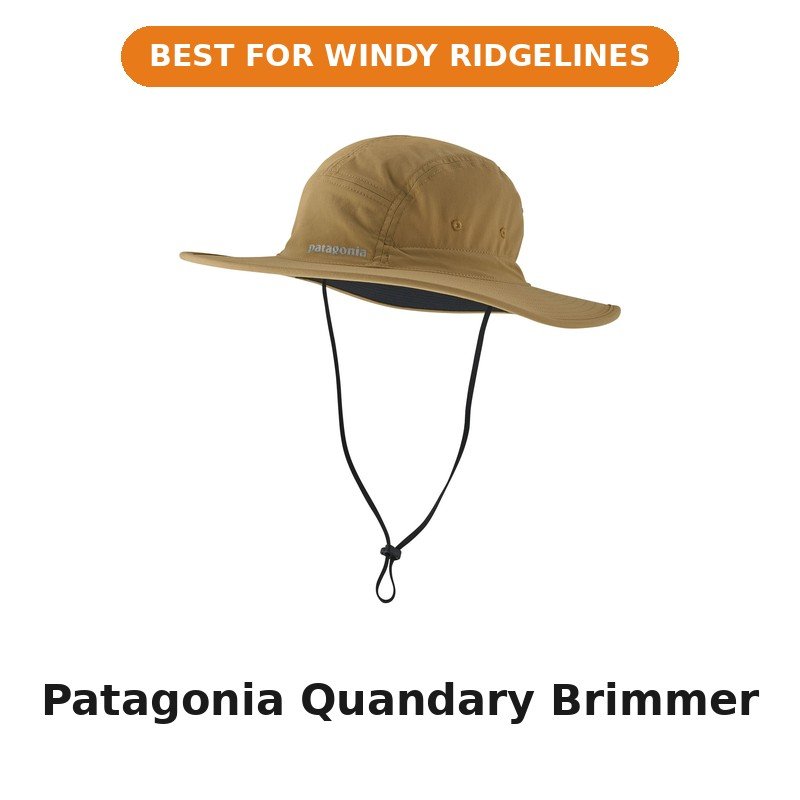
Patagonia builds the Quandary Brimmer around stability rather than a minimal scale reading. Its product page lists a semi-rigid brim with a dark underside, an adjustable chin strap, a separate rear toggle, vented crown, wicking sweatband, and 4.05-ounce weight. The main fabric is recycled nylon with a DWR finish made without intentionally added PFAS.
Patagonia does not give a numeric UPF rating on the cited product page, so we do not assign one. Although the buoyant brim can be useful around water, it adds bulk. Skip the Brimmer if you need a fold-flat cap or require a documented UPF number before purchase. A brim that stays firm can also strike the top of a tall backpack on steep descents.
BEST EXTRA-WIDE SHADE
5. Sunday Afternoons Latitude Hat
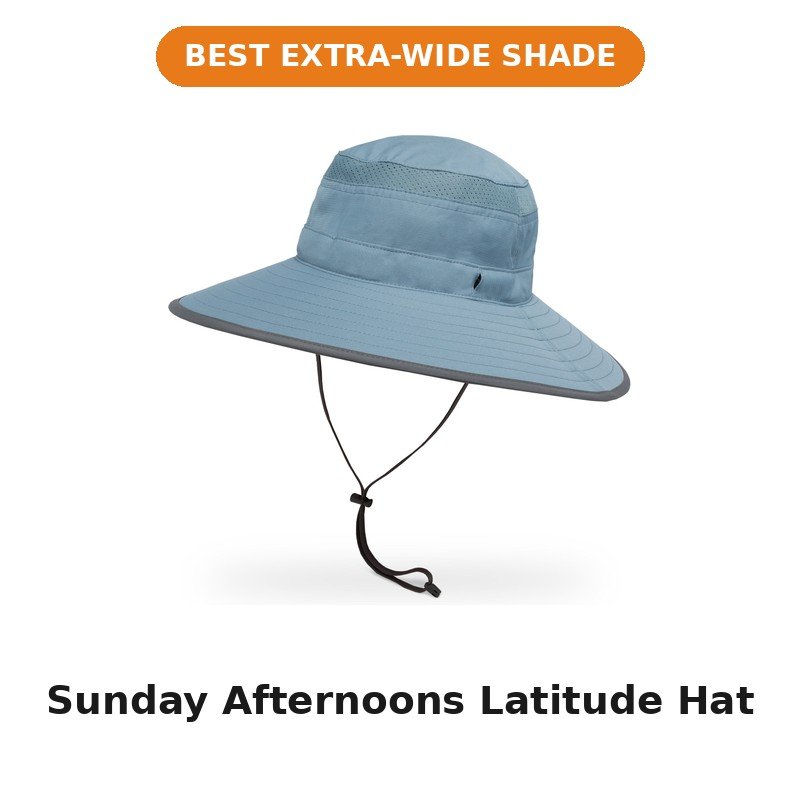
The Latitude is the option to evaluate when you dislike neck flaps but need substantial shade. Its brim measures 3.75 inches in front, 4 inches at the sides, and 4.75 inches at the back. Sunday Afternoons also lists a split folding brim, UPF 50+ fabric, flotation, sunglasses keeper, and 4.3-ounce weight. The length difference is meaningful if afternoon sun reaches the back of your neck.
The tradeoff is sail area and visibility. A bigger rear brim can contact high packs when you tilt your head back, while crosswinds can push any broad hat sideways. Its mesh is not included in the published UPF rating. Skip it for narrow brush corridors or if a very compact cap is more important than geometric shade.
BEST CLASSIC DESERT CAPE
6. Sunday Afternoons Adventure Hat
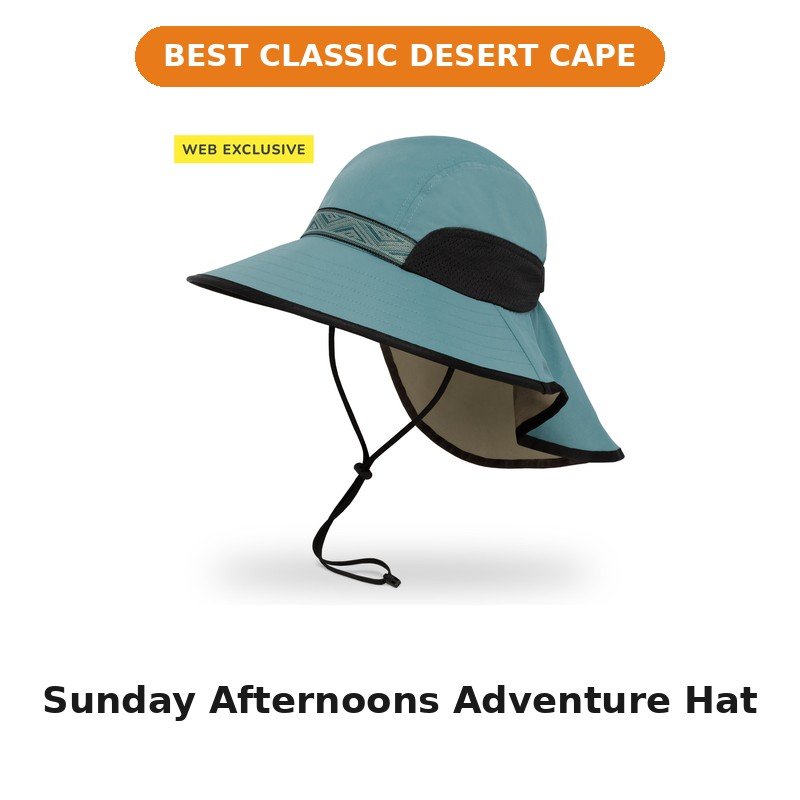
The original Adventure Hat has more physical shade behind the head than many brim-only models. The manufacturer lists a 7.5-inch cape, a size-dependent front brim of 3.75 to 4 inches, UPF 50+ fabric, and a 3-ounce weight. Its floating build, chin cord and sweatband also suit exposed campgrounds and lakeside walks.
The brim requires more careful packing than the Ultra Adventure foldable design: the maker says to pack it flat and not crease it. The UPF rating excludes the crown mesh. Reject this choice if you crush hats into a jacket pocket, expect frequent low-branch obstacles, or need easy removal of the cape for town use.
BEST REMOVABLE NECK CAPE
7. Outdoor Research Sun Runner Cap
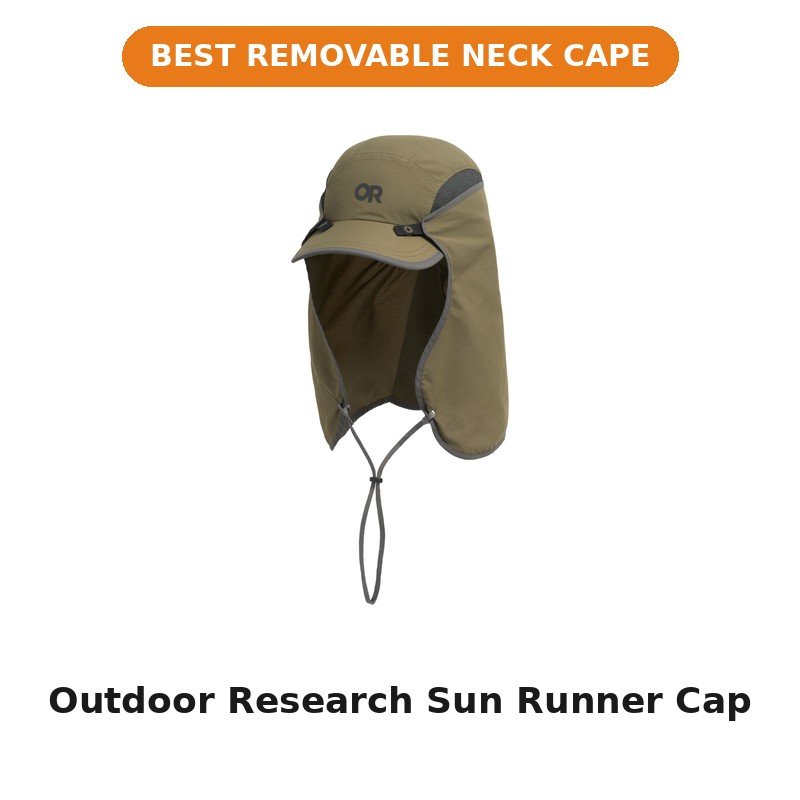
Choose the Sun Runner when your sun exposure changes throughout the day. Outdoor Research specifies UPF 40 main fabric, a 2.75-inch brim, 10.75-inch removable cape, external mesh panels, dark underbill and removable chin cord. With the cape attached it blocks more direct sun around ears and neck; remove it for walking under tree cover.
The extra fabric can make humid hiking feel enclosed, and a snug cape can alter peripheral vision. The manufacturer also flags PFAS restrictions for certain US states on current listings, so verify shipment availability. Skip it if you need UPF 50+ specifically, hate fabric against your jaw, or require an uninterrupted circular brim.
BEST ADJUSTABLE CAPE SYSTEM
8. Sunday Afternoons Sun Guide Cap
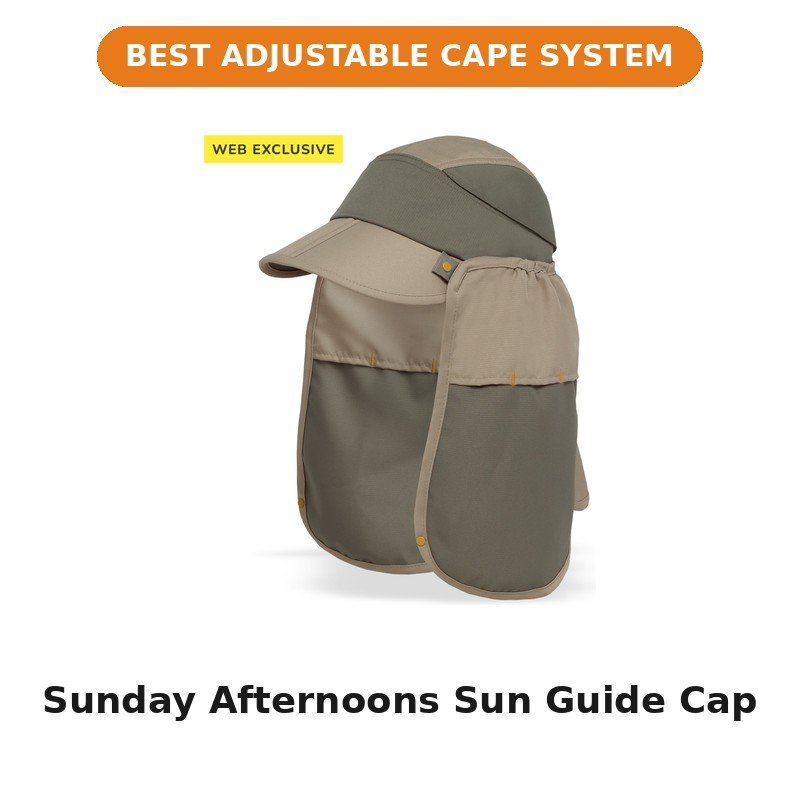
This model is for hikers who need ear and neck coverage but prefer a cap rather than a broad brim. It lists a 3-inch folding visor, 10-inch removable ventilated cape, UPF 50+ rated fabric, and 3.3-ounce weight. The cape has multiple wear configurations, and the Clamshell Brim folds for storage.
A windproof attachment claim should not be assumed from the cape clips or adjustment system. Verify the complete closure setup in photos before ordering. Reject the Sun Guide if you want a simple brim, cannot tolerate dangling fabric, or need mesh sections to carry the same rated UPF claim as the fabric panels.
BEST LONG-LIFE CLASSIC
9. Tilley LTM6 Airflo Sun Hat
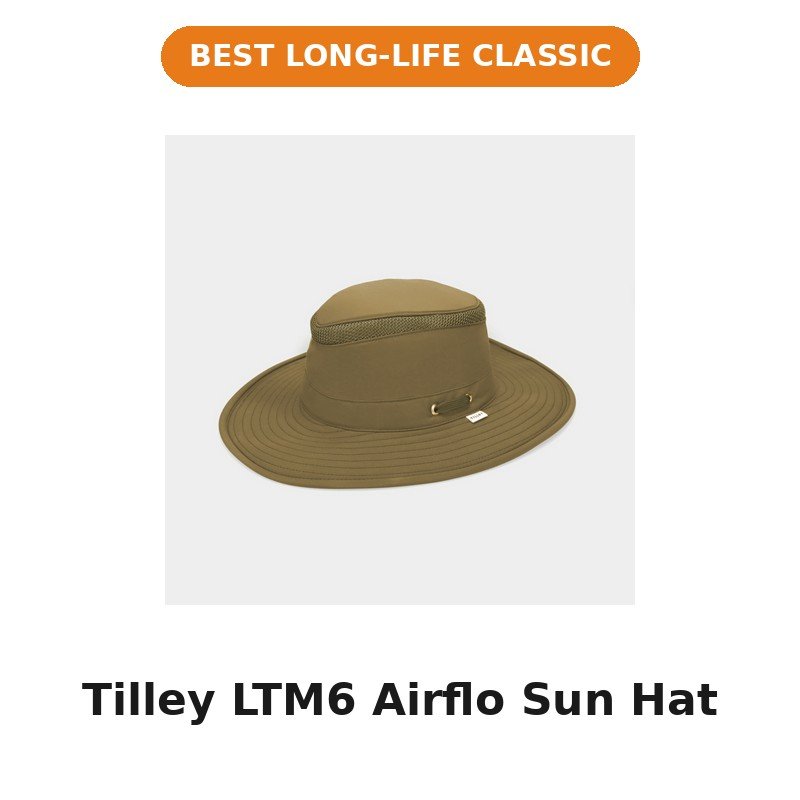
For buyers who want a durable general-purpose hat, the LTM6 combines UPF 50+ rated recycled nylon, a mesh Airflo crown, a wicking Hydrofil sweatband, and a tucked wind cord. Tilley gives 3.5-inch front and rear brim dimensions and 2.5-inch sides, along with a 4-ounce listed weight for the version reviewed. It also publishes detailed fitted sizing.
The fit is a real purchase decision: Tilley says this version fits snugly and suggests sizing up for its traditional fit. The comparatively structured brim and 4-ounce weight are less appealing for ultralight backpacking. Skip it if you need a fold-small sun cap or cannot try an appropriate numbered size before buying.
BEST STIFF BRIM
10. Shelta Firebird V2
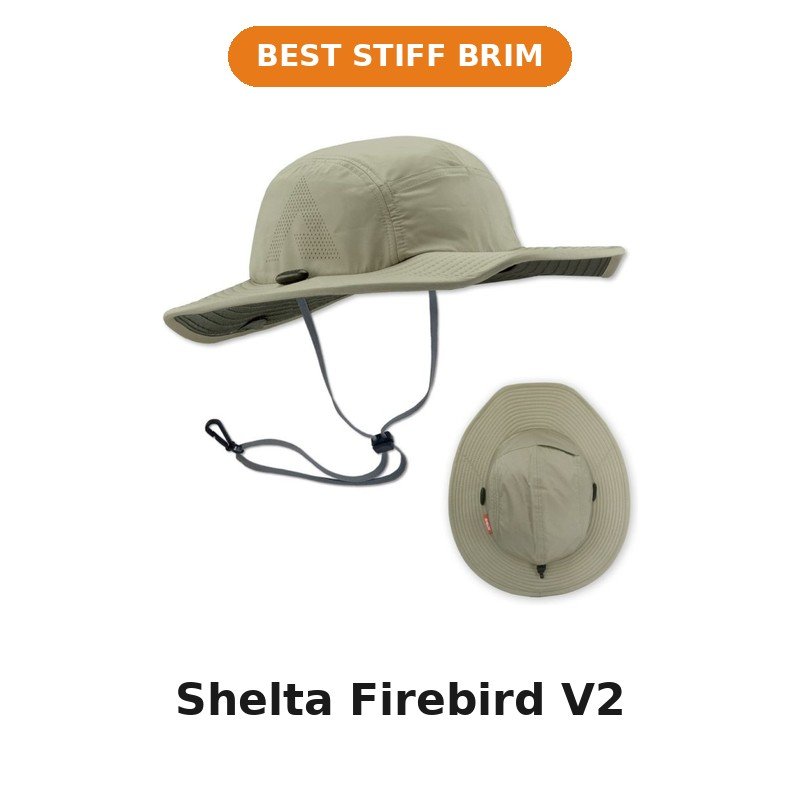
The Firebird V2 solves a specific frustration: brims that collapse with sweat or tilt down into your eyes. Shelta lists a 3-inch front brim, 2.75-inch side and rear brim, UPF 50+ fabric, 4-ounce M/L weight, laser-cut vents, moisture-management panels, and the patented No Flop brim. The convertible cord accommodates wind or calm conditions.
However, Shelta says not to fold or crease the visor, so it is not for hikers who habitually stuff hats inside tight pockets. The reviewed listing also advertises a final-sale option, making return terms important. Skip it if compact packability, rather than brim rigidity, is your priority.
BEST STRUCTURED TRAVEL HAT
11. Sunday Afternoons Charter Hat
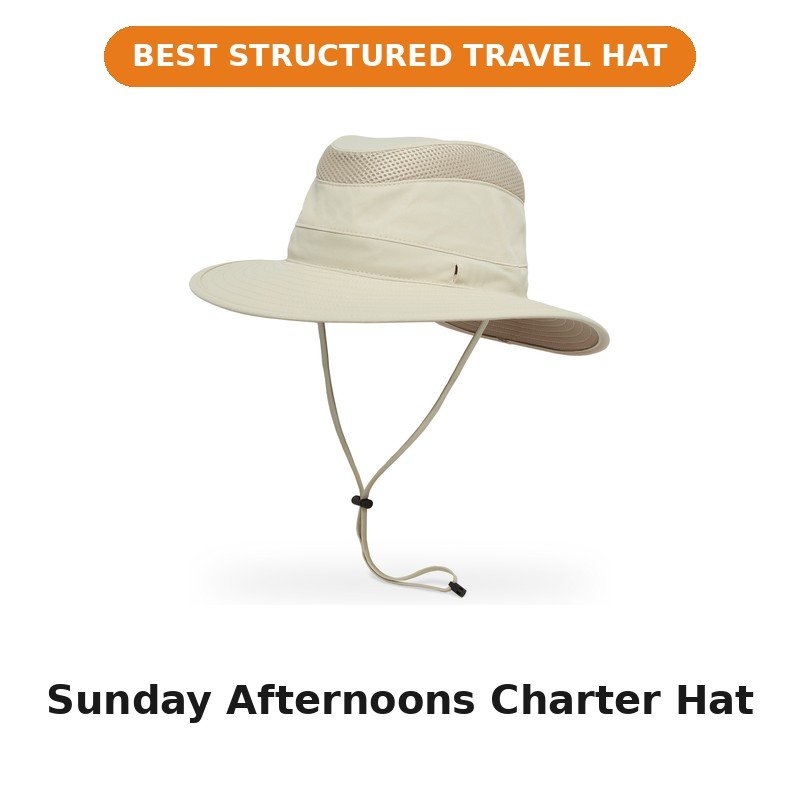
The Charter is a middle ground between a casual travel hat and a technical sun hat. Sunday Afternoons gives a 3-inch front and back brim, 2.5-inch side brim, UPF 50+ including mesh, and a 3.6-ounce weight. It also includes an internal adjustment, chinstrap, sunglass holder, and small crown pocket.
The hidden constraint is packing direction: the brand says to pack the brim flat and avoid creases. This is not as space-efficient as the crushable Brushline. Reject it if you need 4-inch side coverage or if everything in your luggage gets tightly compressed. A small hidden pocket is not a substitute for secure storage of valuables.
BEST PONYTAIL-FRIENDLY CAPE
12. Sunday Afternoons Sundancer Hat
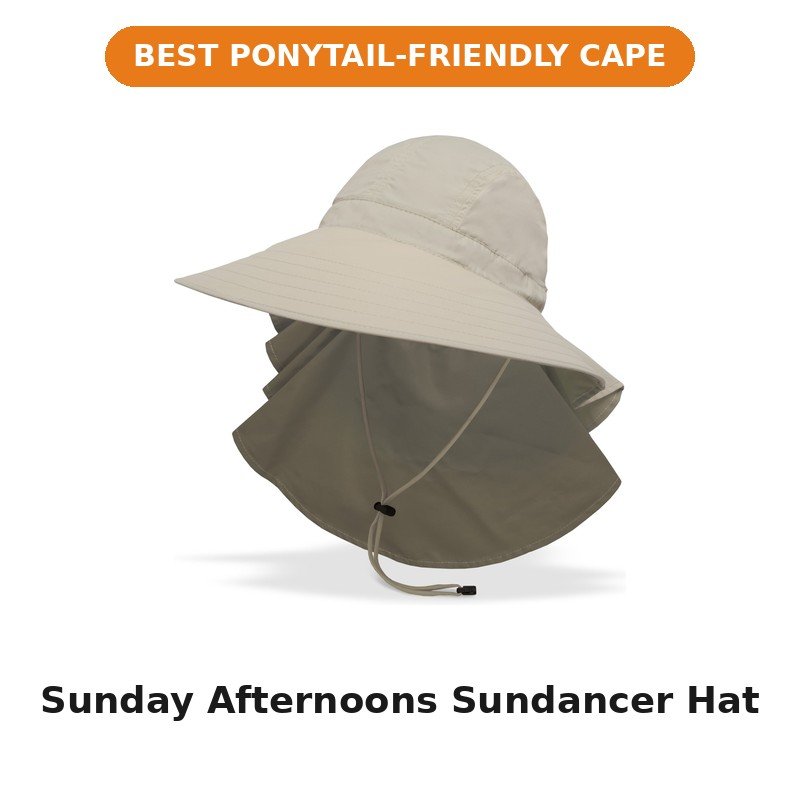
The Sundancer deliberately prioritizes generous head and neck shade over a tiny packing profile. Its manufacturer lists a 4.5-inch brim, 7.5-inch pleated cape, UPF 50+ fabric, and 2.9-ounce weight. The ponytail opening and adjustable chinstrap are helpful when conventional crown shapes fight hair volume or a tied-back hairstyle.
The brim is meant to be packed flat rather than rolled into a ball. Sunday Afternoons does not market this as a ventilated mesh crown, so do not assume it will feel as airy as the Helios. Skip it if you need maximum air movement, a detachable rear cape, or frequent pocket-size stowing.
BEST CRUSHABLE ALL-ROUNDER
13. Sunday Afternoons Brushline Bucket
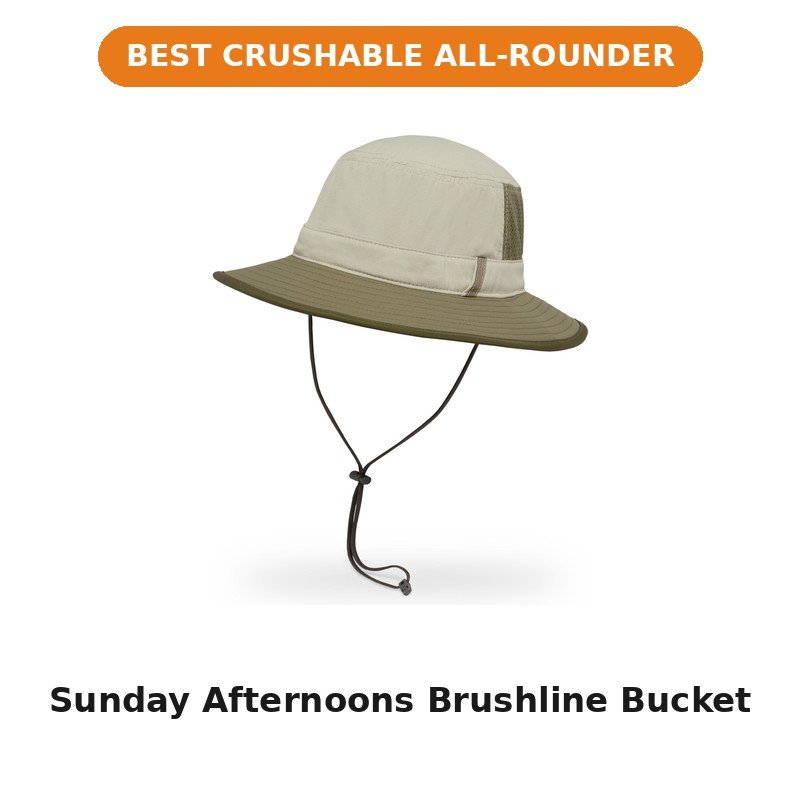
The Brushline Bucket works when pack practicality matters more than maximal shadow. It weighs 2.6 ounces and uses a 2.5-inch downsloping brim, with strategically ventilated crown panels and a wicking sweatband. The manufacturer explicitly describes the body as crushable and includes a sunglasses holder.
This is not a full desert-protection hat. The UPF 50+ fabric claim excludes mesh, and the cited specifications do not list a chinstrap. Skip it for consistently windy ridges or long open routes where a wider brim or cape would cover more neck and ear skin.
BEST REVERSIBLE
14. Sunday Afternoons Clear Creek Boonie
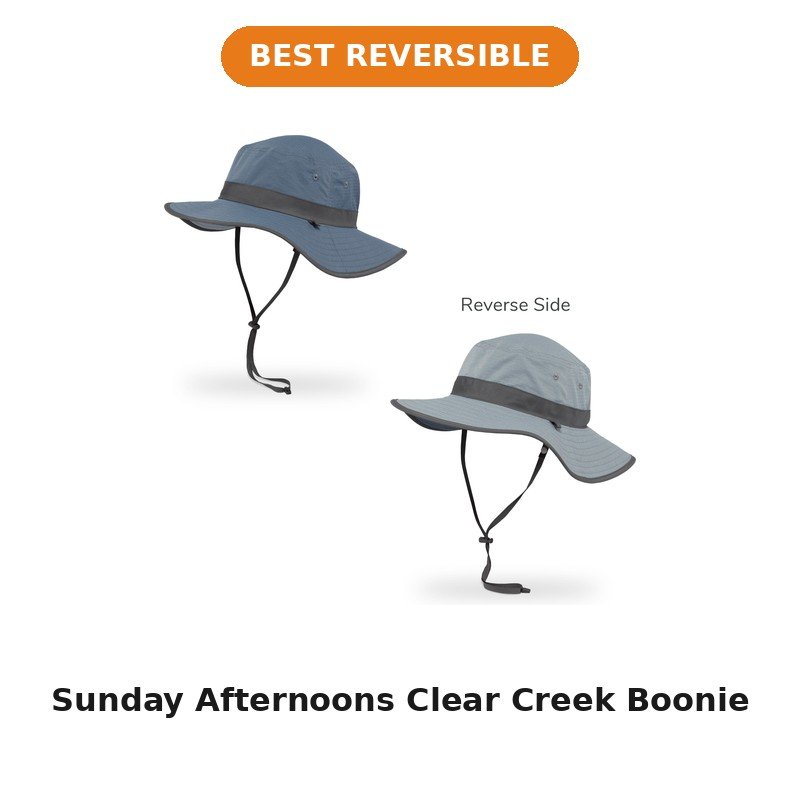
The Clear Creek Boonie pairs a 3-inch flexible brim with reversible fabric and a removable chinstrap. Sunday Afternoons lists UPF 50+ protection, adjustable sizing, a PFAS-free DWR and 3.1-ounce weight. The soft brim makes it easier to store in a daypack than structured safari silhouettes.
Do not confuse reversible fabric with a technical vent system: the maker does not publish mesh-crown ventilation for this hat. The wider 3-inch brim also can flop when it gets wet. Reject it for strenuous desert hikes if ventilation and neck cape coverage outrank style flexibility.
BEST CLASSIC BUCKET
15. Sunday Afternoons Solar Bucket
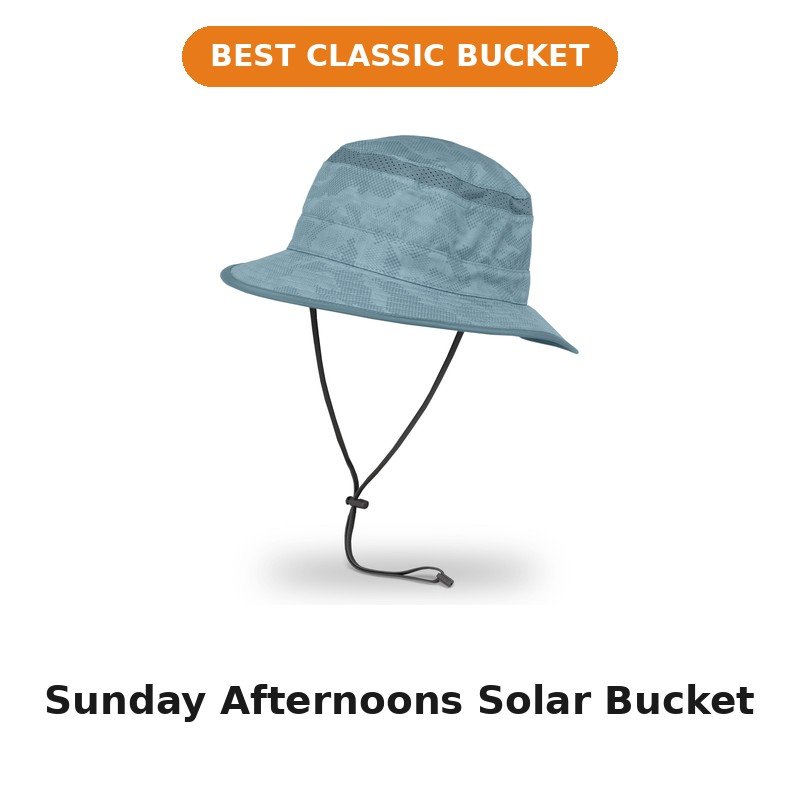
The Solar Bucket is a comfortable entry point for trail hikers who normally wear ordinary caps. Its downsloping 2.25-inch brim is supplemented by a wicking sweatband, crown ventilation, chin strap, and adjustable fit. The maker lists a 2.5-ounce weight and a crushable body.
The shorter brim is a measurable drawback rather than a mystery: it shades less surface than the Latitude or Sundancer. The mesh is excluded from the UPF 50+ rating. Skip it if you burn easily on the sides of your face or want serious neck coverage without an extra collar or sun hoodie.
BEST WET-WEATHER BUCKET
16. Sunday Afternoons Ultra Storm Bucket
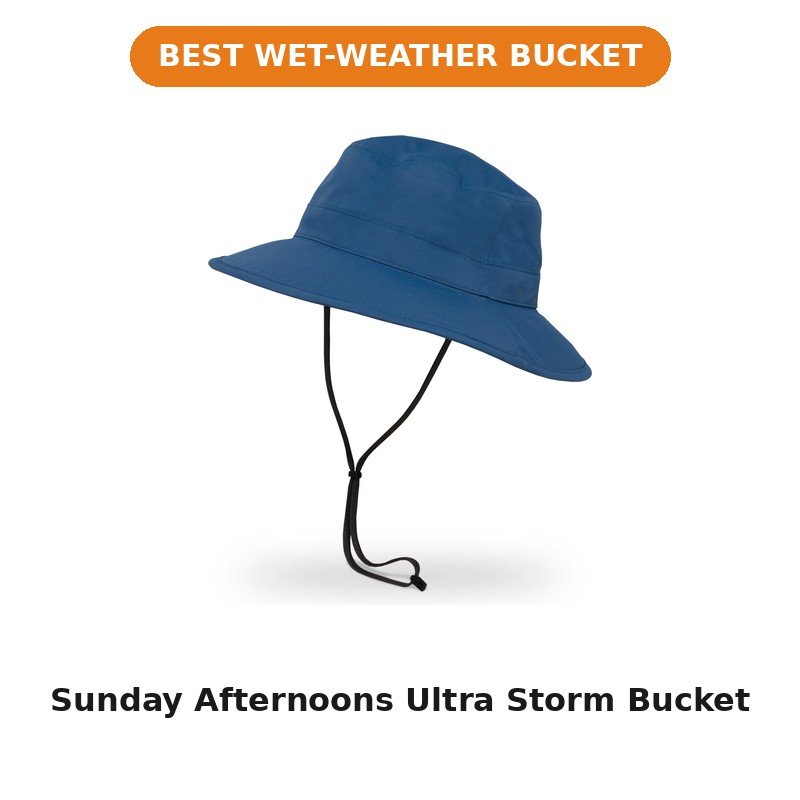
The Ultra Storm Bucket is the choice if you routinely alternate between bright sun and heavy rain. Sunday Afternoons explicitly lists a 10k waterproof membrane, fully taped seams, a 2.75-inch downsloping brim, UPF 50+ rating, and 2.5-ounce weight. Unlike ordinary DWR treatments, this is a manufacturer-stated waterproof system.
The downside of the waterproof construction is the ventilation compromise. A lined, seam-taped hat may feel less airy during a fast uphill climb than a mesh-crown model. Skip this if your primary use is hot desert hiking and you rarely see rain, or if you need neck coverage beyond the 2.75-inch brim.
BEST FOLDING EVERYDAY CAP
17. Sunday Afternoons Sun Tripper Cap
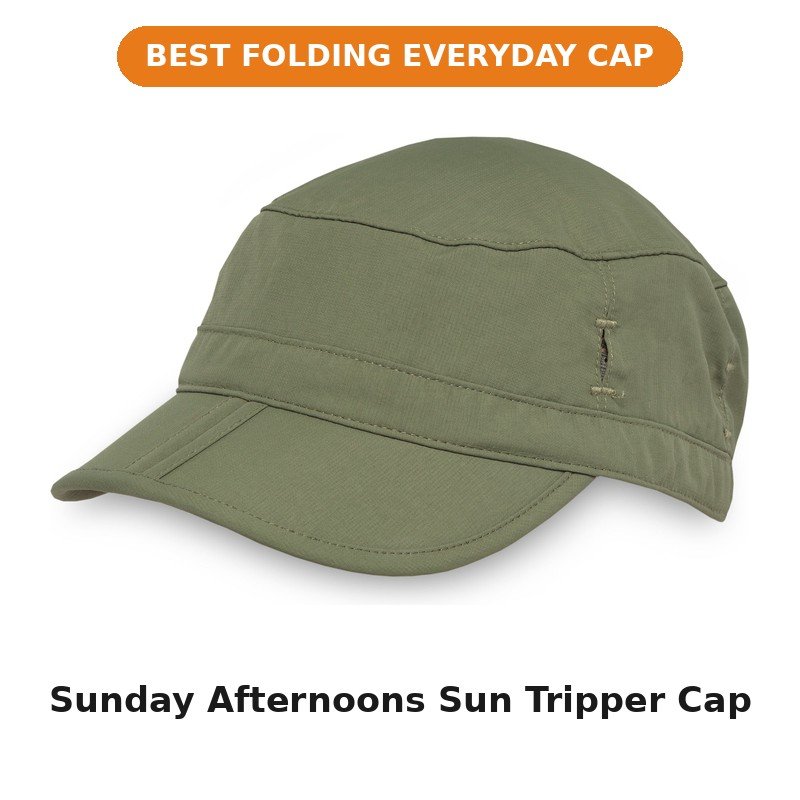
The Sun Tripper is an option for mixed hiking and travel days when you want ordinary cap styling. The maker gives a 2.25-inch folding visor, UPF 50+ crown fabric, hidden ventilation, 2.6-ounce weight, and internal crown pocket. Its Clamshell Brim folds in a way a conventional stiff baseball bill cannot.
The greatest weakness is coverage geometry. It does not claim to protect the ears or neck and the product listing does not show a separate chin strap. Skip this on long open hikes unless you pair it with other clothing or sunscreen, and consider a wide-brim model for exposed midday routes.
BEST WIDE FIELD OF VIEW
18. Sunday Afternoons Sport Hat
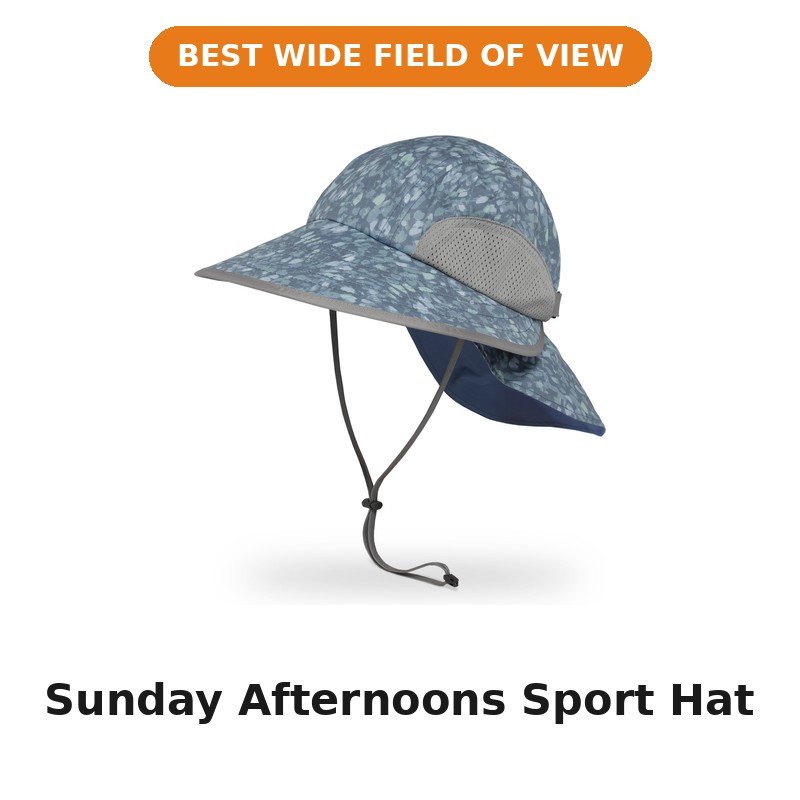
The Sport Hat is aimed at active movement where a normal full rim can obstruct sight lines. Sunday Afternoons lists a 4-inch crescent brim, 5-inch cape, mesh ventilation, 2.2-ounce weight, a dark underbrim, and adjustable chinstrap. It gives a broader front visor without asking you to look through the edge of a symmetrical brim.
The published UPF 50+ applies to rated fabrics but not the mesh. Its shape is also not a folding bill: the care instructions say to pack flat and avoid creasing. Skip it if you want a conventional appearance, hate a fixed rear cape, or plan to repeatedly crush your hat into narrow pockets.
BEST ULTRALIGHT CAP
19. Sunday Afternoons VaporLite Stride Cap
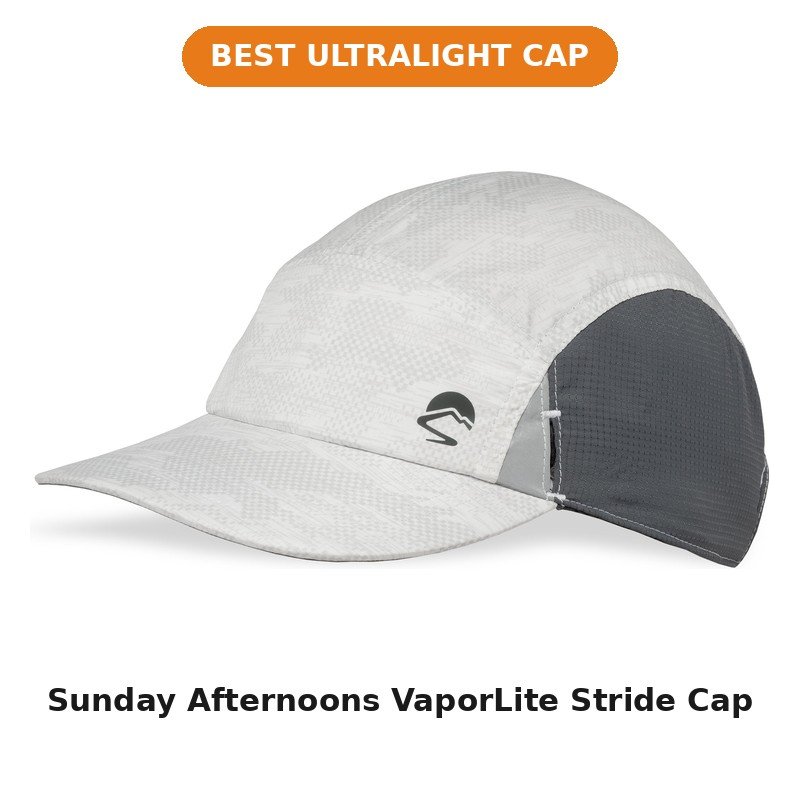
The VaporLite Stride is the pack-light choice among true fabric caps here. At 1.3 ounces, it has a 2.5-inch crushable brim, wicking headband, ponytail-friendly fit, and reflective detailing. Sunday Afternoons lists UPF 50+ protection for rated material, while specifically excluding mesh.
A 1.3-ounce cap should not be treated as interchangeable with a brim-and-cape hat. Its limited physical shade may require a separate sun hoodie and sunscreen, which changes the real system you carry. Skip it if you need all-around coverage or a chin cord to secure the hat in strong wind.
<
BEST FOR FAST MOVEMENT
20. Outdoor Research Swift Cap
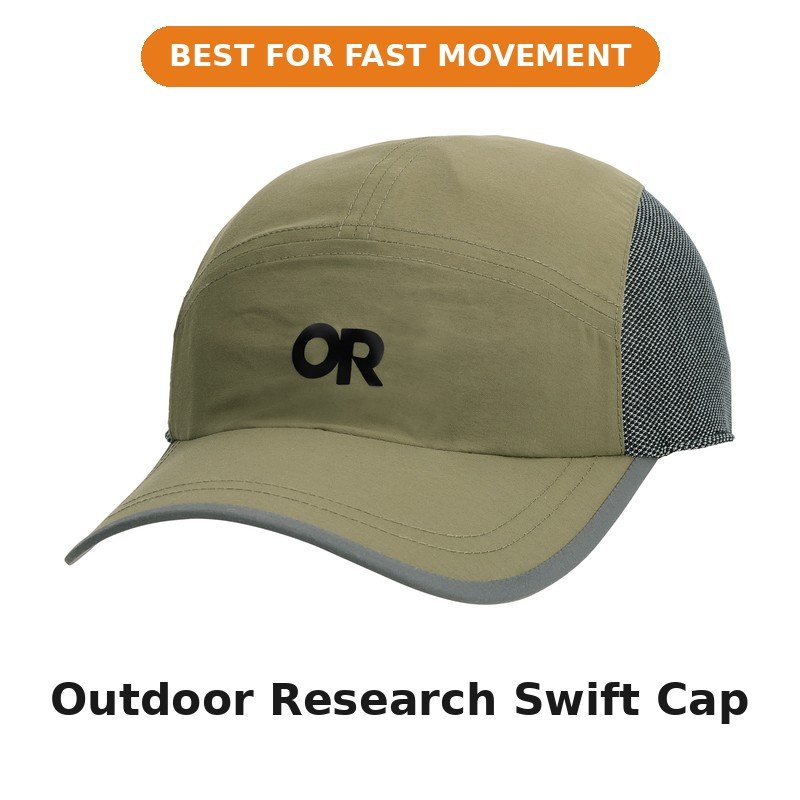
The Swift is a simple tool for trail runs and high-output hikes. Outdoor Research specifies UPF 40 main fabric, a 2.5-ounce weight, mesh side panels, a wicking TransAction headband, dark underbrim, and a rear quick-release buckle. The curved visor occupies less space around the head than a wide circular brim.
The manufacturer lists one-size head fit at about 21 to 24 inches around. That range is not guaranteed comfortable for every crown shape, and the bill leaves neck and ears uncovered. Skip this hat if you need a detachable cape, adjustable chin cord, or a documented full-brim width.
BEST COTTON HERITAGE
21. Tilley T3 Classic
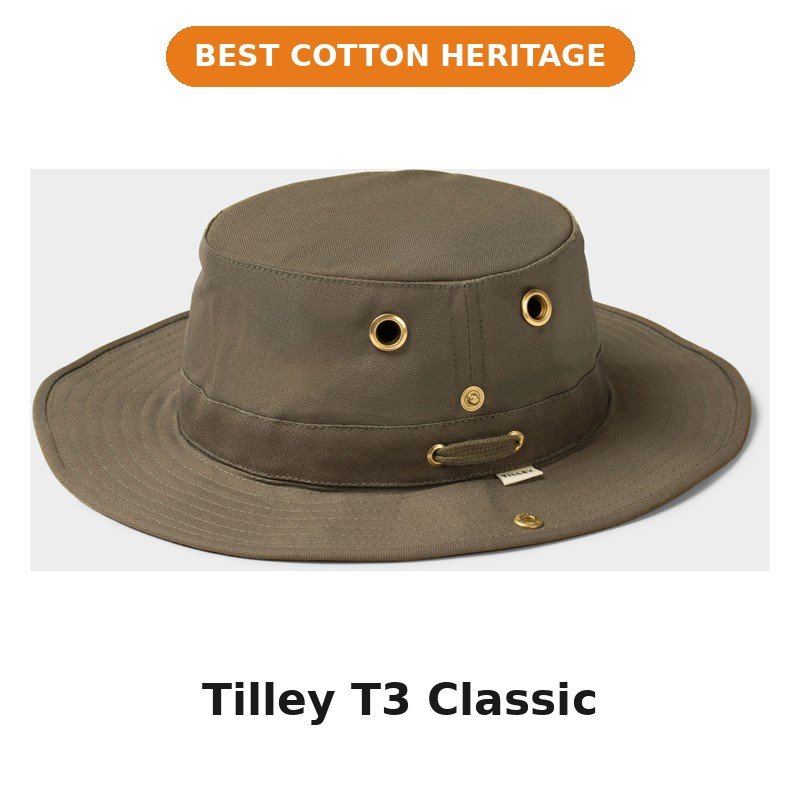
The T3 is for hikers who value a classic cotton hat and correct fitted sizing over minimum weight. Tilley lists a UPF 50+ rating, 164-gram weight, wind cord, metal vent grommets, adjustable snap-up brim sides, and a wicking Hydrofil headband. It is described as made in Canada and uses 100% cotton.
Cotton is the clear tradeoff for backpacking: it is heavier than comparable nylon models and can remain wet longer after soaking. The flat brim also occupies more storage space. Skip it for very humid multi-day treks where quick drying and minimal bulk are more important than heritage styling.
BEST SWEAT-ACTIVATED NECK SHADE
22. Columbia Coolhead II Zero Booney
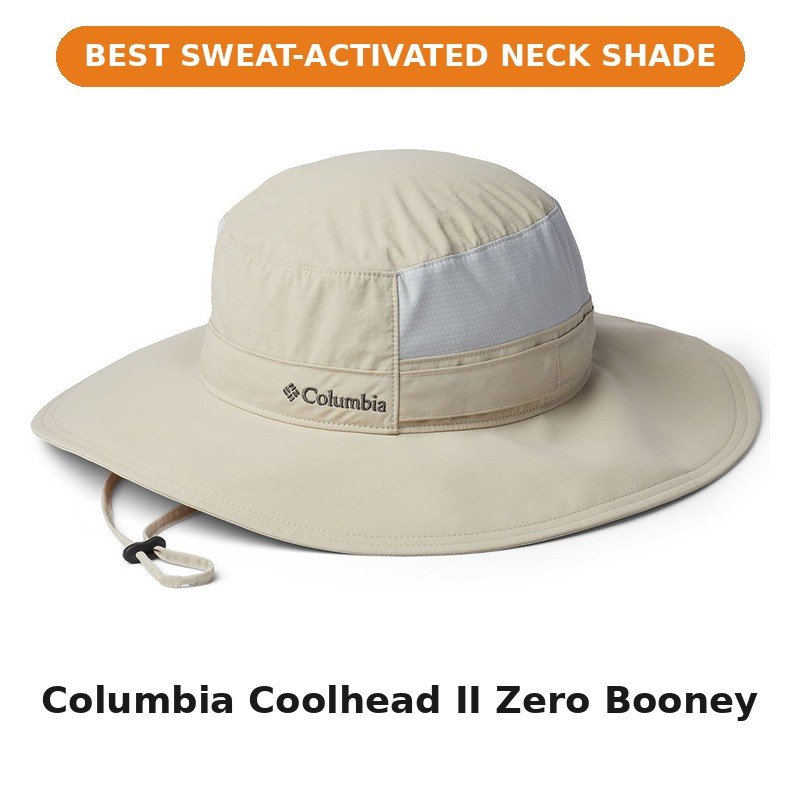
The Coolhead II Zero Booney targets hot, exposed hiking. Columbia lists a 3.5-inch brim, UPF 50 Omni-Shade fabric, Omni-Freeze Zero sweat-activated cooling technology, a packable cape, chinstrap, and adjustable rear drawcord. The combination can be appealing if you want neck shade without permanently wearing a cape.
Cooling claims should not be mistaken for a measured temperature reduction under your trail conditions. The manufacturer page does not provide a hat weight, so we leave it unstated rather than copying a retailer guess. The US manufacturer listing currently shows out of stock, so verify retailer availability. Skip this hat if you need a guaranteed ounce budget or do not want to manage a cape on windy ascents.
BEST MAXIMUM CIRCULAR SHADE
23. KAVU Chillba
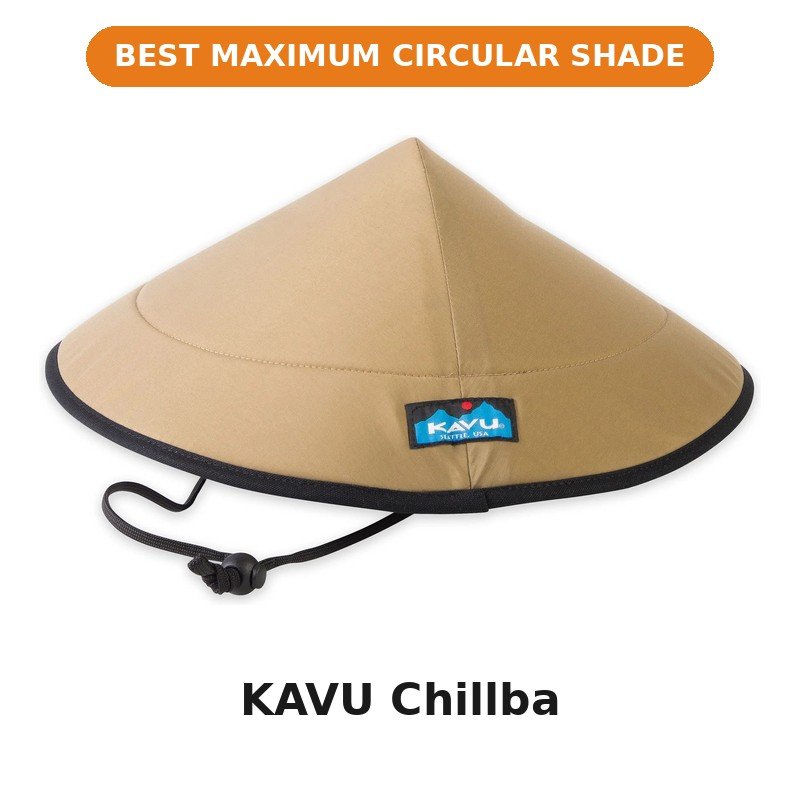
The Chillba is intentionally different from a standard backpacking cap. KAVU lists UPF 50+ fabric, a quick-dry polyester mesh headpiece, adjustable toggle, water-resistant broad circular brim, flotation, and an approximately 20.5 to 25.5-inch one-size fit range. It can provide extensive geometric shade when standing in open sun.
This is not a pocket sun hat. KAVU says to roll the brim gently and never crease it flat, or the brim may retain the crease. Because no weight or numerical brim width is stated on the cited product page, we leave those fields blank. Skip it if your route is windy, densely wooded, or requires compact packing.
The Bottom Line: Which Hiking Hat Should You Choose?
- Best all-around for exposed hiking: Sunday Afternoons Ultra Adventure, with 3.5-inch brim, 6-inch cape and 2.6-ounce weight.
- Best budget-friendly boonie: Columbia Bora Bora II, with UPF 50 nylon and a 3-inch brim, while acknowledging its unrated mesh.
- Best basic lightweight 360-degree brim: Outdoor Research Helios 2026, with UPF 50+, 2.75-inch brim, and 2.41-ounce weight.
- Best for exposed neck without a fabric cape: Sunday Afternoons Latitude, with an unusually deep 4.75-inch rear brim.
- Best for variable sun and shade: Outdoor Research Sun Runner or Sunday Afternoons Sun Guide for removable cape designs.
- Best small-pocket option: Sunday Afternoons Brushline Bucket, but accept a shorter brim and reduced wind security.
- Best rain-oriented alternative: Sunday Afternoons Ultra Storm Bucket, with manufacturer-specified taped seams and 10k waterproof membrane.
Final decision: buy the smallest hat that shades the skin you need covered and still stays comfortable on the windiest, sweatiest part of your actual hike. A UPF label cannot answer that decision for you.
Related reading on The Bridge: sun protection layering