
Disclosure: The Bridge is reader-supported. When you buy through links on our site, we may earn a commission at no extra cost to you. Learn more.
Updated October 22, 2026 | 14 manufacturer-sourced jackets | US buying guide
Best Winter Jacket for Extreme Cold in 2026: 14 Parkas Compared
You need a winter jacket that keeps heat in during the actual cold you face, whether that means waiting outside at 0°F (-18°C), walking in damp snow, or standing in harsher wind. Here is how to choose by exposure, waterproofing, insulation mass and coverage rather than a vague “extreme” tag.
This guide is for shoppers in the United States who need a genuine cold-weather outer layer, not a lightweight rain shell or a fashion-only puffer. We compare 14 distinct models using documented specifications from manufacturers and REI listings. We have not worn these jackets side by side or measured thermal performance in a laboratory, and the editorial scores below do not pretend otherwise.
Quick answer: Start with the Fjällräven Nuuk for cold, wet city exposure; the REI Stormhenge 850 Down Hybrid Parka for waterproof value; the Rab Neutrino Pro for a much lighter packed mountain layer; and the Canada Goose Expedition only for truly sustained low-motion cold. For wet winters on a premium budget, examine the Patagonia Stormshadow or Arc’teryx Therme.
How to Choose a Winter Jacket for Extreme Cold
1. Start with the exposure, not a temperature label
Standing and walking are different tasks. Waiting for transit, watching an outdoor game or conducting stop-and-go work produces much less body heat than climbing a hill or shoveling snow. A longer, higher-loft parka with a large hood and storm cuffs makes sense for the first category. A lighter layer or adjustable system may be easier to manage for the second. Wind-chill forecasts describe how exposed skin can lose heat; they do not award a standardized safe temperature to a particular jacket.
The same nominal air temperature also behaves differently in damp rain, blowing snow, strong wind and dry, still conditions. Define how many minutes you normally spend outside, whether you can take shelter, and whether wet clothing is plausible. If exposure is genuinely hazardous, follow local official weather guidance and plan appropriate full-body equipment. No jacket in this list alone guarantees safety from cold injury.
2. Compare insulation mass, fill power and construction
Down fill power is a loft measurement, expressed as cubic inches per ounce of down under a standard test, not an index where 800 automatically beats 600. Fill weight matters too: Rab lists 800-fill and 7.5 oz (212 g) of down in its Neutrino Pro medium; Fjällräven lists 600-fill and 10.4 oz (295 g) in its Singi Down size medium. You still cannot reliably calculate one jacket’s warmth from those two numbers because baffle design, cut, drafts, compression, wind and wetness differ. Where a manufacturer does not publish down weight, we do not guess.
Synthetic insulation commonly appears as a fabric-area measurement such as 200 g/m² or 250 g/m², though some sites abbreviate it as 200 g insulation. That is not interchangeable with the total ounces of down sewn into a coat. Synthetic fill tends to be a practical choice where moisture and repeated daily use are likely; down is especially attractive when loft-to-packed-weight matters. Box baffles aim to keep loft more even, while stitch-through construction can introduce narrower cold lines. Neither automatically cancels poor fit.
3. Read the shell claim literally
Water-resistant does not equal waterproof. A durable water-repellent (DWR) finish helps liquid bead on the outer face, but a waterproof membrane and correctly sealed seams provide the more relevant barrier for prolonged wet weather. The Nuuk states a 10,000 mm water column; Rab Valiance states a 20,000 mm hydrostatic head. The Columbia Landroamer says critically seam sealed, which is a narrower claim than fully seam sealed. GORE-TEX ePE, H2No, DryVent and HydroWall identify different branded constructions, so avoid assigning them the same performance number when that number is not published.
If you already own a compatible insulating layer and want more flexibility on a winter hike, consider waterproof shell layering rather than buying a second fully integrated parka. The outer shell must fit over the loft without flattening it; an undersized shell can reduce comfort and insulation. Do not assume a budget shell alone makes an expedition layer suitable for freezing rain.
4. Test fit while sitting, reaching and wearing gloves
Wear the sweater or midlayer you actually use. Fully close the jacket, reach forward to mimic driving, raise both arms, sit down and climb a step. Check whether cuffs lift, the collar rubs the chin, the hood obstructs peripheral vision, or the hem rides upward. A two-way zipper can make sitting and stair climbing much easier in a long parka, but only if it engages reliably with cold hands. An oversized hood may fit a winter hat, yet a sloppy opening can let wind in unless tightened.
Look for a neck baffle, storm cuffs, waist drawcord and hem length before getting distracted by pocket counts. Powder skirts or snow skirts help block snow blown up from below in some specialty garments, including the Canada Goose Expedition, but you do not need a ski-style skirt to commute through a city. One functional zipper that works in mittens may matter more than three extra security pockets.
5. Eliminate unsuitable coats before comparing scores
Shortlist verified waterproof membranes: REI Stormhenge, Patagonia Jackson Glacier, Patagonia Tres, Rab Valiance, Arc’teryx Therme, Patagonia Stormshadow and The North Face McMurdo. The Columbia listing states critical seam sealing, not full seam sealing.
Start with long coverage and closed draft points. Nuuk, Singi, Expedition, Stormshadow and a verified in-stock Coze are more relevant than a compact puffy solely because of fill power.
Look at Rab Neutrino Pro for packability, or Rab Valiance for a waterproof integrated jacket. Manage perspiration and carry a protection system for rest breaks.
Compare Columbia’s published $240 list and REI’s $299 parka against premium models. Check stock, and check California/New York/Colorado shipping restrictions before selecting Outdoor Research Coze or Mountain Hardwear Absolute Zero.
14 Winter Jackets Compared: Published Specifications
The numbers below are reported manufacturer or REI listing values, sometimes for a specified sample size. Not verified means a comparable official number was not available, not that the jacket has zero insulation or weighs nothing.
| Jacket | Insulation | Shell | Published weight | Published back length | Skip when… |
|---|---|---|---|---|---|
| Fjällräven Nuuk Parka M | 250 g/m² synthetic polyester | Waterproof Hydratic; 10,000 mm water column | 4 lb 0 oz (1,820 g), size M | 34.6 in (88 cm), size M | Skip for packable travel: size M weighs approximately 4 lb |
| REI Co-op Stormhenge 850 Down Hybrid Parka – Men’s | 850-fill goose down with 180/80 g synthetic zones | Fully seam-sealed HydroWall 2-layer waterproof shell | 1 lb 15 oz (879 g), listed model | 35.5 in (90.2 cm) | Skip if you insist on an all-synthetic insulation system |
| Patagonia Jackson Glacier Parka – Men’s | 700-fill-power recycled down | H2No 2-layer waterproof/breathable shell | 2 lb 9.2 oz (1,168 g) | Long parka; exact length not published | Skip for ultralight backpacking: 41.2 oz is not a packable puffy weight |
| Patagonia Tres 3-in-1 Parka – Men’s | 700-fill-power recycled down removable jacket | H2No 2-layer waterproof outer shell | 2 lb 15.3 oz (1,341 g), complete system | Long parka; exact length not published | Skip for simple, daily extreme-cold use if you will never separate the layers |
| The North Face McMurdo Parka – Men’s | 600-fill recycled waterfowl down | Seam-sealed DryVent 2-layer waterproof shell | Not verified in official listing | 31.75 in (80.6 cm) | Skip if you need mid-thigh or knee coverage; 31.75 in back |
| Outdoor Research Coze Down Parka – Women’s | 700+ fill responsibly sourced down | Water-resistant outer; not waterproof-rated | 2 lb 3.5 oz (1,006 g) | 43 in (109.2 cm) | Skip for sustained rain: shell is only water-resistant |
| Rab Neutrino Pro Down Jacket – Men’s | 800-fill goose down; 7.5 oz down in size M | Pertex Quantum Pro weather-resistant shell; not waterproof | 1 lb 3.9 oz (563 g), size M | 30.3 in (77 cm), size M | Skip as a standalone shell in rain; not a verified waterproof jacket |
| Rab Valiance Waterproof Down Jacket – Men’s | 700-fill recycled down; 7.2 oz down in size M | Pertex Shield 2-layer; 20,000 mm hydrostatic head | 1 lb 13.3 oz (832 g), size M | 32.1 in (81.5 cm), size M | Skip if thigh coverage outranks walking mobility: 32.1 in back |
| Canada Goose Expedition Parka | 625-fill down; 80% down/20% feathers | Water-repellent Arctic Tech outer; not rated as waterproof membrane | Not verified on referenced official page | Parka coverage; exact back length not verified | Skip if you require a waterproof membrane in prolonged rain |
| Arc’teryx Therme Down Parka – Men’s | 750-fill goose down, synthetic moisture-zone mapping | 2-layer GORE-TEX ePE waterproof shell | 2 lb 11.6 oz (1,230 g) | 34 in (86 cm), size M | Skip if $900 outerwear is poor value for your exposure frequency |
| Columbia Landroamer II Parka – Men’s | 200 g Microtemp XF II synthetic + Omni-Heat Infinity | Omni-Tech waterproof fabric, critically seam sealed | Not verified on official page | 33 in (83.8 cm), regular style | Skip if full seam sealing is mandatory: manufacturer says critically sealed |
| Fjällräven Singi Down Jacket M | 600-fill down; 10.4 oz (295 g) down fill | Water resistant G-1000; not membrane waterproof | 3 lb 13.7 oz (1,750 g), size M | 35.8 in (91 cm) | Skip for sustained wet weather: G-1000 is water resistant, not waterproof |
| Patagonia Stormshadow Parka – Men’s | 700-fill-power recycled down | 2-layer GORE-TEX ePE waterproof/breathable shell | 2 lb 9.7 oz (1,182 g) | Parka; exact published center-back length not verified | Skip if $899 is unjustifiable for how often you face cold wet weather |
| Mountain Hardwear Absolute Zero Parka – Men’s | 800-fill down; 17 oz (481 g) down in size M | Welded protective construction; verified membrane HH not provided | 3 lb 0.6 oz (1,378 g), size M | 31 in (78.7 cm) | Skip for everyday commuting and casual errands |
How the four editorial scores work
We assign Cold Coverage, Weather Barrier, Mobility & Fit, and Practical Value on the same 1-to-10 scale for each jacket. Scores interpret published design information. They are not lab-measured insulation, waterproofness, field-tested breathability or a claim we owned the product. A 10 in Cold Coverage is a decision-framework maximum, not an assurance at a particular air temperature.
Individual Winter Jacket Reviews
1. Fjällräven Nuuk Parka M
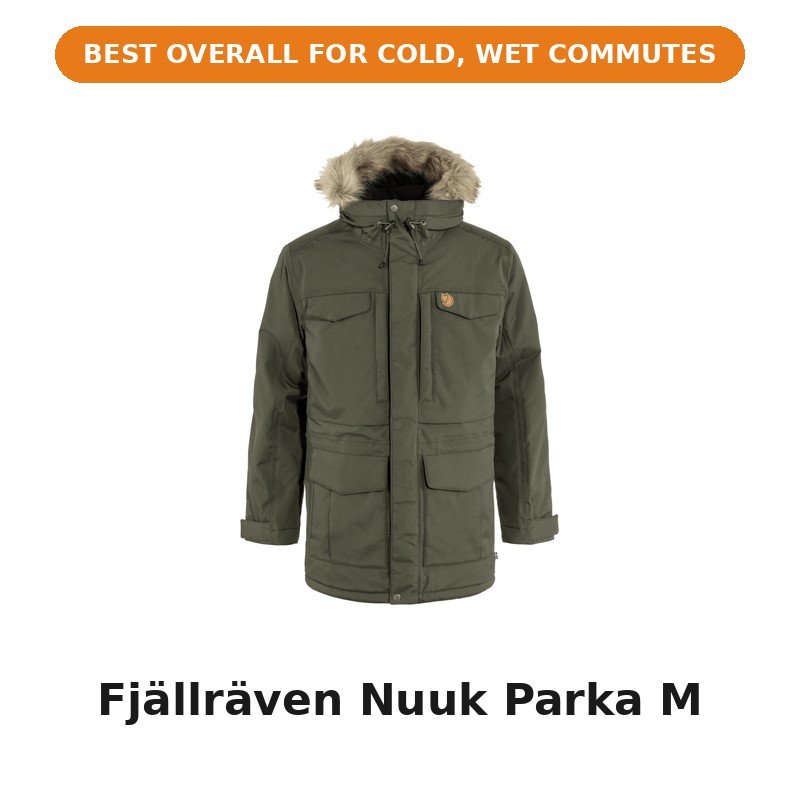
Best for: People walking, waiting or commuting in cold, damp weather who want one protective layer rather than a shell-plus-puffy kit.
The Nuuk combines a waterproof Hydratic membrane with a substantial synthetic fill and a below-seat cut. That pairing matters for the person who spends 20 minutes waiting for a bus, then walks through slush: unlike a simple DWR-only parka, the outer construction is designed for rain as well as snow, while the insulation is not dependent on down loft. A shaped hood, waist drawcord and two-way front zipper offer useful control of drafts and stride comfort.
The manufacturer publishes an unusually useful 10,000 mm water-column figure and 250 g/m² fill specification, but neither becomes a universal temperature rating. The published size-M weight is 1,820 g (about four pounds), and Fjällräven explicitly lists no ventilation system. That makes it a poor layer to carry on a backpacking trip or to wear while working hard uphill. Because the fill is synthetic rather than down, comparing it to a 700-fill-power coat on fill numbers alone is meaningless.
Check the relaxed layering fit with a sweater, reach forward as if driving, and practice the two-way zipper with gloves on. For severe wet cold and urban waiting, this is our default starting point; for high-output travel or a light suitcase, skip it.
Manufacturer-verified features:
- Waterproof, breathable Hydratic membrane
- 10,000 mm water column
- 250 g/m² recycled synthetic filling
- Two-way zip, waist drawcord, adjustable storm hood
- 4 lb 0 oz (1,820 g) in size M
Verification source: Manufacturer listing. What to verify at checkout: size, current version, inventory and location-based shipping restrictions.
2. REI Co-op Stormhenge 850 Down Hybrid Parka – Men’s
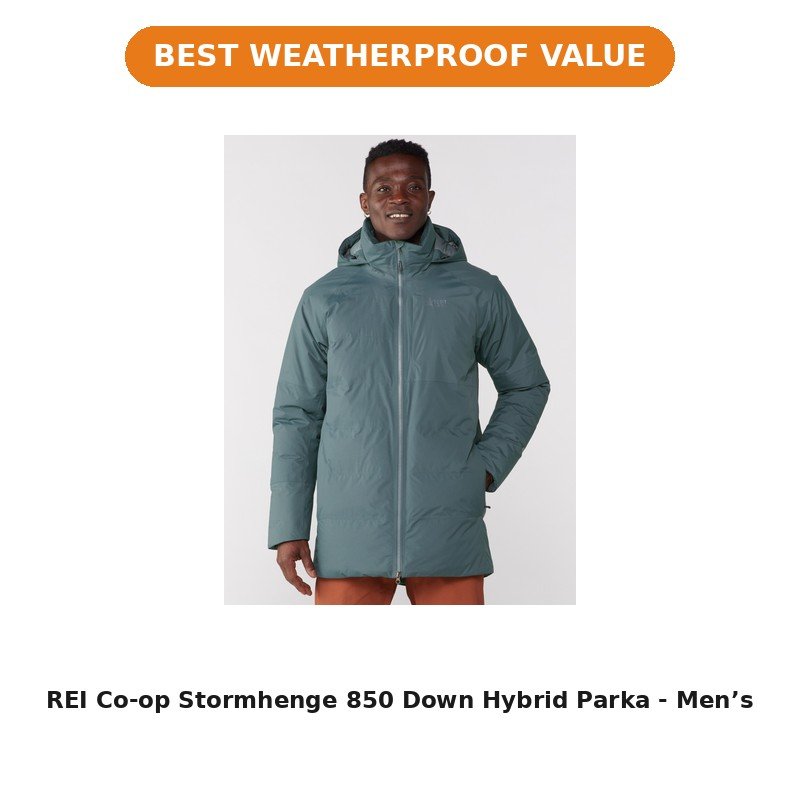
Best for: US buyers who need a waterproof parka with strong published construction details but do not want to spend premium expedition-coat money.
The current Stormhenge 850 Down Hybrid Parka checks boxes usually split between an insulated jacket and an outer shell. REI lists a fully seam-sealed, two-layer HydroWall fabric, 850-fill goose down in mapped zones and synthetic insulation in other zones, including areas that may see moisture. The 35.5-inch thigh-length coverage is a more meaningful cold-weather feature than fill power alone: it helps limit drafts around the seat and lower torso during transit and standing.
The important SKU trap is that REI has several Stormhenge generations and jacket-length products with different weights and lengths. This review uses the current 850 Down Hybrid Parka page with a listed weight of 1 lb 15 oz, not the older Stormhenge Down Hybrid Parka page reporting 2 lb 3 oz. The two-way waterproof front zipper helps movement; the manufacturer does not list pit zips on this parka. Confirm which listing and size you are ordering before treating numbers as interchangeable.
The trade-off is that the fitted, technical silhouette is less understated than a classic city wool-look coat, and down zones still require correct laundering and complete drying. This is a strong value choice, not an independently tested promise for a particular subzero temperature.
Manufacturer-verified features:
- 850-fill goose down, mapped synthetic insulation
- HydroWall 2-layer waterproof fabric with sealed seams
- 180 g and 80 g synthetic insulation zones
- 35.5 in center-back length, two-way zip
- 1 lb 15 oz published weight for current model
Verification source: REI retailer listing. What to verify at checkout: size, current version, inventory and location-based shipping restrictions.
3. Patagonia Jackson Glacier Parka – Men’s
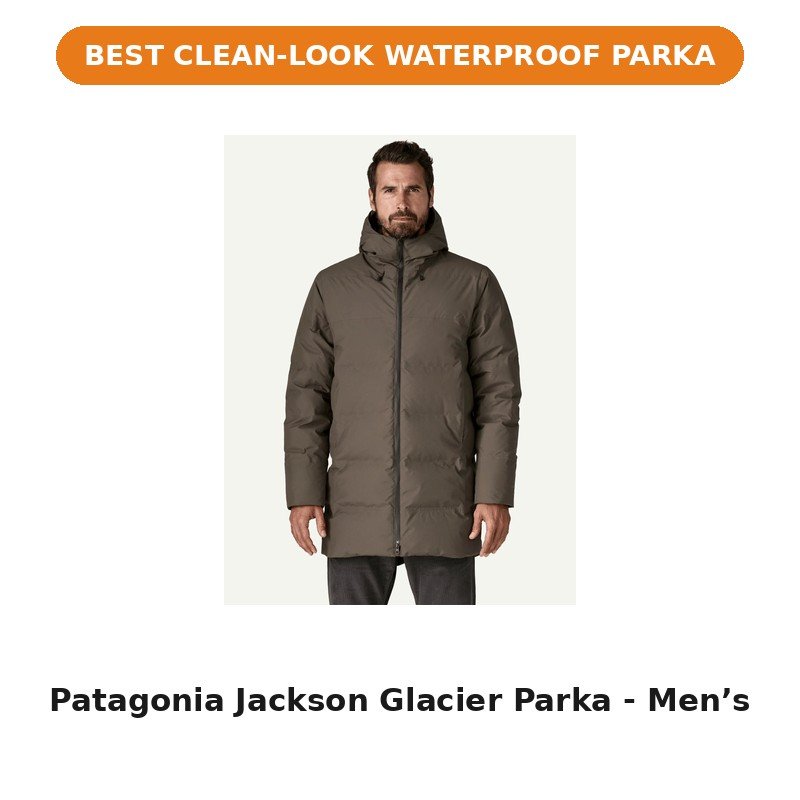
Best for: City wearers who want protection from cold rain, blowing wet snow and wind without a highly technical mountaineering look.
Patagonia gives the Jackson Glacier an H2No two-layer waterproof shell and 700-fill recycled down, which makes its weather-protection claim materially different from a water-resistant fashion puffer. Its baffles are taped to the shell to reduce migration of insulation, while the adjustable fixed hood and internal storm cuffs address draft points that buyers often notice only after their first freezing commute.
At 41.2 ounces (1,168 g), the jacket is notably heavier than a compact mountain puffy but lighter than some of the burliest heritage parkas here. That is a fit-for-purpose compromise: it is intended as a regular everyday outer layer, not an insulated piece you constantly stuff into a small daypack. The waterproof construction is valuable in mixed precipitation, but a damp outer face may still feel clammy even if the membrane continues to keep liquid water out.
If you already have a waterproof shell and need a dedicated static belay parka, the Jackson Glacier may duplicate coverage without matching the insulation focus of a true expedition design. If you want fewer wardrobe pieces for a variable winter city, it belongs on the shortlist.
Manufacturer-verified features:
- H2No Performance Standard 2-layer shell
- 700-fill-power recycled down
- 41.2 oz (1,168 g) listed weight
- Insulated hood, storm cuffs, two-way front zip
- PFAS-free DWR wording for listed garment
Verification source: Manufacturer listing. What to verify at checkout: size, current version, inventory and location-based shipping restrictions.
4. Patagonia Tres 3-in-1 Parka – Men’s
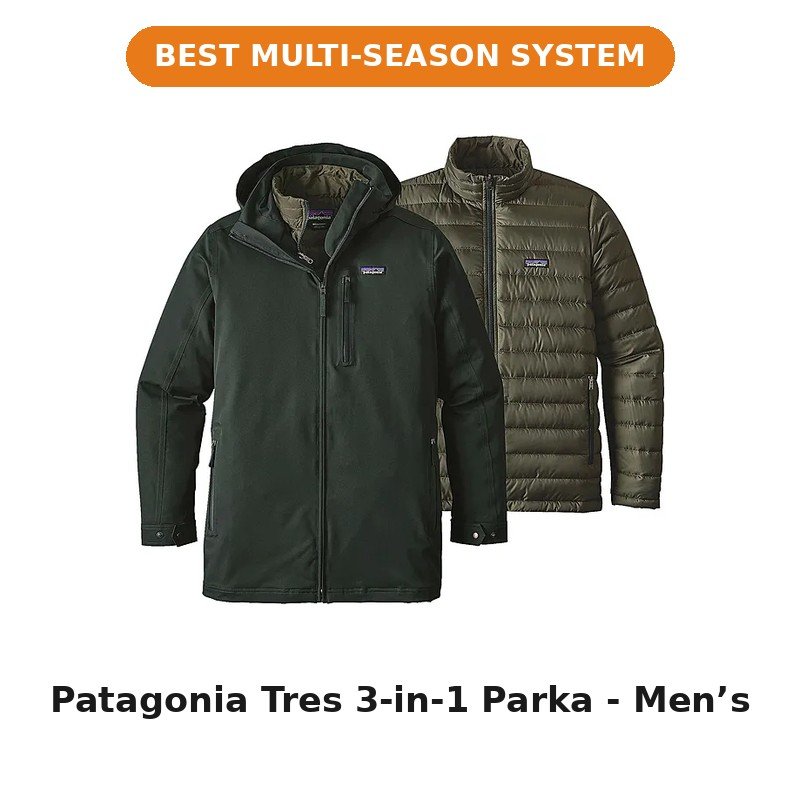
Best for: A commuter who moves between wet shoulder seasons, windy cold days and occasional deep freezes and wants one adaptable purchase.
The Tres earns its place for a different reason than a one-piece extreme-cold parka. Its H2No outer shell and 700-fill recycled-down inner jacket can be worn individually or combined. That means a buyer in a city with wet October rain and January cold can use parts of the system more often than a single very heavy, very warm coat. The outer layer has a two-way zipper and storm flap for more practical sitting and walking.
The price of that versatility is bulk, layering decisions and more zippers to manage. Patagonia lists the combined system at 47.3 oz (1,341 g). You must check that the inner layer does not bind at the shoulders when zipped to the shell and that you have room for a sweater if you expect below-freezing standby time. The inner piece by itself does not inherit the waterproof properties of the outer shell.
Skip the Tres if you want the least complicated possible one-and-done parka for repeated static exposure to severe cold. It makes more sense when you will actually use all three configurations; otherwise the extra hardware and expense do not buy practical value.
Manufacturer-verified features:
- Three configurations: shell, down liner, combined
- H2No 2-layer waterproof/breathable outer
- 700-fill recycled down in zip-out jacket
- 47.3 oz (1,341 g) complete garment
- Two-way outer zipper with storm flap
Verification source: Manufacturer listing. What to verify at checkout: size, current version, inventory and location-based shipping restrictions.
BEST CLASSIC EVERYDAY PARKA
5. The North Face McMurdo Parka – Men’s
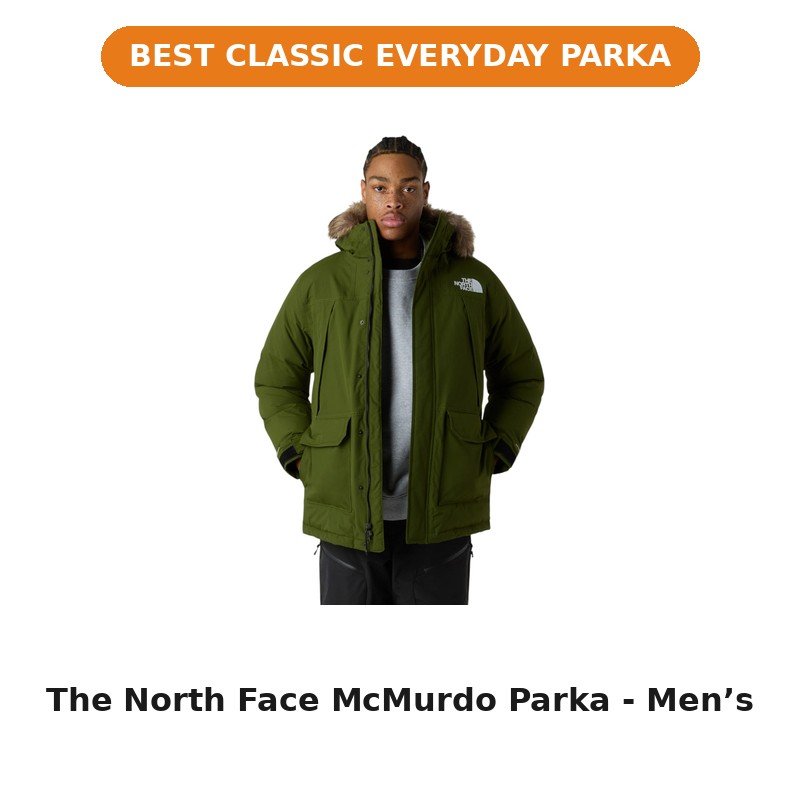
Best for: Someone who wants the recognizable warm winter-parka format with generous pockets, hood coverage and a confirmed waterproof shell.
The McMurdo remains an easy type of coat to understand: a roomy insulated parka with a two-layer, seam-sealed DryVent shell, 600-fill recycled down and a storm flap over its two-way zipper. The relaxed fit may allow thick midlayers without the restrictive shoulders that some slim urban coats create. An adjustable hood and removable faux-fur ruff help block wind around the face, while the hand and chest pockets reduce the need to open the coat for daily essentials.
Its 31.75-inch center back makes it shorter than several thigh-covering choices in this list. That matters when standing still on exposed platforms: the same insulation does less for uncovered thighs. The official listing confirms 600-fill power but does not verify a total fill weight or a whole-jacket comfort temperature. There is no reason to translate that 600 into a safe personal exposure duration in wind.
This is the straightforward waterproof city-parka pick when you appreciate its roomy silhouette. Skip it if you require knee-length coverage or published down-mass measurements to compare thermal capacity more directly.
Manufacturer-verified features:
- 600-fill recycled waterfowl down
- Seam-sealed DryVent 2-layer waterproof shell
- 31.75 in center-back length
- Two-way zipper and storm flap
- Removable faux-fur hood ruff; relaxed fit
Verification source: Manufacturer listing. What to verify at checkout: size, current version, inventory and location-based shipping restrictions.
BEST FULL-LENGTH COVERAGE, CHECK STOCK
6. Outdoor Research Coze Down Parka – Women’s
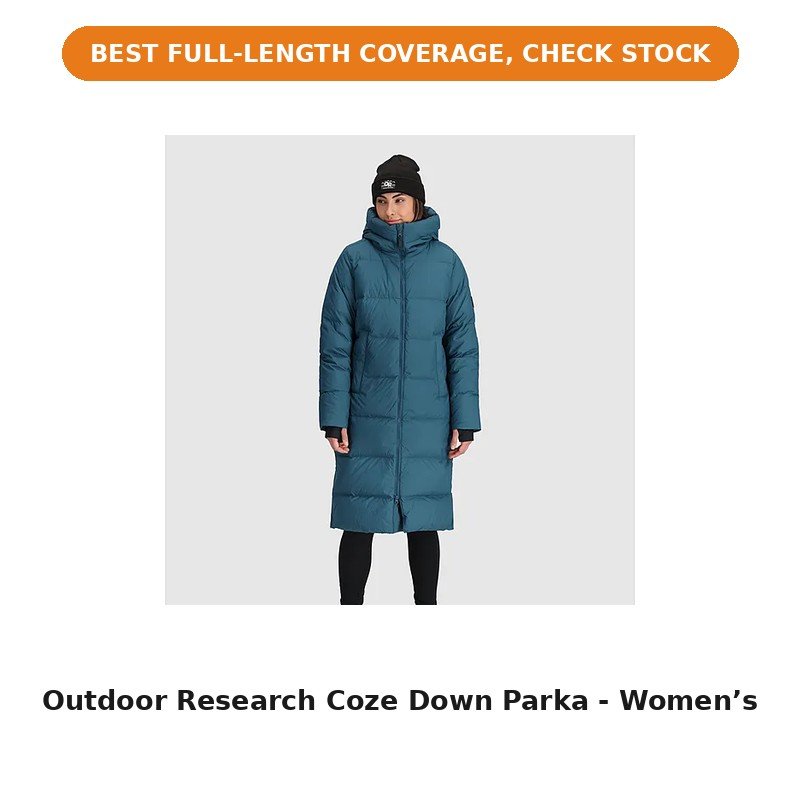
Best for: A wearer prioritizing calf-length warmth and reduced leg exposure on dry, cold commutes, provided a legitimate stocked size is available.
The Coze covers more body than most of these jackets. Its published 43-inch center-back length is the key number: the hem can protect much of the legs during cold, low-motion outings. Outdoor Research also builds in a tall chin collar, hood baffle, knit wrist gaiters with thumb loops, a two-way front zipper and side zippers that restore some stride mobility. This is coverage-first design rather than an attempt to be a short technical alpine layer.
There are two important purchase filters. First, the official manufacturer labels the fabric water-resistant, not waterproof. It is a poor choice if your winters regularly combine sleet and prolonged cold rain without other protection. Second, the manufacturer product page was showing an out-of-stock status at research time and warns that the item contains PFAS and cannot be shipped to California, New York or Colorado. Those limitations matter more than a warmth score for an affected shopper.
For dry severe cold and walking with a long coat, the Coze design is compelling. Skip it if you need wet-weather waterproofing, unrestricted movement on steep terrain or assured US availability.
Manufacturer-verified features:
- 43 in center-back length
- 700+ fill down cited by manufacturer
- 35.5 oz (1,006 g) listed weight
- Side zippers, two-way center zip, knit wrist gaiters
- Water-resistant, not manufacturer-listed as waterproof
Verification source: Manufacturer listing. What to verify at checkout: size, current version, inventory and location-based shipping restrictions.
BEST PACKABLE COLD-WEATHER LAYER
7. Rab Neutrino Pro Down Jacket – Men’s
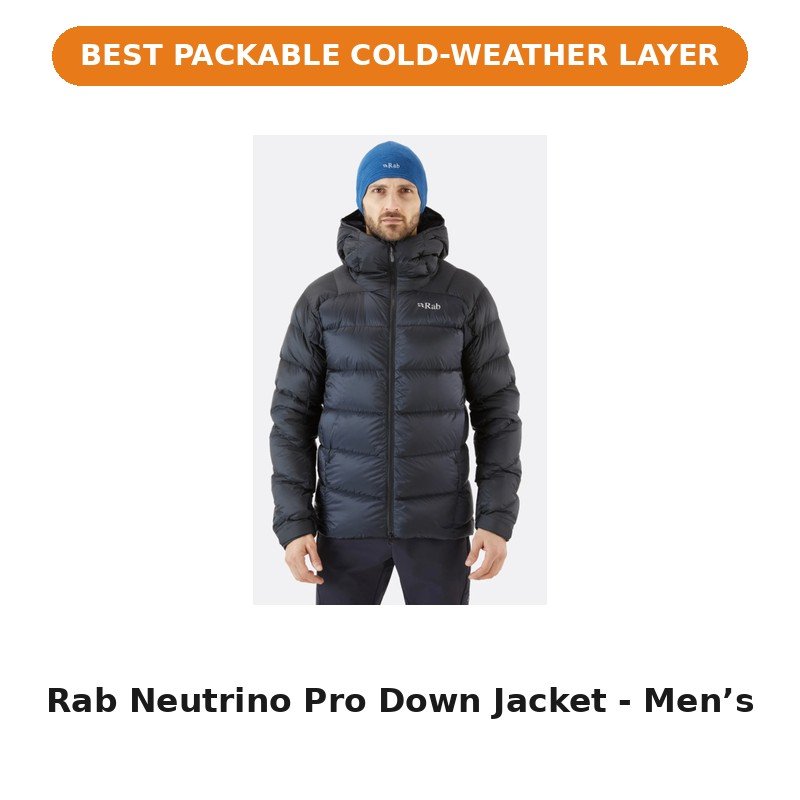
Best for: Cold-weather travelers, winter climbers and people who prize actual warmth-to-weight over long urban-parka coverage.
The Neutrino Pro has the clearest fill-volume story in this comparison: Rab lists both 800 fill power and 7.5 oz (212 g) of down for a medium, alongside a 19.9 oz (563 g) garment weight. That is far more useful than a lone fill-power number. The 20D Pertex Quantum Pro outer reduces weight, and a helmet-compatible hood, two-way belay-ready zipper and accessible pockets show its technical priorities. It is much easier to pack than a heavyweight city parka.
The same light architecture means less coverage and less weather sealing. Rab calls the shell weather-resistant, not waterproof, and the 30.3-inch back length leaves more of your legs exposed than a long parka. It is excellent as a dry-cold stationary layer in a planned system, but not a substitute for a waterproof protective jacket in prolonged rain or sleet. The 20D fabric also warrants care around abrasion and rough urban use.
Pick this when insulation-to-weight and packability drive your decision. Skip it when your problem is holding still for hours in wet wind without additional shell or leg coverage.
Manufacturer-verified features:
- 800-fill goose down, 7.5 oz (212 g) fill in size M
- Pertex Quantum Pro 20D water-resistant outer
- 19.9 oz (563 g) garment weight, size M
- Two-way front zipper and helmet-compatible hood
- 30.3 in back length
Verification source: Manufacturer listing. What to verify at checkout: size, current version, inventory and location-based shipping restrictions.
BEST FOR ACTIVE WET WINTERS
8. Rab Valiance Waterproof Down Jacket – Men’s
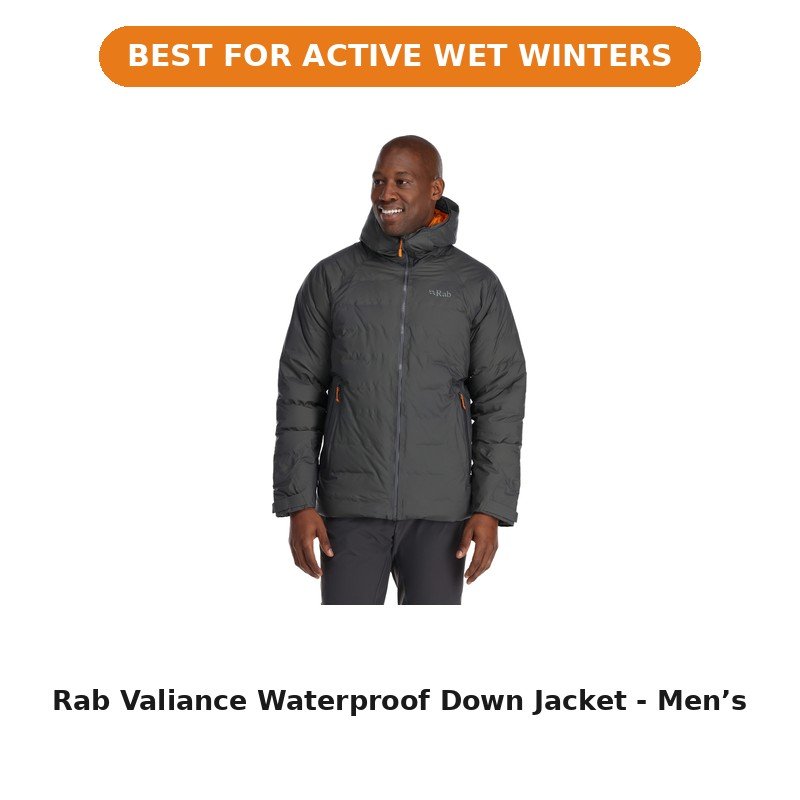
Best for: A person hiking or walking in persistent wet winter weather who wants down insulation within an integrated waterproof outer.
Rab publishes three unusually comparable numbers for the Valiance: 700 fill power, 7.2 ounces (205 g) of down in a medium and a 20,000 mm hydrostatic-head rating for its two-layer Pertex Shield outer. Those are concrete reasons to consider it for slushy hikes or cold, rainy towns where a simple water-resistant puffy would be a weak solution. An insulated neck baffle, close-fitting inner cuffs and adjustable hood focus on the openings where moving air steals warmth.
The weight is 29.34 oz (832 g) and the size-M back length is 32.1 inches. That is practical for walking, but not as enveloping as a 43-inch full-length parka while standing in one place. Waterproof-breathable fabric can still trap heat and humidity during high exertion, and the published information does not show the user-facing pit zips of a dedicated ventilation jacket. Cooling down mid-hike matters: damp base layers can make an otherwise warm coat feel cold on a stop.
Skip this if you want a very long static-warmth parka for stadium seating or long outdoor work shifts. Treat it as a strong wet-winter walking jacket, not a laboratory-rated polar survival system.
Manufacturer-verified features:
- 700-fill recycled down, 7.2 oz (205 g) in size M
- Pertex Shield 2L waterproof shell
- 20,000 mm hydrostatic head
- 29.34 oz (832 g) published garment weight
- 32.1 in center-back length
Verification source: Manufacturer listing, REI retailer listing. What to verify at checkout: size, current version, inventory and location-based shipping restrictions.
BEST FOR LONG STATIC EXPOSURE
9. Canada Goose Expedition Parka
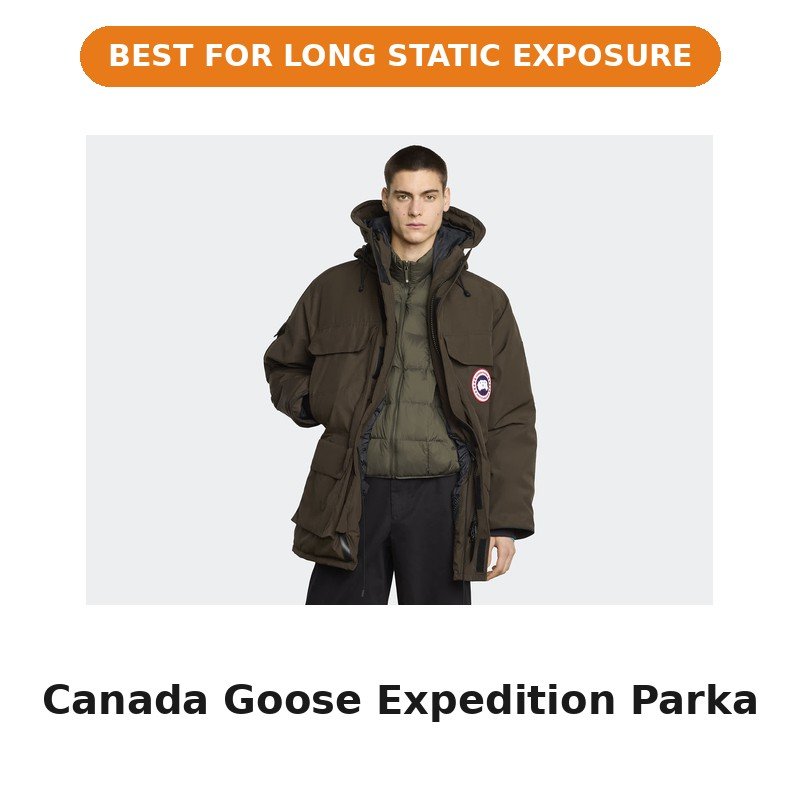
Best for: Someone spending significant low-motion time in wind and severe dry-cold conditions with room in the budget and little concern about packing size.
Canada Goose positions the Expedition as its polar-oriented, maximal-coverage option. The brand lists 625-fill down, a water-repellent Arctic Tech shell, recessed rib-knit cuffs, a snow skirt, storm-flap layers and interior carrying straps. The snow skirt is unusual in an urban parka and helps manage blowing snow entering from below. Those features make the design relevant to repetitive static cold work or long standing periods rather than short walks between heated buildings.
Do not read the brand’s TEI 5 designation of -22°F and below as a standardized independent jacket test or a personal safety threshold. Wind, activity, pants, boots, moisture and individual cold tolerance remain decisive. The manufacturer calls the outer water-repellent, not a waterproof membrane shell, and the price is far above much of this field. Its volume and insulation can become actively uncomfortable indoors or while shoveling at a hard pace.
This is a specialty purchase for severe cold exposure. Skip it if your winter usually involves five-minute station-to-office hops, frequent travel packing or wet rain where waterproofing is the first requirement.
Manufacturer-verified features:
- 625-fill-power responsibly sourced down
- Water-repellent Arctic Tech polyester/cotton shell
- Interior backpack straps
- Built-in snow skirt and recessed knit cuffs
- Manufacturer TEI 5 warmth category (brand-defined)
Verification source: Manufacturer listing. What to verify at checkout: size, current version, inventory and location-based shipping restrictions.
BEST PREMIUM WET-CITY SHELL
10. Arc’teryx Therme Down Parka – Men’s
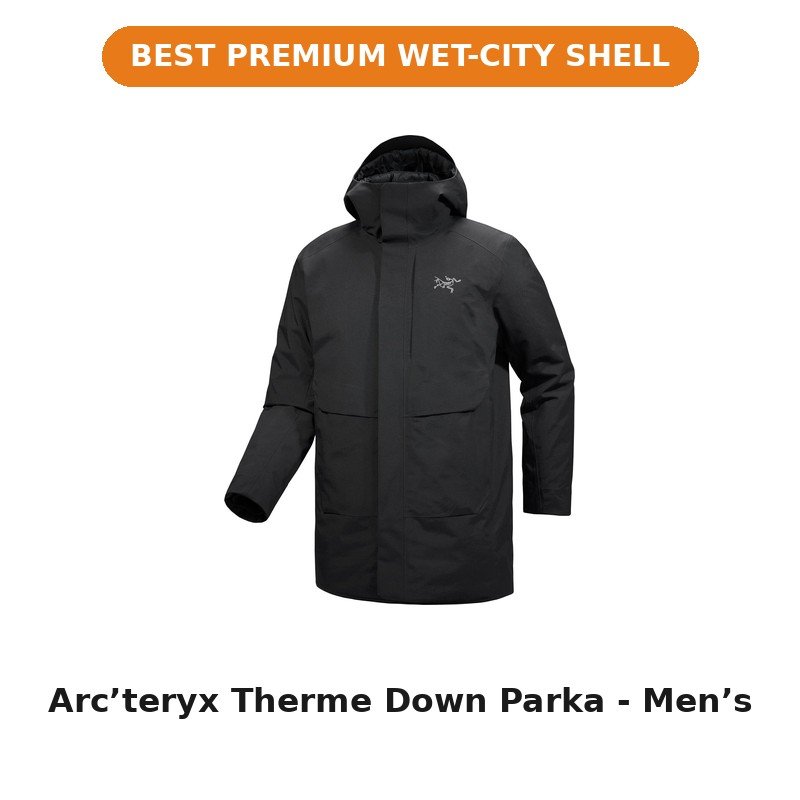
Best for: A city buyer willing to pay for a subdued waterproof coat with verified construction and fewer expedition-style design details.
The Therme combines a 2-layer GORE-TEX ePE shell, 750-fill goose down and mapped synthetic insulation in moisture-prone zones. Arc’teryx documents a 34-inch center-back length for a medium, enough to cover the seat and upper thigh while retaining easier walking movement than full calf-length parkas. Its low-key finish suits office-to-train routines where a technical mountaineering silhouette looks out of place.
The manufacturer lists a weight of 2 lb 11.6 oz (1.23 kg) and says this model can run large. That makes try-on time important: too much air volume around the hem and shoulders can compromise draft management even though a coat technically has premium down. The waterproof membrane and DWR treatments perform different jobs, so surface fabric wetting out is not automatic proof of membrane leakage, but it can affect comfort.
The high price is the main practical disqualifier. If you mostly need warmth and do not face frequent wet precipitation, a lower-priced long insulated parka may solve the actual task with less investment.
Manufacturer-verified features:
- 2-layer GORE-TEX ePE shell
- 750-fill certified goose down, mapped synthetic zones
- 34 in center-back length, size M
- 2 lb 11.6 oz (1.23 kg) garment weight
- Regular fit; manufacturer warns sizing may run large
Verification source: Manufacturer listing. What to verify at checkout: size, current version, inventory and location-based shipping restrictions.
BEST AFFORDABLE SYNTHETIC
11. Columbia Landroamer II Parka – Men’s
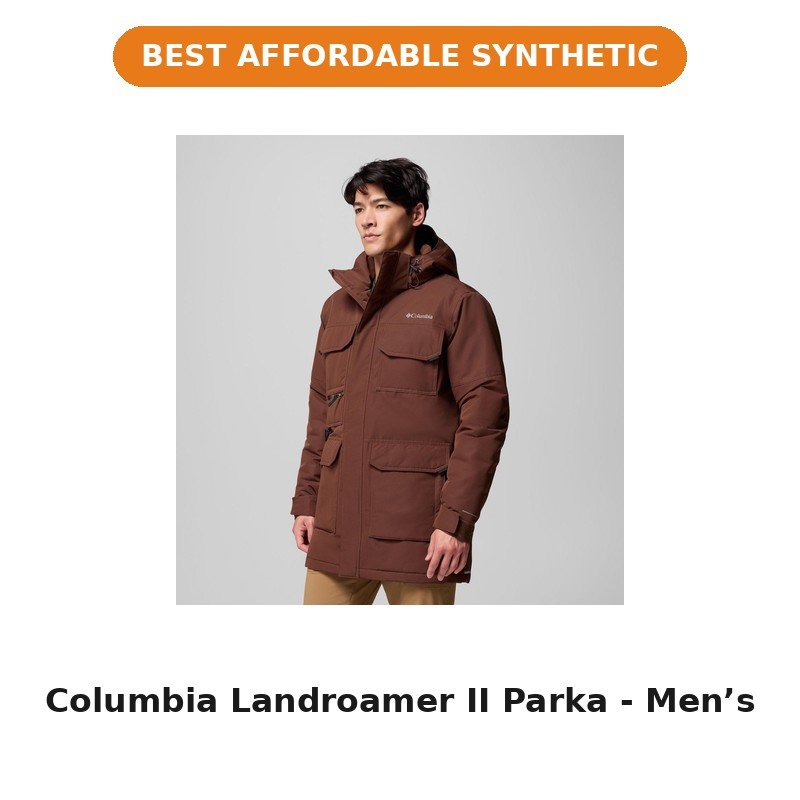
Best for: A shopper prioritizing a straightforward water-protective synthetic winter coat at a substantially lower posted price than premium down options.
Columbia publishes a clear 200 g synthetic insulation specification alongside its Omni-Heat Infinity reflective lining, an Omni-Tech waterproof fabric and critically sealed seams. At a $240 US listed price, the Landroamer II brings sensible details to a middle-of-the-road commute: adjustable cuffs, a removable hood, several pockets and a published 33-inch center-back length. Synthetic fill is also less dependent on down loft after occasional moisture exposure, although no insulation remains magically warm when a wearer is soaked and exposed.
The sealing wording is important. Columbia says critically seam sealed rather than fully seam sealed, so do not describe this as a hard-shell equivalent for every long, wind-driven rainstorm. Nor does 200 g insulation alone guarantee that you can remain motionless for hours below 0°F. The manufacturer lists the garment for everyday use; extreme static-cold needs may call for more coverage, layered lower-body insulation and mittens as well.
This makes sense as a value-oriented daily winter coat, especially for someone avoiding down. Skip it when your primary need is lengthy, exposed polar-like standing or a fully sealed membrane standard.
Manufacturer-verified features:
- 200 g synthetic Microtemp XF II
- Omni-Heat Infinity reflective lining
- Omni-Tech fabric, critically seam sealed
- 33 in center-back length
- Adjustable and removable hood
Verification source: Manufacturer listing. What to verify at checkout: size, current version, inventory and location-based shipping restrictions.
BEST DURABLE DRY-COLD PARKA
12. Fjällräven Singi Down Jacket M
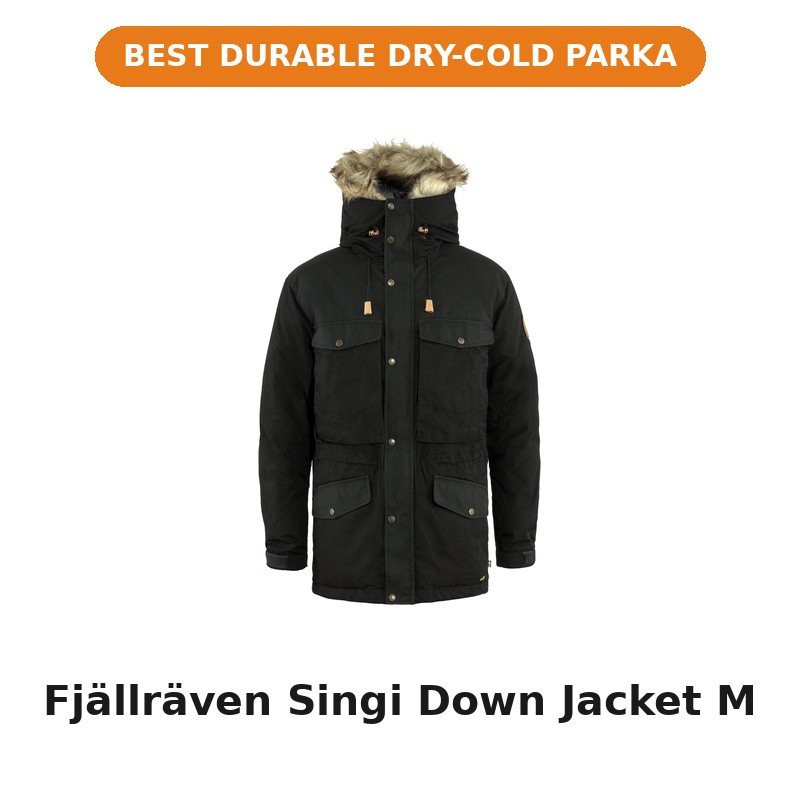
Best for: Dry-cold dog walking, outdoor chores and commuting where abrasion resistance and a long, traditionally styled coat matter most.
The Singi Down Jacket is a useful counterexample to the idea that every great cold coat needs 800 or 900 fill power. Fjällräven documents 600-fill down with a relatively large 295 g (10.4 oz) of down in size medium. Combined with a 91 cm (35.8-inch) back and tougher G-1000 fabrics at high-wear shoulders and lower back, that creates a convincing warmth-and-durability concept for slow winter walking and everyday rough use.
The biggest trade-off is moisture protection. The G-1000 textile is rated water resistant and can be treated with Greenland Wax, but the manufacturer does not claim the waterproof membrane construction offered by the Nuuk or Therme. Wax treatment also becomes an ownership task. The 1,750 g garment weight is substantial and Fjällräven explicitly lists no ventilation, so hard uphill movement can be sweaty and cumbersome.
Choose this if you want long wear, physical toughness and strong published fill-weight evidence for dry cold. Skip it for sustained sleet or wet rain without another protective system.
Manufacturer-verified features:
- 600-fill down and 295 g fill weight
- G-1000 recycled polyester/organic cotton shell
- G-1000 HeavyDuty reinforcement on shoulders/back
- Synthetic fill at shoulders
- 91 cm back length, 1,750 g weight in size M
Verification source: Manufacturer listing. What to verify at checkout: size, current version, inventory and location-based shipping restrictions.
BEST HIGH-END ALL-IN-ONE
13. Patagonia Stormshadow Parka – Men’s
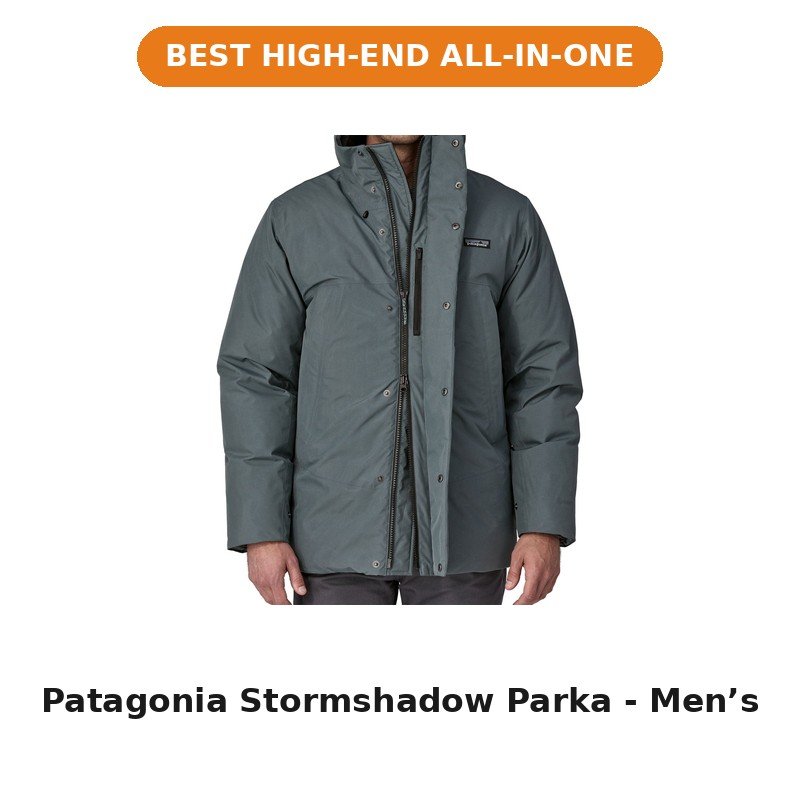
Best for: A person shopping once for regular cold, wet weather who wants an insulated parka with strong face, neck and waist protection.
Patagonia pairs a GORE-TEX ePE two-layer shell with 700-fill recycled down and an adjustable hood. The hidden waist cinch and adjustable storm cuffs give more control of cold air than a simple oversized puffer, while the two-way front zipper helps when sitting down or crossing snowbanks. Its external chest pocket is reachable without unzipping the coat, a small feature with real value when preserving warmth outside.
The published weight is 41.7 oz (1,182 g), only slightly heavier than Patagonia’s Jackson Glacier Parka. This is not a weight-saving expedition belay jacket; it is a protective, everyday integrated coat. The high list price must earn its keep through repeated wet-winter use. Waterproof membrane construction also does not eliminate the need to keep down clean, properly dried and uncompressed in storage.
Buy it for recurring cold rain, wet snow and windy city or low-output outdoor use. Skip it if you already own a competent waterproof outer system and only need extra loft on dry days.
Manufacturer-verified features:
- GORE-TEX ePE 2-layer waterproof shell
- 700-fill recycled down
- 41.7 oz (1,182 g) listed garment weight
- Two-way zipper with storm flaps
- Cinchable waist, adjustable hood, storm cuffs
Verification source: Manufacturer listing. What to verify at checkout: size, current version, inventory and location-based shipping restrictions.
BEST TECHNICAL EXPEDITION INSULATION
14. Mountain Hardwear Absolute Zero Parka – Men’s
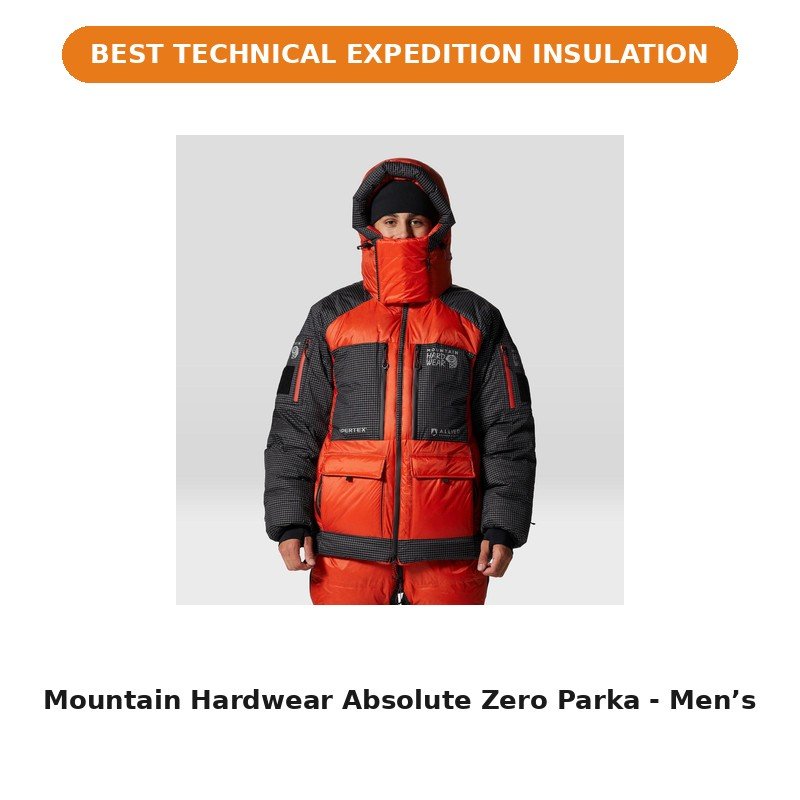
Best for: Experienced mountaineers planning static cold exposure and choosing a technical expedition piece as part of a complete protective system.
The Absolute Zero is the outlier designed around very cold mountain use, rather than a walk to the grocery store. Mountain Hardwear documents 800-fill down and an unusually high 17 oz (480.7 g) of down in a size medium. It uses welded box baffles, a Pertex Diamond Fuse face, elbow reinforcements, an insulated hood and underarm vent zippers. Those details help explain its legitimate place in an extreme-cold shortlist even though its back length is just 31 inches.
The brand calls the construction protective and welded, but the referenced product listing does not publish a hydrostatic-head number or named waterproof membrane. Do not generalize it into the same fully seam-sealed city raincoat category as the H2No and GORE-TEX ePE products. The price is also specialist-level, and the model page explicitly states it uses PFAS chemicals and cannot ship to California or New York. This can make it unavailable even for interested US buyers.
Skip this for ordinary commuting; the bulk, technical cut, care needs and retail restrictions defeat the point of a simple winter coat. Keep it on the list only when you genuinely need an expedition-style down layer and can evaluate it within a full cold-weather system.
Manufacturer-verified features:
- 800-fill down and 17 oz insulation fill weight
- Welded box-baffle construction
- Pertex 20D Diamond Fuse face fabric
- 3 lb 0.6 oz size-M total weight
- Extended underarm vent zippers; thumbloop cuffs
Verification source: Manufacturer listing. What to verify at checkout: size, current version, inventory and location-based shipping restrictions.
Hidden Buying Costs and Common Failure Modes
Fit and moisture failures are not always product defects
A jacket can feel cold because the face opening leaves the neck exposed, the hem rides above the hips, sleeves pull back when reaching or the insulation is compressed under a tight shell or pack strap. Conversely, a warm parka can feel clammy when a wearer overdresses for walking and cannot vent. Try the exact layering system planned for use and practice opening the main zipper, cuffs and any available vents with gloves.
Maintenance and storage: what buyers discover later
The Canada Goose Expedition is listed as dry-clean only, while down coats generally need specific washing, thorough drying and loose storage to preserve loft. Fjällräven’s Nuuk and Singi instructions warn against ordinary tumble drying assumptions and require care matched to their shell and insulation. Rab also publishes down washing and drying guidance because wet, matted down loses loft. Before buying a premium parka, check that its care routine is realistic for your home and travel pattern and that you have space to store it uncompressed.
Don’t confuse warm with safe
An extreme-cold jacket is one component of a protective system. Hands, head, legs, feet, hydration, wind exposure, exertion level and shelter access all change the outcome. Manufacturer claims such as TEI categories, marketing temperature statements or fill power do not certify that an individual wearer will be safe at a particular temperature. If conditions can produce frostbite or hypothermia, use conservative margins, carry backup insulation and stop exposure rather than relying on a coat label.
Stock and state shipping restrictions
Product-page statements as of October 2026 require current verification before relying on any jacket in a time-sensitive plan. Outdoor Research’s Coze page showed best-selling sizes and colors out of stock in the referenced listing, and the model is subject to PFAS-related shipping restrictions in California, New York and Colorado. Mountain Hardwear’s Absolute Zero page states PFAS restrictions for California and New York. These constraints are easy to miss when shopping from a third-party article or search result, so check the actual size and color on the manufacturer page before counting on delivery.
Reader Poll: What Matters Most When You Choose a Jacket for Extreme Cold?
If you still cannot decide between a warmer integrated parka and a separate shell-plus-insulation system, start by naming the weather failure you fear most: cold air leaking in while standing, sleet soaking the insulation, or sweat building up during movement. Our hiking rain-shell comparison can help you judge a separate outer layer before you pay expedition-parka money: see how dedicated rain shells compare.
The Bottom Line: Choose by Your Actual Winter
There is no single warmest jacket for every US buyer. The correct purchase depends on whether you are standing in dry cold, walking through sleet, traveling with limited luggage space or working outdoors in wind. For a cold, wet commute, start with the Fjällräven Nuuk; for weatherproof value, look at the REI Stormhenge; for long static exposure, consider the Canada Goose Expedition or Mountain Hardwear Absolute Zero only with the rest of a serious cold-weather system; and for affordable everyday use, compare the Columbia Landroamer II.
Before you buy, verify the current size run, exact model revision, shipping restrictions and return window. Then test the coat with your real layers and gloves. A jacket that closes completely, covers the areas you expose and still lets you move is a better extreme-cold choice than a specification sheet with a bigger fill number. If you have not already voted in our reader poll above, add your answer so other shoppers can see what mattered most.
Method note: This US guide compares manufacturer-published specifications and product-page statements retrieved October 22, 2026. Temperature comfort varies by person, activity, wind, moisture and the rest of the clothing system; no coat in this list should be treated as a personal safety guarantee.
Related reading: Best Waterproof Jackets | Best Rain Jacket for Hiking Under $150 | Best Camping Gear Checklist