Disclosure: The Bridge is reader-supported. When you buy through links on our site, we may earn a commission at no extra cost to you. Learn more.
Best Camping Tents of 2026: 18 Models Compared by Floor Space, Weather and Setup
You need a camping tent that fits your actual sleeping pads and protects you from the conditions at your campsite, not simply the largest number on its capacity label. Here is how to choose by usable floor area, rainfly coverage, setup complexity and vehicle fit before comparing 18 current or recently listed models.
This is a specification-based buying guide for vehicle-supported campground stays, families, couples and group weekends in the United States. We did not pitch and field-test all 18 models; scores below are editorial comparisons of documented features, with availability or revision caveats made explicit. If you are carrying your tent for miles, choose a dedicated backpacking shelter instead.
How to Choose a Camping Tent: Four Decisions Before You Buy
1. Sleep area is not the capacity number
Four-person means four nominal sleepers, not four adults plus shoes, coolers and a dog. Measure the longest sleeper, pad width, door clearance and gaps between walls. A 6-person tent with roughly 80-85 sq ft can be more practical for four campers on large pads than a tightly filled 4-person design. Wide mattresses also need a floor shape without severe corner taper.
2. Rain protection is a system, not one waterproof number
A rainfly, sealed seams, a bathtub-style floor, properly tensioned guylines and campsite drainage all matter. Hydrostatic head describes fabric pressure resistance under a specified test, not the whole shelter in wind-driven rain. A freestanding tent still usually requires stakes for the fly and vestibules. Lower vents and upper vents can help manage condensation but cannot eliminate it in every humidity condition.
3. Setup and transport can disqualify a tent
Hub pop-ups can pitch quickly yet require unusually long cargo space. A pole-sleeve tent may be slower at a windy arrival but more compact. Packaged weight includes the full retail kit where verified; never compare it directly to a manufacturer’s minimum trail weight. Check trunk length, campsite pad measurements, and whether you can safely pitch the tent without another adult.
4. Count doors, vestibules and the true dry storage area
Two doors make nighttime exits less disruptive. A vestibule keeps muddy boots out of the sleeping room but does not necessarily count as enclosed floor space or dry living room. A screen-room tent can advertise a large total area while having a much smaller fully enclosed sleep room. Put your sleeping pads for tent camping on the ground and measure the actual occupied footprint before buying.
Skip these mismatches: avoid tall cabins if your typical sites are very windy and exposed; reject one-door models if two adults must exit without disturbing children; skip giant instant cabins for small-car travel; reject any tent without a verified floor footprint if your camp pad is small; and do not treat a 3-season rating as approval for alpine winter storms.
Camping Tent Comparison Table: Verifiable Specs
All dimensions are manufacturer or major-retailer figures for the linked variant. Listed weight is packaged unless explicitly marked minimum. Stock changes. “125 total” includes screen-room space, not just sleeping floor.
| Tent | Rated sleepers | Floor area | Peak height | Listed weight | Doors | Best use |
|---|---|---|---|---|---|---|
| The North Face Wawona 6 | 6-person rated | 75.7 sq ft | 76 in | 19 lb 6.4 oz | 2 | Couples with children who want a sleeping room plus a large sheltered gear zone |
| REI Co-op Westward 4 | 4-person rated | 68 sq ft | 69 in | 15 lb 6.9 oz | 2 | Two or three car campers who want living room without a six-person shelter |
| REI Co-op Westward 6 | 6-person rated | 80.83 sq ft | 77 in | 19 lb 10 oz | 2 | Family campers who expect to spend rainy afternoons near the tent |
| REI Co-op Base Camp 4 | 4-person rated | 59 sq ft | 63 in | 17 lb 5.6 oz | 2 | A small group prioritizing a lower-profile freestanding dome over maximum headroom |
| REI Co-op Base Camp 6 | 6-person rated | 84 sq ft | 74 in | 20 lb 11.5 oz | 2 | Vehicle-supported trips where a durable dome is preferable to a wide cabin shape |
| NEMO Aurora Highrise 6P | 6-person rated | 83.3 sq ft | 77 in | 18 lb 10 oz | 2 | Campers who care about usable upright space near tent walls |
| Big Agnes Bunk House 6 | 6-person rated | 82 sq ft | 78 in | 18 lb 4 oz | 2 | Families keeping boots, coolers and wet outerwear out of the bed area |
| Kelty Discovery Basecamp 6 | 6-person rated | 87.6 sq ft | 68 in | 13 lb 14 oz | 1 | New or occasional campers who want straightforward assembly and a usable rectangular floor |
| Coleman Skydome 6 Screen Room Dark Room | 6-person rated | 125 total | 72 in | 21 lb 3.8 oz | 1 | Family campers who prioritize a screened sitting zone and reduced early-morning light |
| Snow Peak Alpha Breeze | 4-person rated | 77.35 sq ft | 76.8 in | 22 lb | 2 | Design-focused car campers who want a high-roof four-person base camp |
| CORE 9-Person Instant Cabin Full Rainfly (40217) | 9-person rated | 126 sq ft | 78 in | 36 lb | 2 | Car campers hosting several people where a fast pitch and room divider outweigh portability |
| Zempire Aerospeed 6 Air Tent | 6-person rated | 87 sq ft | 80.7 in | 23.8 lb (manufacturer) | 2 | Campers who prefer inflatable support beams instead of threading long pole sleeves |
| MSR Habitude 4 | 4-person rated | 62.4 sq ft | 73 in | 12 lb 10 oz | 1 | Smaller camping groups who want tall clearance without an oversized 6-person footprint |
| Kelty Wireless 4P | 4-person rated | 58.3 sq ft | 57 in | 13 lb 6 oz | 2 | Campers who value separate exits and shoe storage more than room to stand upright |
| Marmot Tungsten 4-Person | 4-person rated | 52.7 sq ft | 52.8 in | 7 lb 15 oz minimum | 2 | Two to three campers who want a lower tent with two doors and room for smaller gear |
| Gazelle T4 Hub Tent | 4-person rated | 61 sq ft | 78 in | 30 lb | 2 | Overlanders and drive-up campers who prioritize fast setup and easy stand-up room |
| Kelty Discovery Basecamp 4 | 4-person rated | 53.22 sq ft | 58 in | 8 lb 8 oz | 1 | New campers who mainly sleep inside and want low assembly complexity |
| Marmot Limestone 6-Person | 6-person rated | 82.9 sq ft | 76 in | 17 lb | 2 | Families looking for a conventional two-door, roomy car-camping tent |
The 18 Camping Tents Compared
Every review identifies the intended owner, a concrete advantage, and a real reason to skip it. Scores are comparative editorial judgments, not field-test scores or manufacturer performance certifications.
1. BEST OVERALL FOR FAMILIES
The North Face Wawona 6
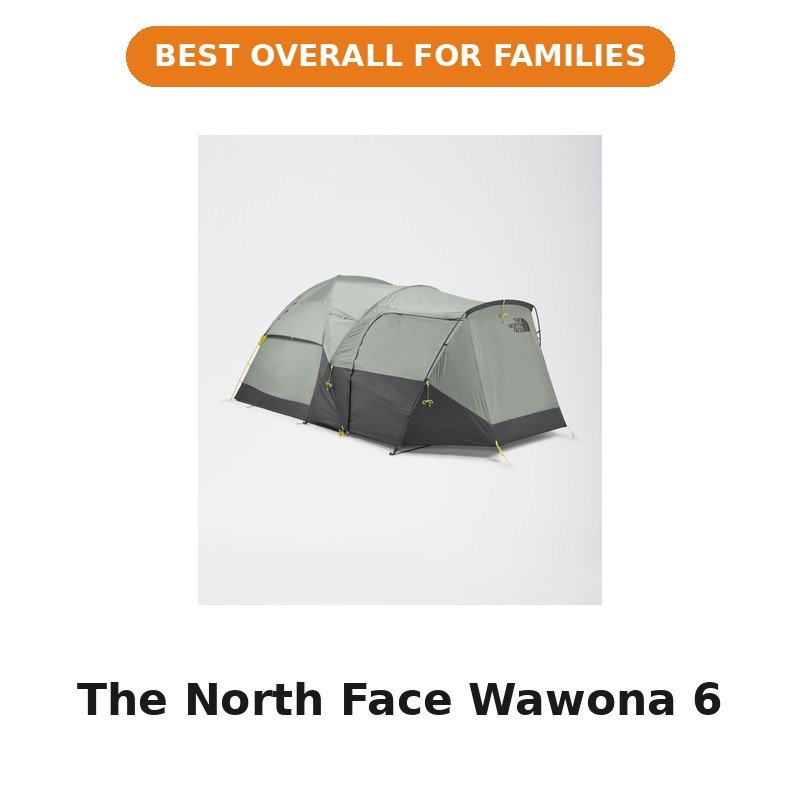
Who this fits: Couples with children who want a sleeping room plus a large sheltered gear zone. The 44.7 sq ft vestibule lets wet shoes and chairs stay outside the sleeping area. The 76 in ceiling works well for changing upright, and a two-door layout helps movement.
What can go wrong: That garage-style vestibule requires extra pitching attention and guyline tension. The 75.7 sq ft current floor is smaller than the 86.11 sq ft specification on an older Wawona generation, so check the retailer SKU. When judging value, include any separate footprint, additional stakes and the real effort of drying and storing this tent after wet weather.
Verified figures: 6-person label; 75.7 sq ft reported area; 76 in peak; 19 lb 6.4 oz listed weight; 2 doors. Check exact product specifications.
2. BEST ROOMY FOUR-PERSON CHOICE
REI Co-op Westward 4
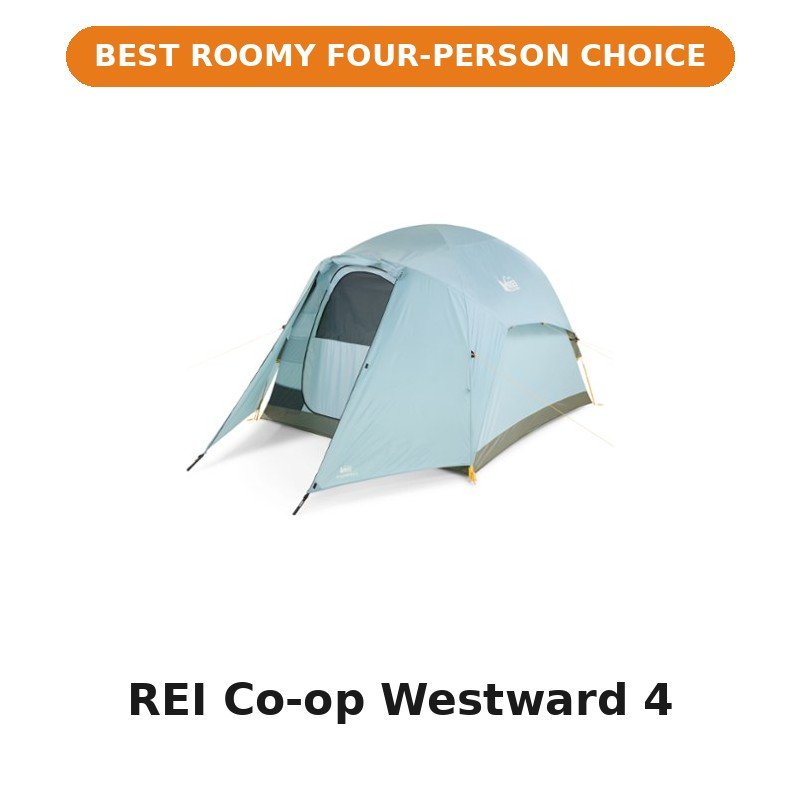
Who this fits: Two or three car campers who want living room without a six-person shelter. A 68 sq ft floor, 69 in peak and 20.27 sq ft vestibule create an appealing balance of headroom and sheltered storage. Aluminum poles and a seam-sealed fly are useful for repeat camping.
What can go wrong: A 4-person label does not guarantee comfort for four adults on large air mattresses. It needs a roomy vehicle and the matching footprint is separate. When judging value, include any separate footprint, additional stakes and the real effort of drying and storing this tent after wet weather.
Verified figures: 4-person label; 68 sq ft reported area; 69 in peak; 15 lb 6.9 oz listed weight; 2 doors. Check exact product specifications.
3. BEST LARGE PORCH LAYOUT
REI Co-op Westward 6
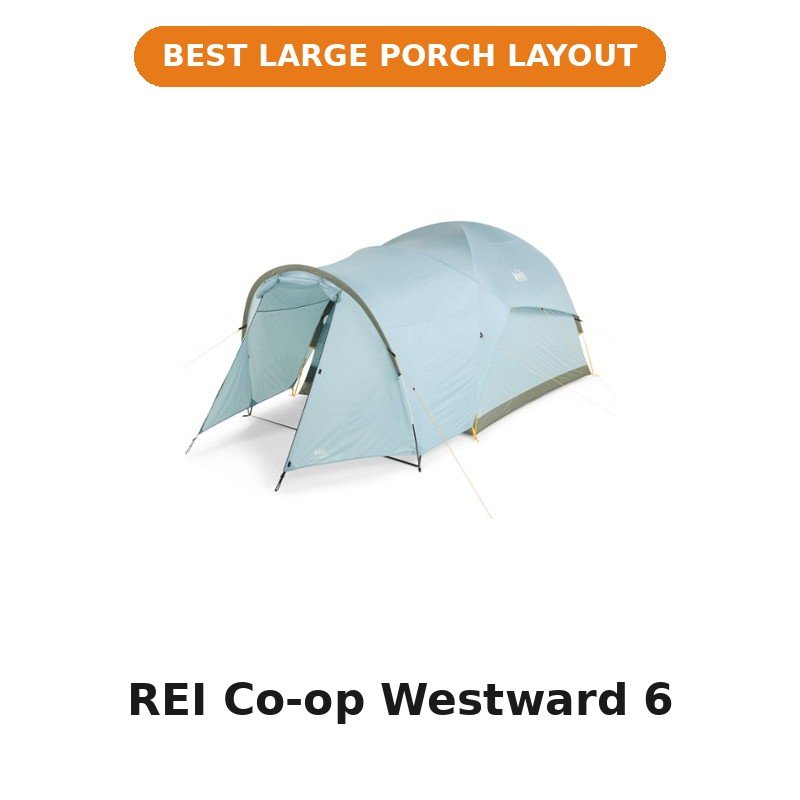
Who this fits: Family campers who expect to spend rainy afternoons near the tent. The 77 in peak and 35.08 sq ft vestibule offer standing access and a covered hangout zone. Two entrances help people come and go without climbing across sleep systems.
What can go wrong: A sizable fly porch needs a sufficiently large, stakeable campsite. The 19 lb 10 oz packaged weight rules it out for meaningful backpack carries. When judging value, include any separate footprint, additional stakes and the real effort of drying and storing this tent after wet weather.
Verified figures: 6-person label; 80.83 sq ft reported area; 77 in peak; 19 lb 10 oz listed weight; 2 doors. Check exact product specifications.
4. BEST FOR WIND-EXPOSED CAMPGROUNDS
REI Co-op Base Camp 4
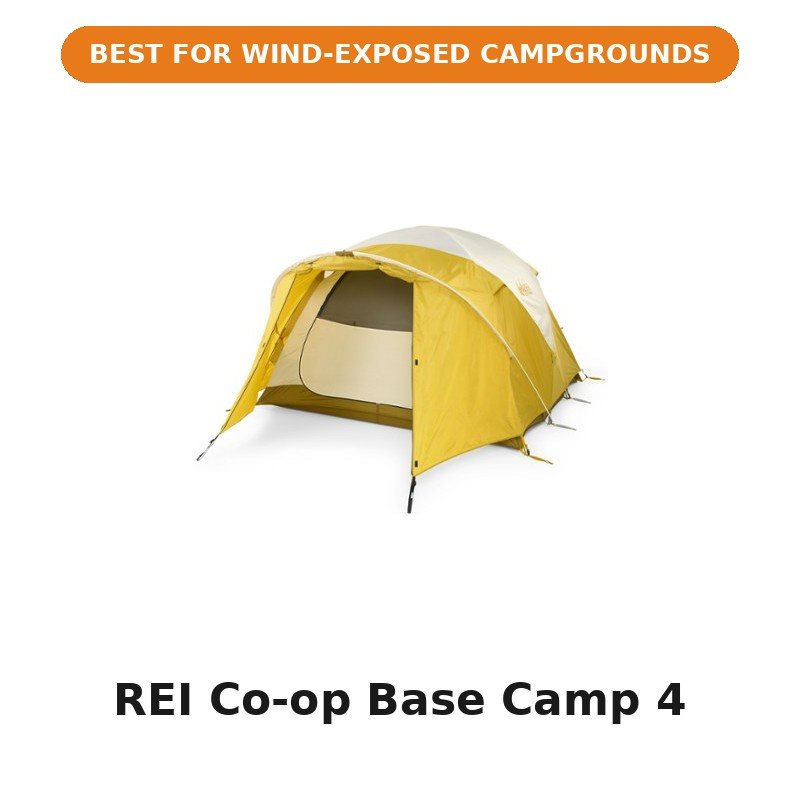
Who this fits: A small group prioritizing a lower-profile freestanding dome over maximum headroom. The current Base Camp 4 uses multiple poles and a full-coverage rainfly approach, with two doors and separate vestibule spaces. Four roof vents and a low side vent help manage humid nights.
What can go wrong: The 63 in peak is noticeably lower than standing-height cabin tents. Five poles and tighter architecture demand careful assembly, and the 2026 listing must not be confused with older 60 sq ft generations. When judging value, include any separate footprint, additional stakes and the real effort of drying and storing this tent after wet weather.
Verified figures: 4-person label; 59 sq ft reported area; 63 in peak; 17 lb 5.6 oz listed weight; 2 doors. Check exact product specifications.
5. BEST ALL-WEATHER FAMILY DOME
REI Co-op Base Camp 6
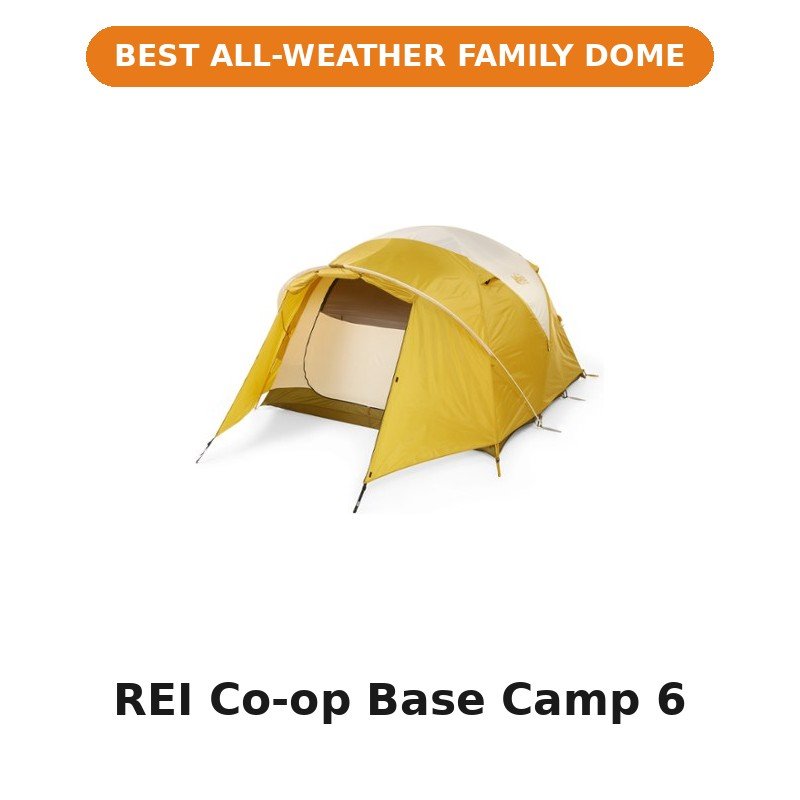
Who this fits: Vehicle-supported trips where a durable dome is preferable to a wide cabin shape. The current 84 sq ft, 74 in version provides substantial floor space, two doors and two vestibules. Multiple poles create a lower, more braced profile than tall pop-up cabins.
What can go wrong: The tent is heavy to move far from the vehicle and has a more involved pitch. The older Base Camp 6 versions list different floor areas and weights; shop by exact SKU. When judging value, include any separate footprint, additional stakes and the real effort of drying and storing this tent after wet weather.
Verified figures: 6-person label; 84 sq ft reported area; 74 in peak; 20 lb 11.5 oz listed weight; 2 doors. Check exact product specifications.
6. BEST FOR STEEP SIDEWALLS
NEMO Aurora Highrise 6P
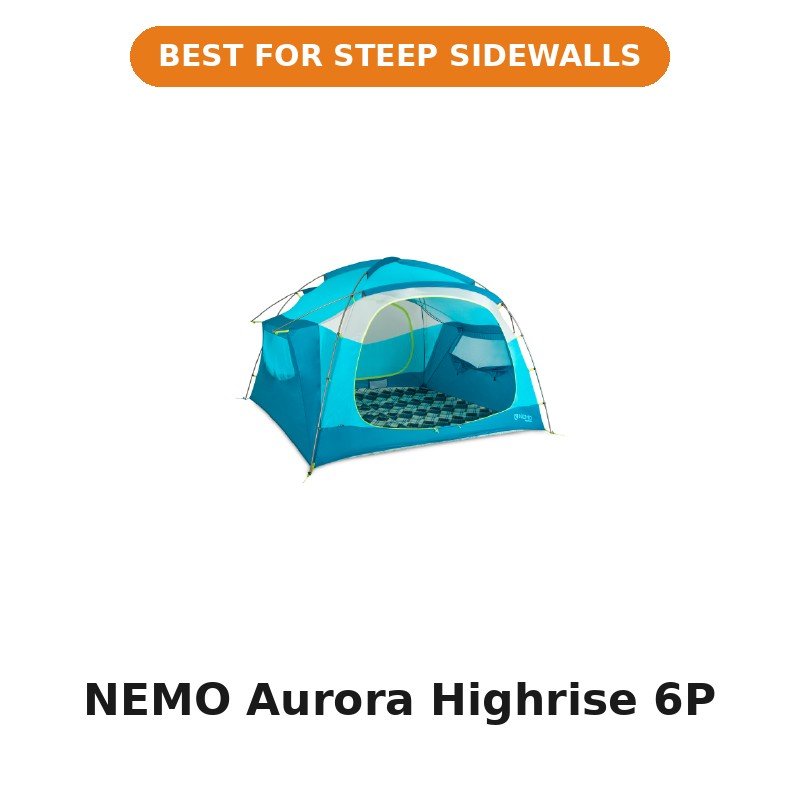
Who this fits: Campers who care about usable upright space near tent walls. A 77 in peak plus steep walls makes moving and changing less cramped. Two entrances and matching 23.6 sq ft vestibules are practical for shoes, kids and individual gear piles.
What can go wrong: Full-height walls catch wind; correct guylines and site selection matter. In windy exposure, prioritize pitch security rather than assuming a tall cabin will behave like a low dome. When judging value, include any separate footprint, additional stakes and the real effort of drying and storing this tent after wet weather.
Verified figures: 6-person label; 83.3 sq ft reported area; 77 in peak; 18 lb 10 oz listed weight; 2 doors. Check exact product specifications.
7. BEST TWIN-DOOR STORAGE
Big Agnes Bunk House 6
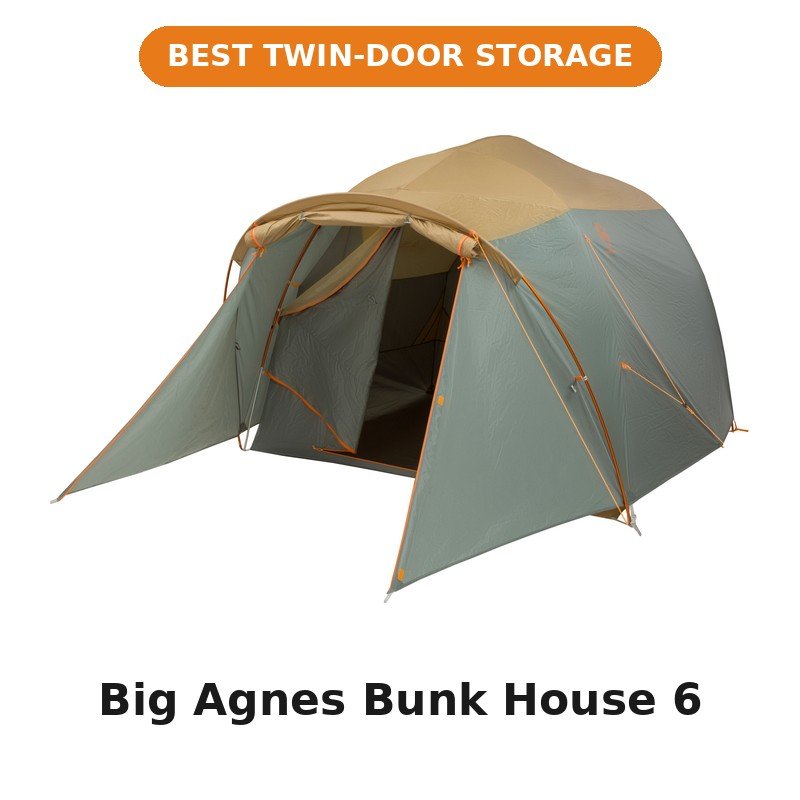
Who this fits: Families keeping boots, coolers and wet outerwear out of the bed area. The current retailer listing describes 82 sq ft of sleeping floor, 78 in peak and a full-featured double-wall arrangement. A roomy vestibule layout is a defining advantage for a longer base camp.
What can go wrong: This model needs a larger campsite and has a relatively involved fly setup. Model-year changes alter the listed packed weight, so use the exact current product page and do not rely on archived Bunk House dimensions. When judging value, include any separate footprint, additional stakes and the real effort of drying and storing this tent after wet weather.
Verified figures: 6-person label; 82 sq ft reported area; 78 in peak; 18 lb 4 oz listed weight; 2 doors. Check exact product specifications.
8. BEST SIMPLE BUDGET FAMILY TENT
Kelty Discovery Basecamp 6
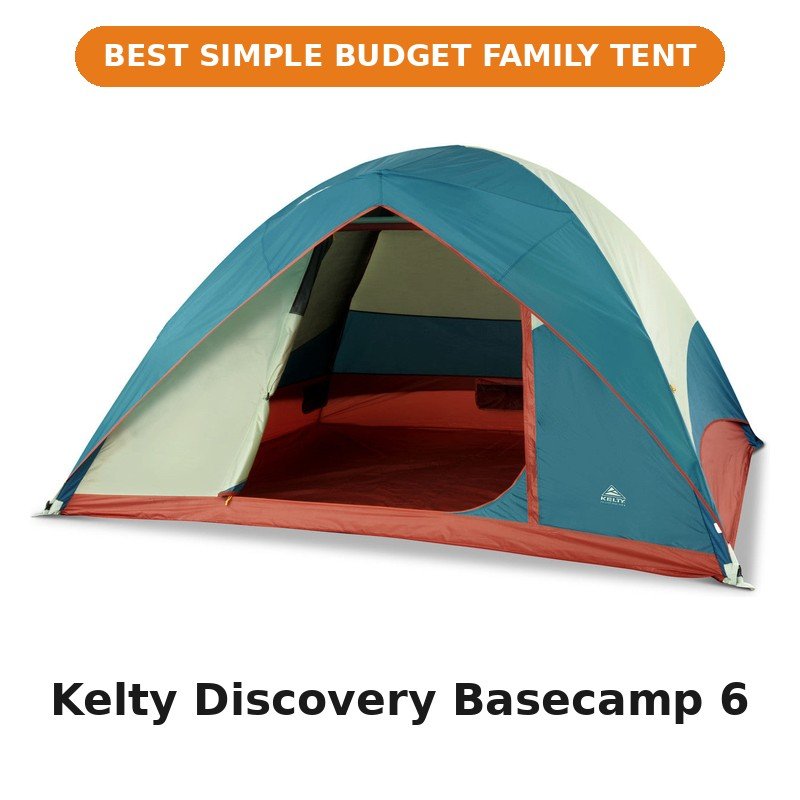
Who this fits: New or occasional campers who want straightforward assembly and a usable rectangular floor. The manufacturer lists 87.6 sq ft, a 68 in peak, Quick Corners and a rainfly. It includes pre-attached guylines, helping first-timers remember to stabilize the tent.
What can go wrong: Only one door means more disturbance at night, and fiberglass poles are a less premium material than the aluminum structures used by some higher-priced tents. Roomy nominal capacity should still be reduced for cots and gear. When judging value, include any separate footprint, additional stakes and the real effort of drying and storing this tent after wet weather.
Verified figures: 6-person label; 87.6 sq ft reported area; 68 in peak; 13 lb 14 oz listed weight; 1 doors. Check exact product specifications.
9. BEST FOR SLEEPING PAST SUNRISE
Coleman Skydome 6 Screen Room Dark Room
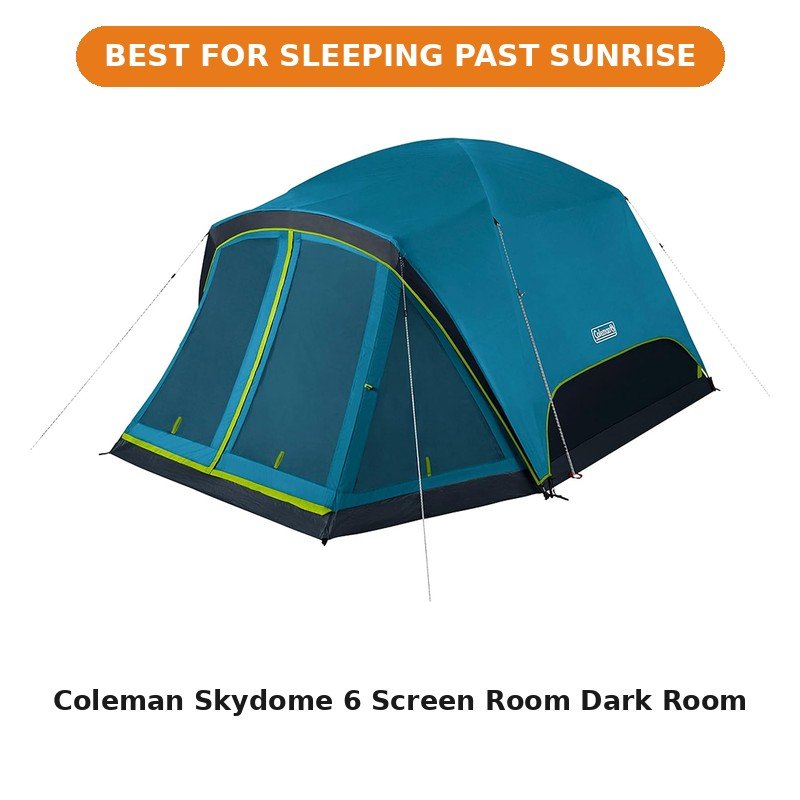
Who this fits: Family campers who prioritize a screened sitting zone and reduced early-morning light. Coleman pairs a screen-room configuration with Dark Room technology. The retailer reports 125 sq ft of total covered area and a 72 in peak, which is useful for campers who lounge at the campsite.
What can go wrong: Do not confuse total covered floor area with unobstructed sleeping area: the screen room is not interchangeable with sealed sleep space. Dark Room fabric reduces sunlight, but ventilation and camp temperature still matter. When judging value, include any separate footprint, additional stakes and the real effort of drying and storing this tent after wet weather.
Verified figures: 6-person label; 125 total sq ft reported area; 72 in peak; 21 lb 3.8 oz listed weight; 1 doors. Check exact product specifications.
10. BEST PREMIUM CABIN-STYLE DESIGN
Snow Peak Alpha Breeze
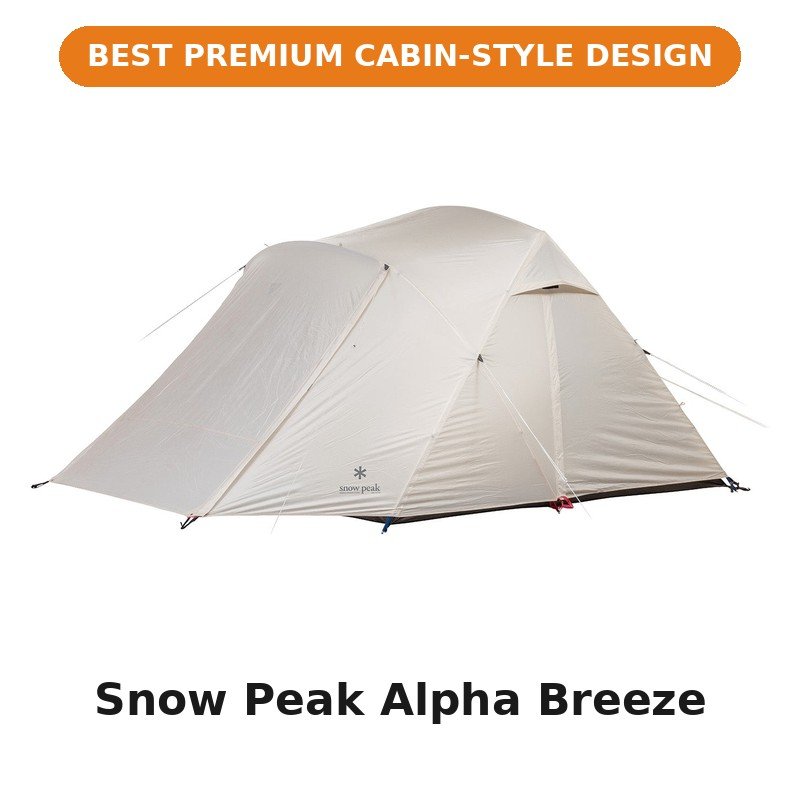
Who this fits: Design-focused car campers who want a high-roof four-person base camp. The updated Snow Peak Alpha Breeze retailer listing gives 77.35 sq ft, a 76.8 in peak and a 22 lb packaged weight. Its near-cabin architecture is oriented toward daytime living as well as sleep.
What can go wrong: That spacious 4-person floor comes at a weight normally associated with some six-person tents. Verify campsite footprint and model year, since the current listing notes a lighter revision than its predecessor. When judging value, include any separate footprint, additional stakes and the real effort of drying and storing this tent after wet weather.
Verified figures: 4-person label; 77.35 sq ft reported area; 76.8 in peak; 22 lb listed weight; 2 doors. Check exact product specifications.
11. BEST QUICK-PITCH LARGE CABIN
CORE 9-Person Instant Cabin Full Rainfly (40217)
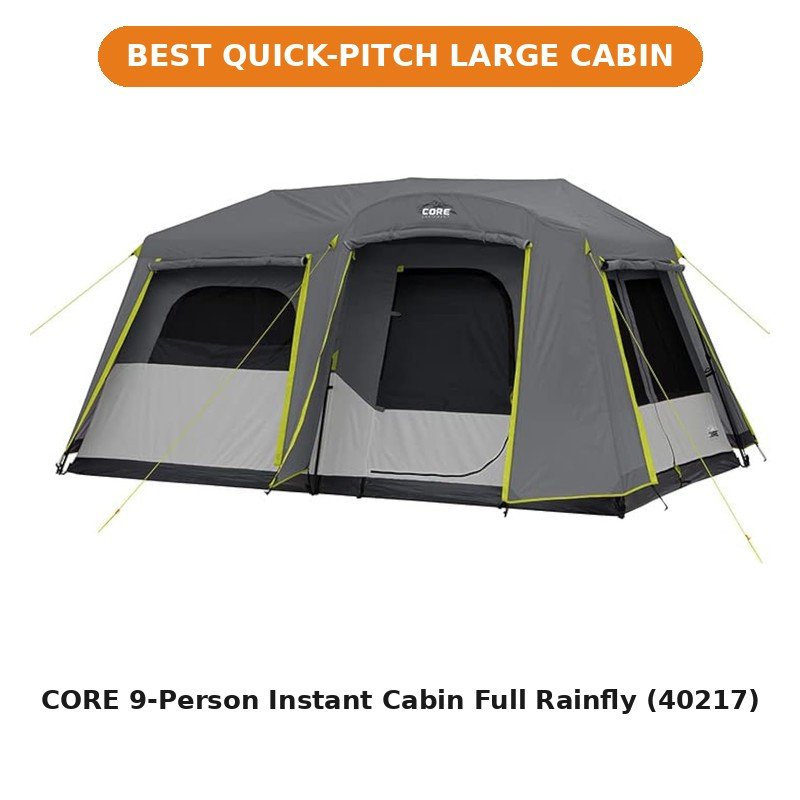
Who this fits: Car campers hosting several people where a fast pitch and room divider outweigh portability. CORE lists a 14 by 9 ft floor, 78 in center height and full-coverage fly with a vestibule. The instant structure reduces loose-pole assembly and the included divider can divide family sleeping zones.
What can go wrong: The same manufacturer explicitly describes four people plus gear as its most comfortable setup, despite the nine-person industry label. At 36 lb and 48 in packed length, check trunk fit and vehicle space. When judging value, include any separate footprint, additional stakes and the real effort of drying and storing this tent after wet weather.
Verified figures: 9-person label; 126 sq ft reported area; 78 in peak; 36 lb listed weight; 2 doors. Check exact product specifications.
12. BEST AIR-FRAME CAMPING TENT
Zempire Aerospeed 6 Air Tent
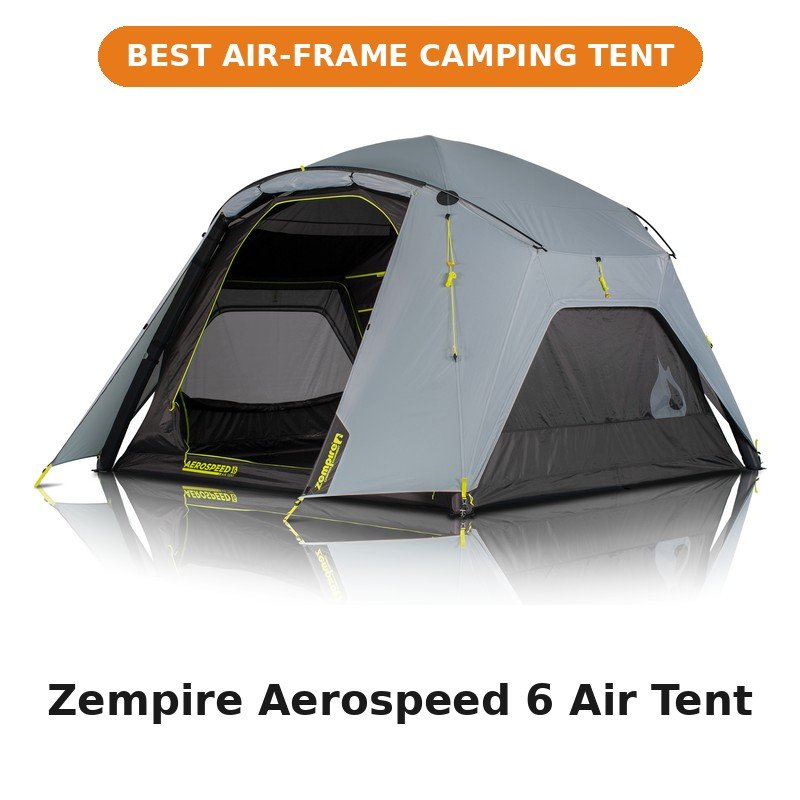
Who this fits: Campers who prefer inflatable support beams instead of threading long pole sleeves. Zempire lists a 205 cm (80.7 in) peak, around 87 sq ft interior, and a hand pump included. The air frame is designed for rapid inflation, with a real 34.4 sq ft vestibule outside the sleeping compartment.
What can go wrong: An inflatable structure introduces valve and pressure checks that regular pole tents do not have. Published area numbers differ by regional version: REI lists 95.5 sq ft for a separate SKU. Confirm the exact variant. When judging value, include any separate footprint, additional stakes and the real effort of drying and storing this tent after wet weather.
Verified figures: 6-person label; 87 sq ft reported area; 80.7 in peak; 23.8 lb (manufacturer) listed weight; 2 doors. Check exact product specifications.
13. BEST COMPACT BUT TALL FOUR-PERSON DOME
MSR Habitude 4
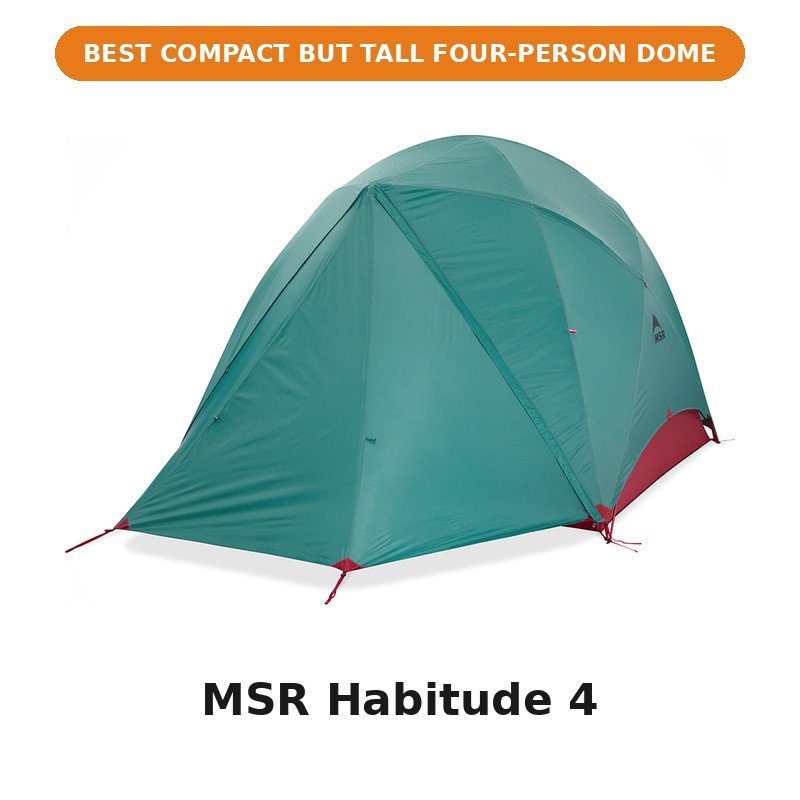
Who this fits: Smaller camping groups who want tall clearance without an oversized 6-person footprint. The 62.4 sq ft Habitude 4 stands 73 in high and includes a 23.5 sq ft vestibule. Hubbed aluminum poles and strategically placed mesh favor an organized pitch and flexible three-season use.
What can go wrong: One door is less flexible than the two-entry alternatives. The integrated porch light requires two CR2032 batteries that are not included, and the archived retailer listing should be checked for current stock. When judging value, include any separate footprint, additional stakes and the real effort of drying and storing this tent after wet weather.
Verified figures: 4-person label; 62.4 sq ft reported area; 73 in peak; 12 lb 10 oz listed weight; 1 doors. Check exact product specifications.
14. BEST TWIN-VESTIBULE VALUE TENT
Kelty Wireless 4P
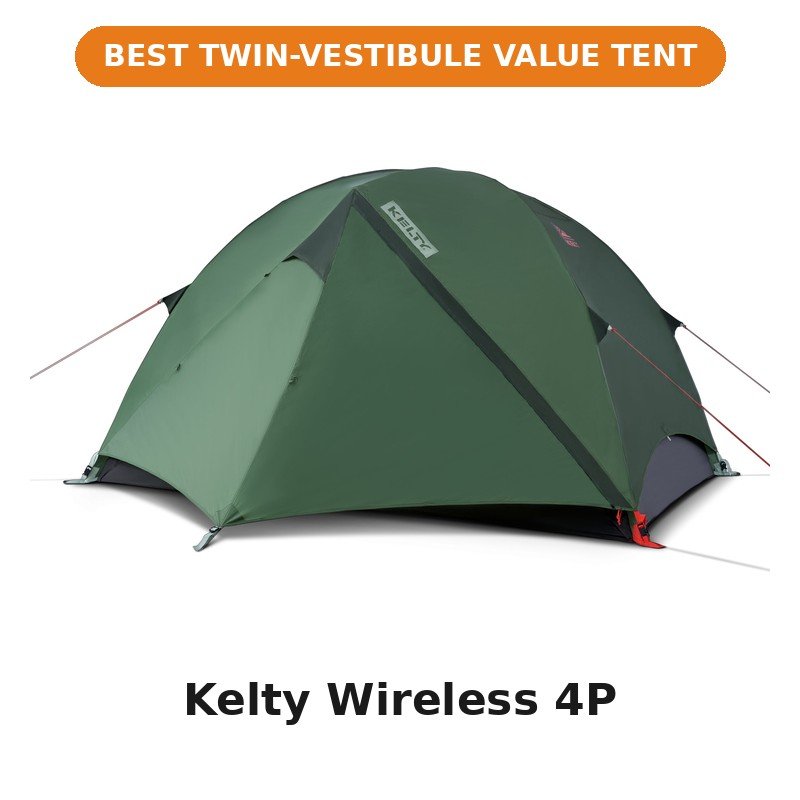
Who this fits: Campers who value separate exits and shoe storage more than room to stand upright. Kelty confirms 58.3 sq ft of sleeping space, two doors and two 12.9 sq ft vestibules. The rainfly has taped seams and the corners are intended to speed setup.
What can go wrong: The 57 in peak is suitable for sitting or crouching, not adult standing. Kelty notes retailer versions may differ, and the manufacturer product page also displays unavailable stock, so verify the current seller and SKU. When judging value, include any separate footprint, additional stakes and the real effort of drying and storing this tent after wet weather.
Verified figures: 4-person label; 58.3 sq ft reported area; 57 in peak; 13 lb 6 oz listed weight; 2 doors. Check exact product specifications.
15. BEST LIGHTER SMALL-GROUP OPTION
Marmot Tungsten 4-Person
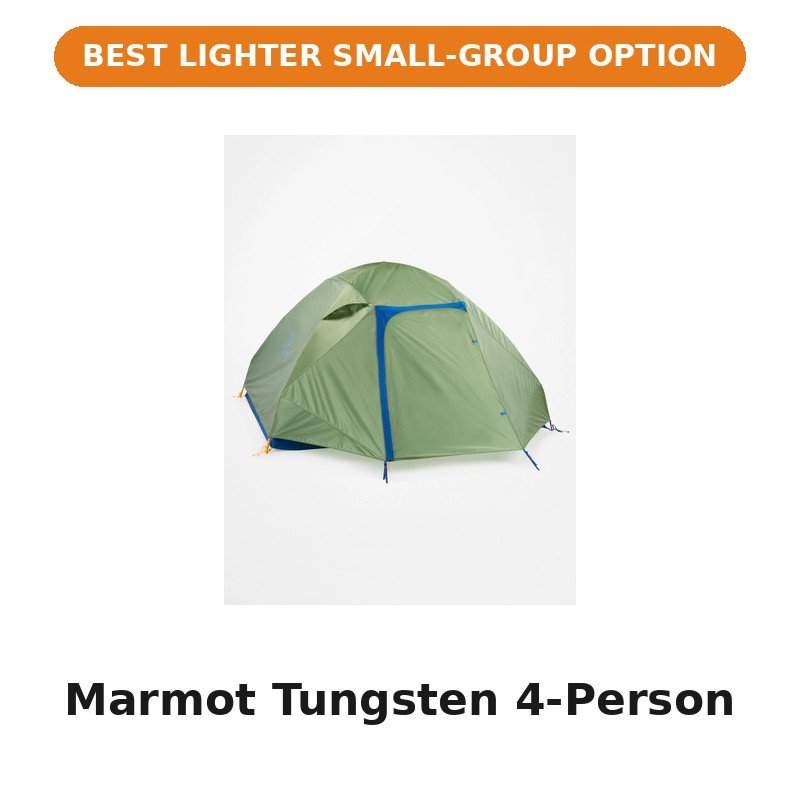
Who this fits: Two to three campers who want a lower tent with two doors and room for smaller gear. Marmot confirms 52.7 sq ft floor, two vestibules and a 52.8 in peak. A full-coverage seam-taped fly, catenary-cut floor and included footprint create a practical shelter package.
What can go wrong: The advertised 7 lb 15 oz is minimum weight, not packed weight, so do not compare it directly to other models’ packaged weights. A low roof and smaller floor make air mattresses and standing impossible. When judging value, include any separate footprint, additional stakes and the real effort of drying and storing this tent after wet weather.
Verified figures: 4-person label; 52.7 sq ft reported area; 52.8 in peak; 7 lb 15 oz minimum listed weight; 2 doors. Check exact product specifications.
16. BEST DRIVE-UP POP-UP HUB
Gazelle T4 Hub Tent
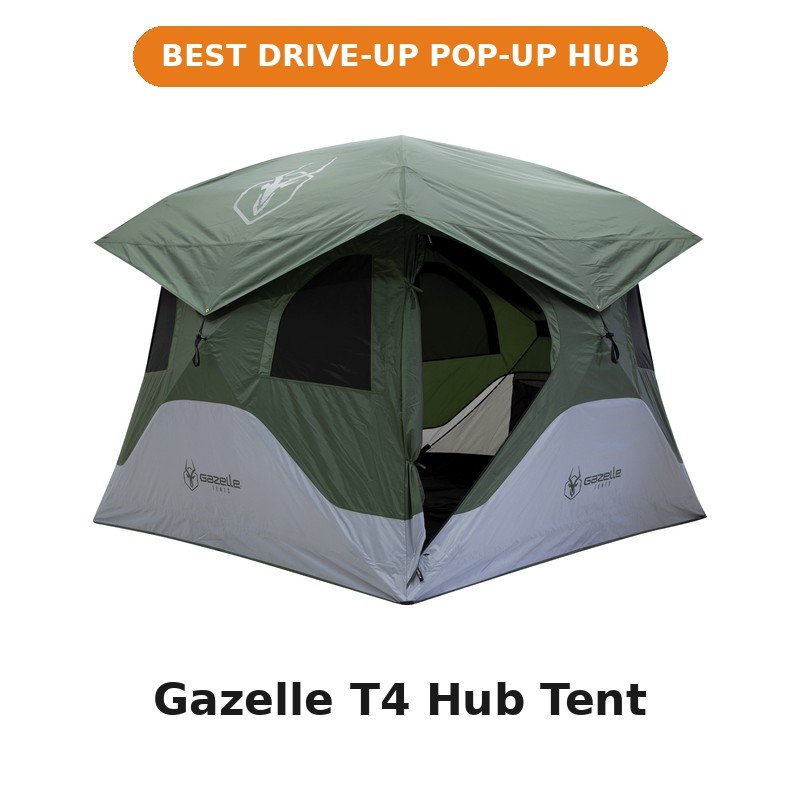
Who this fits: Overlanders and drive-up campers who prioritize fast setup and easy stand-up room. Gazelle confirms 61 sq ft floor and 78 in peak for the T4, with the manufacturer promoting pop-out hubs and a removable rainfly. Its rugged rectangular shell suits repeated quick camps.
What can go wrong: The long, roughly 67.5 in folded package is inconvenient for compact vehicles and will not work as a backpacking shelter. At 30 lb on the retailer listing, check your carry distance carefully. When judging value, include any separate footprint, additional stakes and the real effort of drying and storing this tent after wet weather.
Verified figures: 4-person label; 61 sq ft reported area; 78 in peak; 30 lb listed weight; 2 doors. Check exact product specifications.
17. BEST AFFORDABLE SIMPLE FOUR-PERSON
Kelty Discovery Basecamp 4
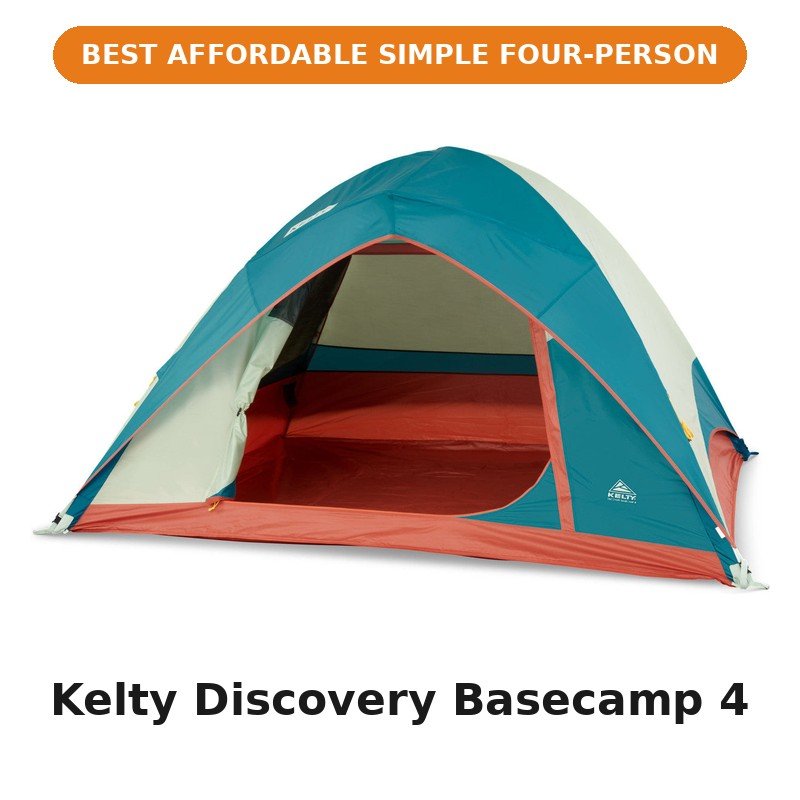
Who this fits: New campers who mainly sleep inside and want low assembly complexity. The manufacturer confirms 53.22 sq ft floor, 58 in peak and a basic Quick Corners X-frame. The taped rainfly and pre-attached guylines reduce setup steps on casual weekend trips.
What can go wrong: The single entrance and limited standing room are real compromises. The fiberglass poles are appropriate to its budget design, but less desirable than aluminum when pitch refinement matters. When judging value, include any separate footprint, additional stakes and the real effort of drying and storing this tent after wet weather.
Verified figures: 4-person label; 53.22 sq ft reported area; 58 in peak; 8 lb 8 oz listed weight; 1 doors. Check exact product specifications.
18. BEST CLASSIC TWO-VESTIBULE GROUP TENT
Marmot Limestone 6-Person
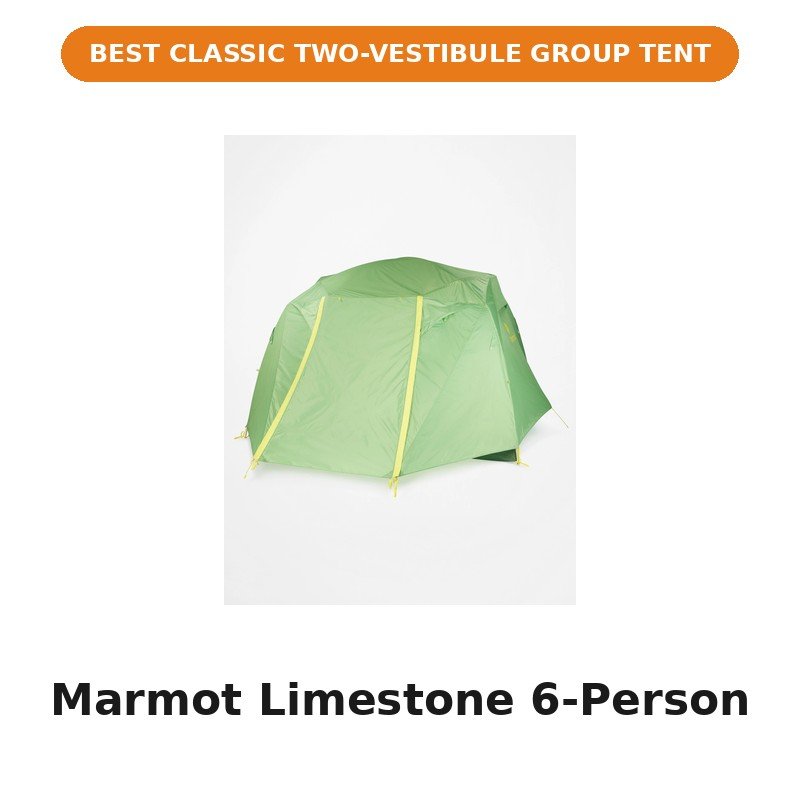
Who this fits: Families looking for a conventional two-door, roomy car-camping tent. The listing confirms 82.9 sq ft, a 76 in peak and two vestibules with a seam-taped full-coverage rainfly. The pre-bent frame makes near-wall space more usable than an equally sized basic dome.
What can go wrong: This specific retailer listing was unavailable during research. Check current manufacturer inventory before recommending a transaction, and verify the exact generation because older and newer Limestone versions vary. When judging value, include any separate footprint, additional stakes and the real effort of drying and storing this tent after wet weather.
Verified figures: 6-person label; 82.9 sq ft reported area; 76 in peak; 17 lb listed weight; 2 doors. Check exact product specifications.
Reader Poll: What Most Often Makes You Reject a Camping Tent?
The Bottom Line
Best all-around family base camp: The North Face Wawona 6 for its usable vestibule. Best four-person room: REI Westward 4. Best exposed campground choice: REI Base Camp 4 where a braced, full-fly dome is preferred. Best simple family value: Kelty Discovery Basecamp 6. Fastest hub-style drive-up option: Gazelle T4 if its folded length fits your vehicle.
Do not buy by the “sleeps six” label alone. Draw the floor dimensions, check the full packed kit and verify stock for your exact model revision. Published specs are a starting point; weather and fit still depend on your pitch and campsite.
Editorial transparency: manufacturer and retailer specifications were reviewed in October 2026. We did not conduct original side-by-side weather testing, and product designs, measurements, stock and regional conditions can change.
Related reading on The Bridge: the complete camping gear checklist, camping hammocks, inflatable kayaks