
Editorial disclosure: The Bridge is reader-supported. When you buy through links on our site, we may earn an affiliate commission at no extra cost to you. Full disclosure. Scores below are editorial design-fit estimates from manufacturer specifications and product documentation, not laboratory measurements.
Best Inflatable Kayaks of 2026: 18 Models Compared for Lakes, Tandem Trips and Rivers
You need an inflatable kayak you can carry, store and paddle on the water you actually visit. Here is how to choose between a light weekend boat, a straighter-tracking touring inflatable and a self-bailing river kayak, without buying the wrong package or exceeding its real load capacity.
Quick answer: Choose the Sea Eagle 385ft FastTrack V-bottom for mixed solo/tandem flatwater use, the Sea Eagle 393rl RazorLite for efficient solo lake touring, and the Sea Eagle 380x Explorer for appropriately planned mixed-water use. On a smaller budget, the Intex Challenger K1 is strictly a short calm-water starter. Each pick has disqualifiers below.
What makes this guide different: All 18 options are actually inflatable, not folding plastic boats. We compare manufacturer-reported hull weight rather than shipping weight, publish concrete passenger/load limits, explain fin/valve/PSI mismatches, and count the accessories and drying space you need after purchase. The 1-10 scores are editorial interpretations of published specifications, not field-test results.
Longer sheltered-water miles: narrow hull plus skeg. Mixed casual tandem trips: usable cockpit plus 15%-20% load margin, if practical. Rapids: appropriate manufacturer rating, self-bailing drainage and training. Apartment ownership: manageable packed bag, surface access for drying and a pump compatible with each chamber. Do not use marketing words such as “expedition” or “stable” to override those checks.
How to Choose an Inflatable Kayak: Four Decisions Before You Shop
1. Flatwater tracking versus river maneuverability
A long, more directional waterline plus an appropriate skeg helps a lake kayak travel with fewer corrective strokes. A short rockered whitewater hull turns faster but generally asks for more corrections on flatwater. Wind, paddler technique, seating position and hull pressure can change the result. Reject narrow touring models for whitewater unless the exact manufacturer approves the use.
2. Real seating space and usable load
A maximum load is not a guarantee of comfortable seating for the listed number of people. Add adult weights, dogs, wet clothing, water, pumps and dry bags, then allow a practical margin rather than planning to paddle exactly at the rated limit. Inspect the internal legroom, not merely the outside length. The Sea Eagle SE370, for example, carries a three-person label but the manufacturer says it most easily fits two adults.
3. How much you will actually carry
Manufacturers may advertise hull-only weight, while stores sometimes display packaged or shipping weight. Those figures are not interchangeable. Add pump, paddle(s), seats, fins, repair kit, personal flotation devices and water to the carried load. Check the bag dimensions if you have apartment stairs, public transportation, a compact car or a long walk to the shoreline.
4. Cleanup, inflation pressure and missing accessories
Low-pressure vinyl, detachable drop-stitch floors and full drop-stitch hulls need different pumps and drying routines. Pay attention to each chamber: a 10-15 psi floor can sit beside 2-3.5 psi side tubes. Match the valve adapter, pressure gauge and PSI rather than inflating by feel. Check whether the package actually contains paddles, seats and a compatible pump.
Understand the construction terms before comparing prices
Drop-stitch uses internal threads to keep a chamber flatter and more rigid at its specified pressure. I-beam floor refers to a softer low-pressure construction. A skeg is a tracking fin, and should be handled or removed where launch depth is inadequate. A self-bailing hull drains water through dedicated openings, a river benefit that may also leave a wet floor in some flatwater situations. Rocker describes the upward curvature toward the bow and stern, often associated with turning rather than straight tracking.
Materials and valves: PVC is common throughout this list, while Hypalon or CSM is another inflatable-boat fabric family; do not assume it is used unless the specific product states so. Boston valves appear on some Intex designs, Halkey-Roberts-style adapters appear in Aquaglide kits, and NRS lists Summit II or Leafield C7 valves on selected river models. The adapter must match the actual valve. Always respect the stated PSI rating for each chamber.
Filter out the wrong kayak before reading reviews
- Reject a kayak above your weight or carried-load limit. Count riders and all gear together.
- Reject a tandem you cannot lift, launch and dry solo if you frequently paddle alone.
- Reject a flatwater kayak for technical rapids without exact manufacturer suitability and relevant paddling skills.
- Reject thin/soft low-pressure designs for long exposed lake days where wind and tracking are major demands.
- Reject any kit that requires accessories you have not budgeted for. Pumps, pressure gauges and two paddles can materially change cost.
Compare 393rl versus the 385ft: a narrower dedicated solo hull versus a configurable two-person load envelope.
Compare the 385ft, Chelan 155 and Zeppelin 12 ft 6 in: tracking focus, expedition length and family stability are three different jobs.
Compare the Explorer 380x, Raven I/Raven II and Tomcat: drain choices, side tubes and the paddling skill required matter.
Compare Deschutes 110, EZLite10 and AdvancedFrame Sport: the lightest listed hull is not always easiest to dry.
Inflatable Kayak Comparison Table: Verified Dimensions and Load Ratings
Specifications reflect the cited model/version as available during the October 2026 research. Hull weight is omitted when only an ambiguous packaged-item weight is shown. Length and width are approximate published manufacturer dimensions. Retail availability changes.
| Kayak and use | Size (length x beam) | Hull weight | Max load | Floor / pressure | Big reason to skip |
|---|---|---|---|---|---|
| Sea Eagle 393rl RazorLite BEST TOURING SOLO |
12 ft 9 in x 27 in | 35 lb | 500 lb | Up to 10 psi in floor and side chambers | Skip it for whitewater; manufacturer lists no whitewater rating |
| Sea Eagle 385ft FastTrack V-bottom BEST OVERALL FLATWATER |
12 ft 7 in x 31 in | 31 lb | 635 lb / 2 people | Up to 10 psi floor; 3.5 psi sides | Skip for technical whitewater beyond manufacturer Class II suitability |
| Sea Eagle 380x Explorer BEST MIXED WATER |
12 ft 6 in x 38 in | 40 lb | 750 lb / rated up to 3 people | Up to 10 psi floor; 3.5 psi sides | Skip if your priority is long-distance flatwater speed, not river versatility |
| Sea Eagle EZLite10 BEST LIGHTWEIGHT HIGH-PRESSURE |
10 ft x 31 in | 25 lb | 325 lb | Up to 10 psi floor and sides | Skip if a second seat is required |
| Sea Eagle SE370 Sport Kayak BEST BUDGET LARGE LOAD |
12 ft 6 in x 33 in | 33 lb | 650 lb / rated 3 people | 1.1 psi floor and sides | Skip if you need a rigid drop-stitch floor and efficient tracking |
| Advanced Elements AdvancedFrame Sport BEST EASY-ENTRY SOLO |
10 ft 5 in x about 32 in | About 26.5 lb | About 250 lb | Refer to product manual for each chamber | Skip if easy rinse-and-wipe cleaning is non-negotiable |
| Advanced Elements AdvancedFrame BEST COVERED COCKPIT |
10 ft 5 in x 34 in | 36 lb | 300 lb | Follow manufacturer manual; not independently verified here | REI page currently shows not available; skip if you need immediate fulfillment |
| Intex Challenger K1 BEST ENTRY-LEVEL SOLO |
9 ft x 30 in | Hull weight not verified | 220 lb | Low-pressure; verify valve-specific inflation limits | Skip for extended distances, exposed bays or whitewater |
| Intex Explorer K2 BEST ENTRY-LEVEL TANDEM |
10 ft 3 in x 36 in | Hull weight not verified | 400 lb | Low-pressure; verify product manual | Skip if tandem touring against wind is the main use |
| Intex Excursion Pro K2 BEST BUDGET FISHING FEATURES |
12 ft 7 in long; width unverified | Hull weight not verified | 400 lb | Check product manual | Skip if you need a stable stand-up fishing deck |
| Aquaglide Deschutes 110 BEST LIGHTWEIGHT OPEN DECK |
11 ft x 36 in | 18.1 lb | 300 lb | Refer to manual; PSI not verified | Manufacturer product page currently sold out |
| Aquaglide Chelan 120 BEST COMPACT DROP-STITCH TOURER |
11 ft 3 in x 32.5 in | 28.3 lb | 300 lb | Floor uses drop-stitch; exact PSI unverified | Manufacturer shows sold out; check reliable stock before committing |
| Aquaglide Chelan 155 BEST LARGE TOURING TANDEM |
15 ft 1 in x 36 in | 38 lb | 600 lb | Drop-stitch floor; verify manual PSI | Manufacturer listing sold out; long hull needs drying/storage space |
| BOTE Zeppelin Aero 10 BEST STABILITY-FIRST SOLO |
10 ft long; beam unverified | 37.5 lb | 300 lb | Separate floor/pontoon pressures; verify model manual | Skip for narrow-hull long-distance efficiency |
| BOTE Zeppelin Aero 12 ft 6 in BEST RELAXED FAMILY TANDEM |
12 ft 6 in x 38 in | 41 lb | 600 lb | Floor 10-15 psi; pontoons 2-3 psi on cited package | Skip if 41 lb hull plus accessories exceeds your solo carry comfort |
| NRS STAR Raven I BEST SOLO WHITEWATER LEARNING PLATFORM |
9 ft 10 in x 38 in | 37 lb | 275 lb | Drop-stitch floor 8-10 psi | Skip for long flatwater outings; rocker trades tracking for maneuvering |
| NRS STAR Raven II BEST TANDEM WHITEWATER |
12 ft 2 in x 38 in | 44 lb | 400 lb | Drop-stitch floor 8-10 psi | Skip for solo carry or efficient lake touring |
| Tributary Tomcat Solo BEST SIMPLE RIVER INFLATABLE |
10 ft 3 in x 36 in | 32 lb | 375 lb | Chamber pressure not confirmed; follow owner manual | Skip for flatwater tracking or if backorder is unacceptable |
Best Inflatable Kayaks: 18 Detailed Reviews
Each review weighs what the kayak does, what becomes inconvenient after purchase and exactly when to skip it. The same four editorial criteria appear in every score table. A lower tracking score on a whitewater kayak reflects its different design purpose, not a claim that it is unsafe or poorly built.
1. Sea Eagle 393rl RazorLite
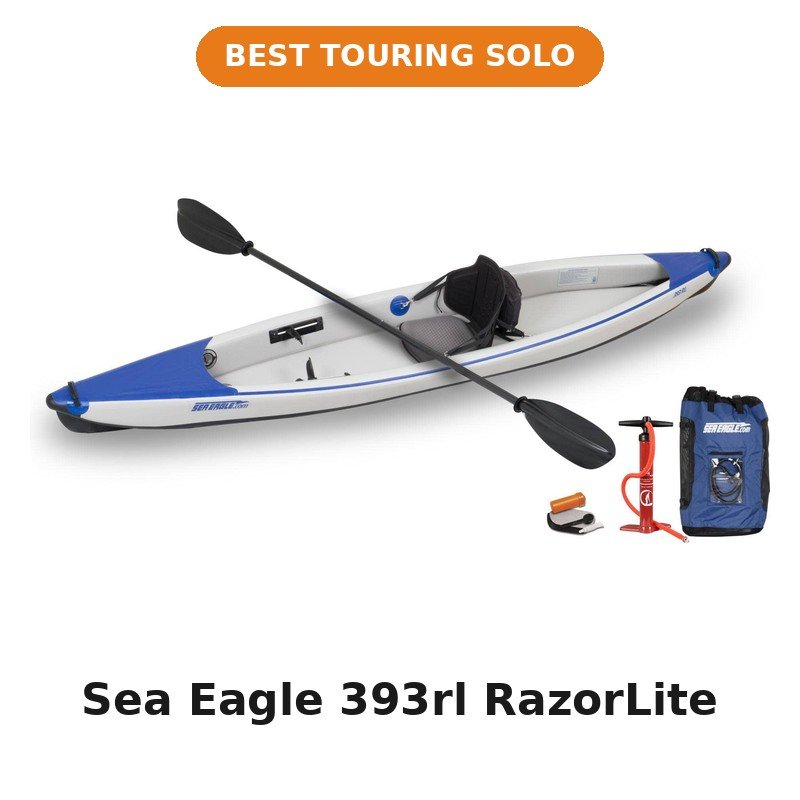
Best for: Longer calm-water routes and efficient solo paddling.
If you have been paddling a soft, wide inflatable across open lakes and keep correcting your heading, the 393rl is a sensible move toward a straighter, more touring-oriented shape. Sea Eagle specifies a 12 ft 9 in hull, a 27 in beam and a 35 lb weight. The 10 psi drop-stitch side chambers and floor make this a different proposition from a low-pressure recreation boat.
The trade-off is clear: a narrow boat rewards a steadier stroke but leaves less margin for uneasy first-time paddlers, an excited dog or frequent swimming stops. There is no manufacturer whitewater rating. It also needs a suitable high-pressure pump, not just a low-pressure mattress inflator. Choose it for calm-water distance, not for easy step-in stability or rocky rapids.
Construction: Full drop-stitch, narrow 27 in hull. Package: Varies by package; verify paddle and pump. Availability: Check seller.
2. Sea Eagle 385ft FastTrack V-bottom
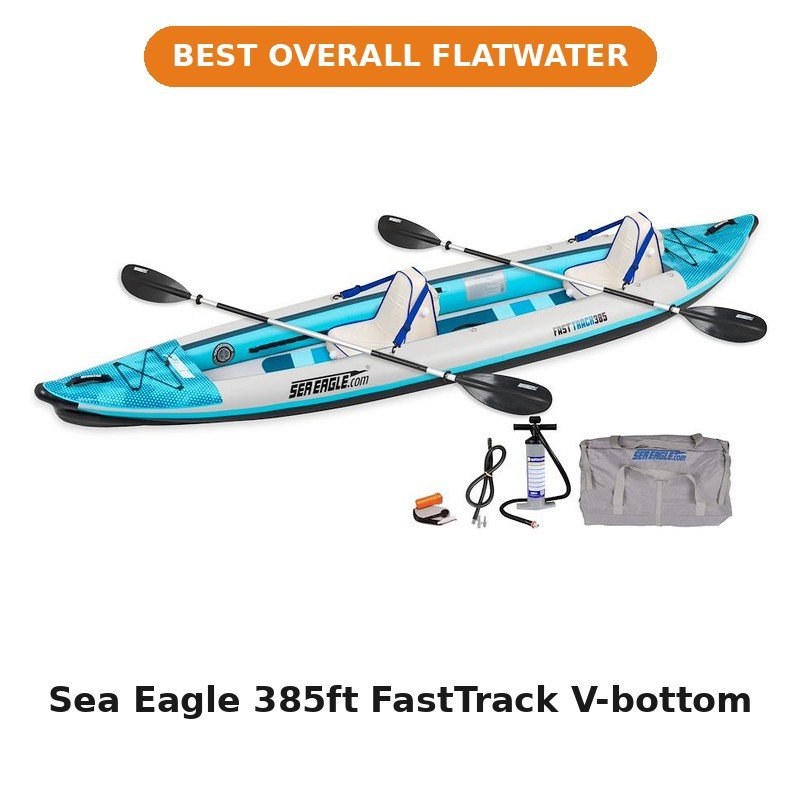
Best for: Mixed solo/tandem lake trips and day touring.
For the paddler who wants one inflatable to cover solo afternoon laps and occasional two-person trips, the redesigned FastTrack 385ft has a balanced spec sheet: 12 ft 7 in long, 31 in wide, 31 lb and a 635 lb rated load. Its attached V-bottom drop-stitch floor and removable skeg give it a more directional design than a plain inflatable I-beam floor.
Two seats do not automatically create two roomy touring positions once dry bags and longer legs enter the picture. The attached floor also means you must check seam channels when drying. Remove the skeg before shallow launches and check the correct floor-versus-side PSI, since the manufacturer specifies different pressure limits. A larger inflatable or 15 ft touring tandem makes more sense for extended two-person trips.
Construction: Attached 4 in V-bottom drop-stitch floor. Package: Carry bag and repair kit; exact seat/paddle/pump depend on package. Availability: Check seller.
3. Sea Eagle 380x Explorer
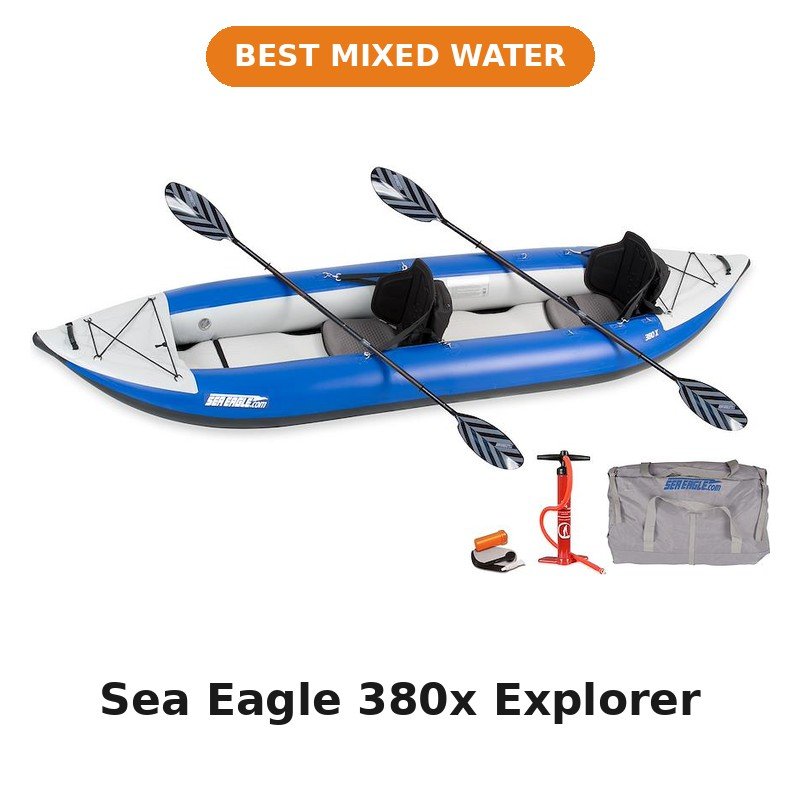
Best for: Paddlers switching between lakes and appropriately rated rivers.
The 380x is a more honest choice than a narrow touring kayak if the same boat must handle supervised moving-water trips and relaxed lakes. Sea Eagle supplies an unusually clear technical basis for that role: a 38 in-wide hull, removable high-pressure floor, 16 closable drains, and a manufacturer rating up to Class IV. That rating is about the boat, not the paddler's ability.
For routine lake miles you pay for that versatility in weight and extra beam, both of which can raise paddling effort. Three-person capacity on a label should not be treated as three comfortable adult seats; fit people and gear in the actual cockpit before deciding. Whitewater requires training, route assessment, protective gear and a competent group. Never buy a Class IV-rated kayak as a substitute for those skills.
Construction: Removable 4 in drop-stitch floor; 16 closeable floor drains. Package: Varies by kit; verify seats, pump and paddles. Availability: Check seller.
4. Sea Eagle EZLite10
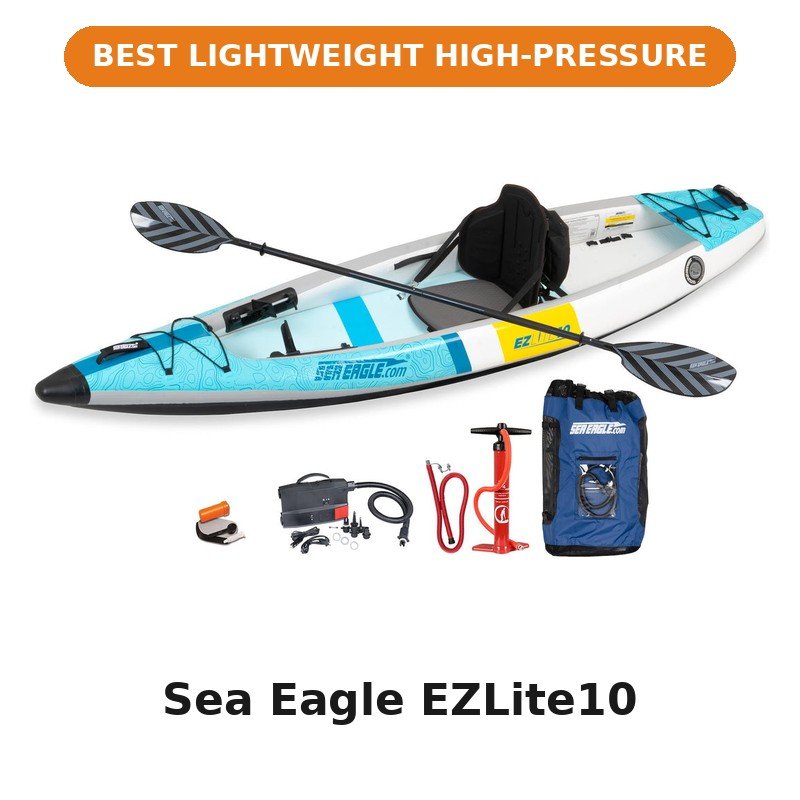
Best for: Solo owners who prioritize an easy lift and compact storage.
A 25 lb hull is materially easier to manage than many 40 lb-plus touring inflatables, especially if a small apartment, stairs or a long path to the shoreline is involved. Sea Eagle's current EZLite10 uses woven drop-stitch chambers and a V-bottom floor, with a 10 ft length and 325 lb rated load.
Do not confuse a compact packed kayak with a fully equipped 25 lb carry. The listed hull weight is not the paddle, pump, PFD, water and bag together. Its shorter waterline also changes the decision for longer tours: choose a longer FastTrack or RazorLite when straight-line distance matters more than getting from closet to shoreline with less effort.
Construction: Three independent chambers; woven drop-stitch V-bottom. Package: Package dependent; confirm pump, seat and paddle. Availability: Check seller.
5. Sea Eagle SE370 Sport Kayak
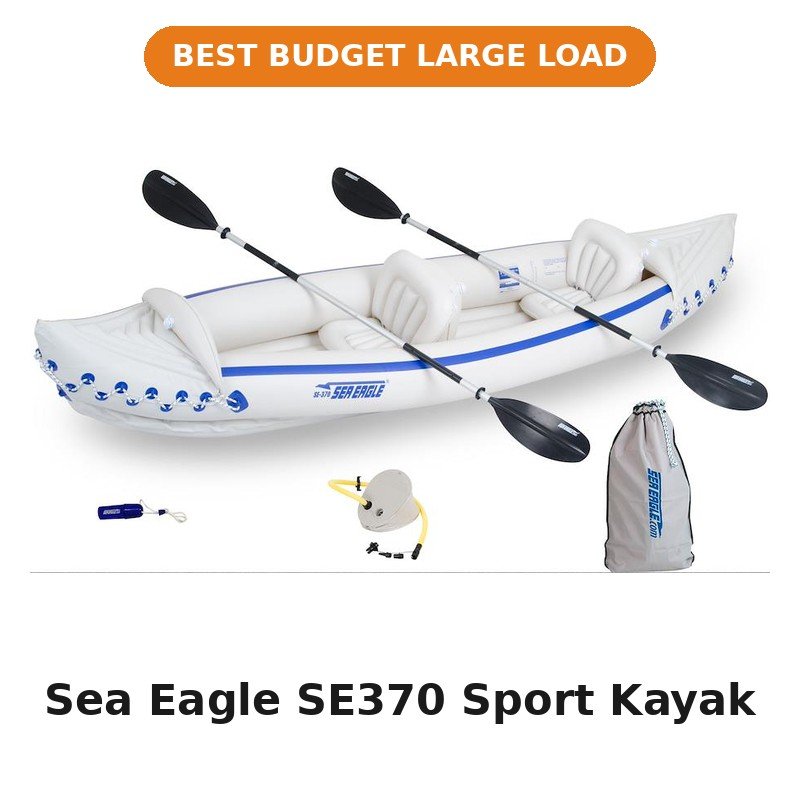
Best for: Casual two-adult flatwater outings with room for gear.
The SE370 is a better fit for relaxed outings than buyers who read 'three-person' and assume it will work like a three-seat touring craft. Sea Eagle itself says that although the boat is rated to 650 lb and up to three people, its space is best suited to two. It uses a 1.1 psi low-pressure floor and sides, with an inflatable I-beam floor rather than a drop-stitch panel.
That construction keeps the purchase accessible but makes it a poorer choice for a paddler frustrated by a soft floor, windy conditions or a long out-and-back route. Two molded skegs help, but they cannot convert the hull into a 27 in touring design. Verify the selected package: the cheapest listing may not include the seats or accessories you expect.
Construction: Low-pressure I-beam floor; twin molded skegs. Package: Different packages include different seats, paddles and pump. Availability: Check seller.
6. Advanced Elements AdvancedFrame Sport
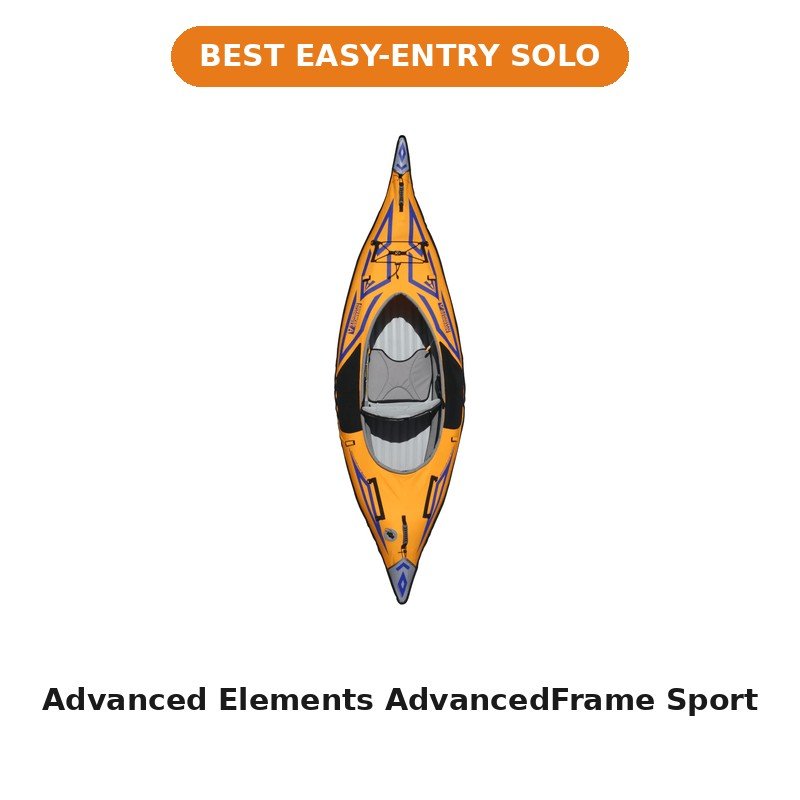
Best for: Casual touring with a wide cockpit opening.
The AdvancedFrame Sport is for the paddler who dislikes stepping into a tightly enclosed kayak but still wants a defined bow and stern. The brand's Belgian distribution page confirms aluminum rib elements, multilayer construction, a tracking skeg, and approximate dimensions of 10 ft 5 in by 32 in. Its listed 12 kg hull works out to about 26.5 lb.
The hidden ownership decision is the textile-over-chamber construction. Sand and water can collect between layers, and owners need enough space and time to dry it thoroughly. The 250 lb approximate load listing leaves less headroom for heavy camping cargo than several boats in this comparison. If you regularly arrive home late with no place to lay gear out, consider an exposed drop-stitch or single-skin design instead.
Construction: Multilayer shell, aluminum bow/stern ribs. Package: Seat and bag; accessory bundles vary. Availability: Check seller.
7. Advanced Elements AdvancedFrame
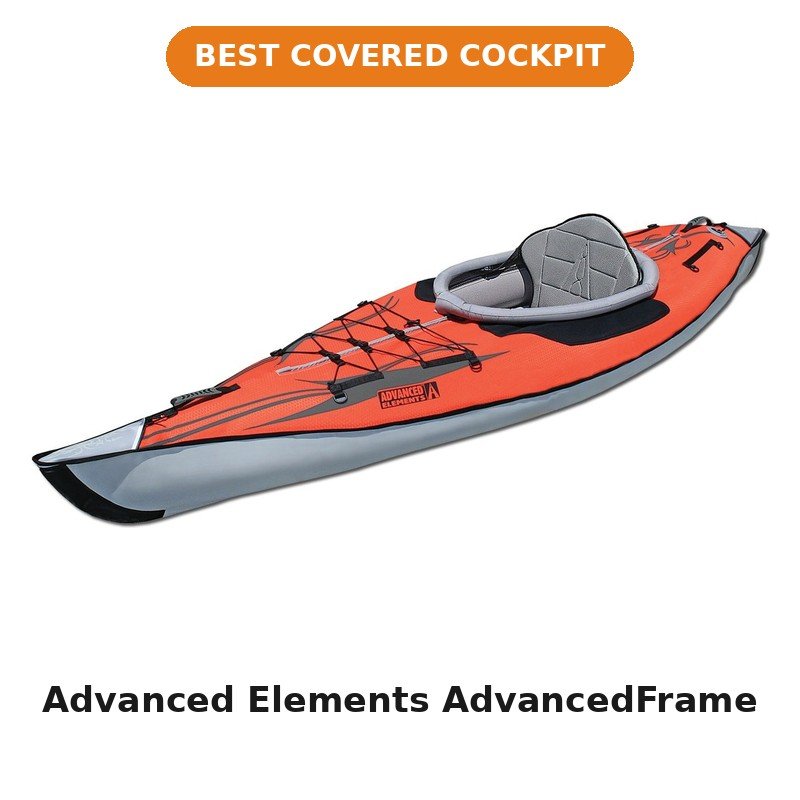
Best for: Solo flatwater touring with a more enclosed cockpit.
The standard AdvancedFrame serves a different buyer from the Sport: someone more interested in a partially covered kayak feel and the option of a spray-skirt-compatible cockpit. REI lists a 10 ft 5 in boat, 34 in beam, 36 lb weight, 300 lb capacity and aluminum frame reinforcement at the ends. It is a compact touring-style inflatable, not an open family raft.
Its shell design is also the chief practical objection. Expect more after-trip drying than with bare PVC tubes, and do not assume a pump is supplied: the REI listing says it is not. The cited REI page currently says the product is unavailable, so treat this as a considered design option rather than a confirmed buy-today recommendation.
Construction: PVC-coated polyester shell with aluminum ribs. Package: Repair kit and duffel; pump not included on REI listing. Availability: REI listing unavailable.
8. Intex Challenger K1
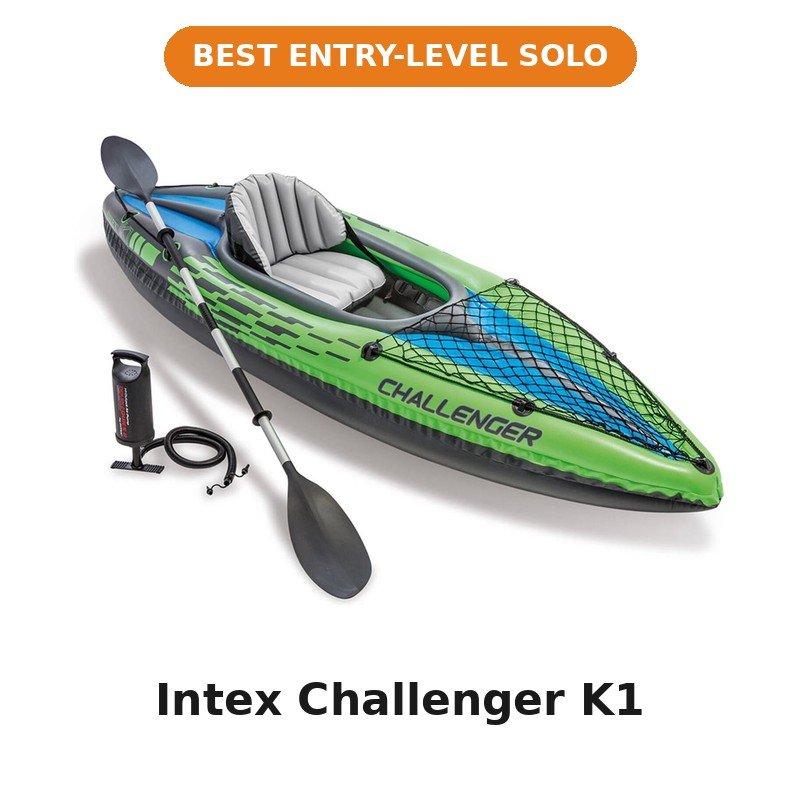
Best for: Low-cost, short calm-lake paddles.
If you are still discovering whether kayaking will become a regular habit, the Challenger K1 makes sense only for a tightly defined job: short, sheltered, fair-weather outings. Intex publishes a 9 ft length and 220 lb maximum load, and includes a paddle, pump and removable skeg. The named Boston valve makes inflation and deflation convenient, but it is not a high-pressure drop-stitch kayak.
The low capacity deserves a hard check before price: paddler weight, clothing, drinking water and gear must remain inside the limit. Its short length and soft floor make it a poor match for ambitious touring. Intex lists a packaged item weight, not a reliably comparable bare-hull weight, so no hull figure is assigned in the table.
Construction: Vinyl I-beam floor; Boston valve; removable skeg. Package: Paddle, hand pump, inflatable seat and repair patch. Availability: Check seller.
9. Intex Explorer K2
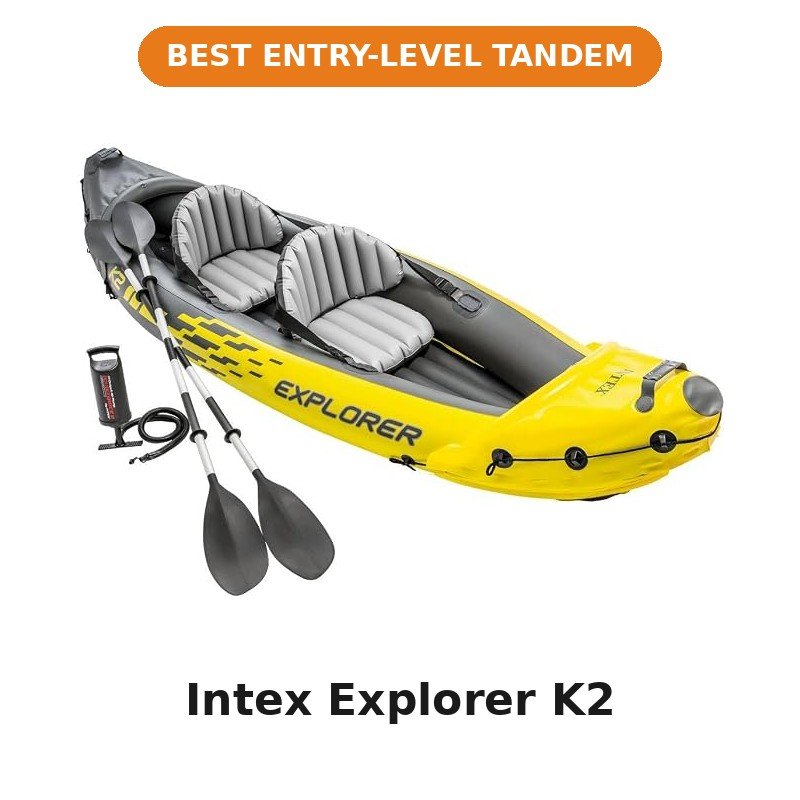
Best for: Two-person outings on sheltered water.
The Explorer K2 is a two-person introduction to calm-water paddling, not a replacement for a long tracking-focused tandem. Intex lists a 10 ft 3 in by 36 in size and a 400 lb combined rating. The removable skeg and inflatable I-beam floor are practical, uncomplicated details for a first summer of short lake trips.
The fastest way to disqualify this model is to add up both paddlers' weight, jackets, water and dry bags. If that total leaves little reserve, move to a more capacious tandem instead of using the limit as a target. Because manufacturer listing weights can reflect the boxed product, we leave hull weight unverified rather than mixing packaged and hull-only numbers.
Construction: Vinyl inflatable I-beam floor; detachable skeg. Package: Two inflatable seats, pump, paddles and repair patch; check kit. Availability: Check seller.
10. Intex Excursion Pro K2
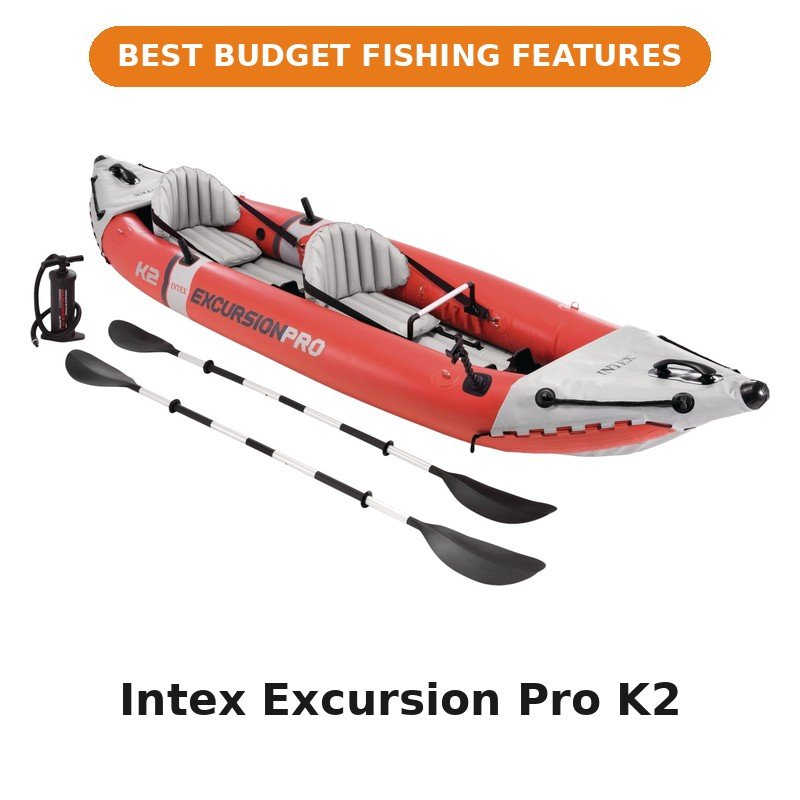
Best for: Anglers who want rod holders without a high-priced platform.
The Excursion Pro K2 is useful when your kayak is primarily a platform for sitting and fishing rather than chasing long distances. Intex confirms two built-in fishing rod holders, two footrests, adjustable seats, storage tie-down points and a 400 lb rated load. The 151 in published length converts to 12 ft 7 in.
Neither the rod holders nor the accessory mount make the hull appropriate for standing to cast. A filled tackle bag, small cooler, paddlers and safety equipment can use up that 400 lb budget quickly. Intex's listing contains an inconsistent width field, so this guide deliberately does not report an unverified beam or a presumed bare-hull weight.
Construction: Three-ply PVC; built-in rod holders, footrests and gear mount. Package: Two seats, paddles, pump and carry bag stated on product page. Availability: Check seller.
11. Aquaglide Deschutes 110
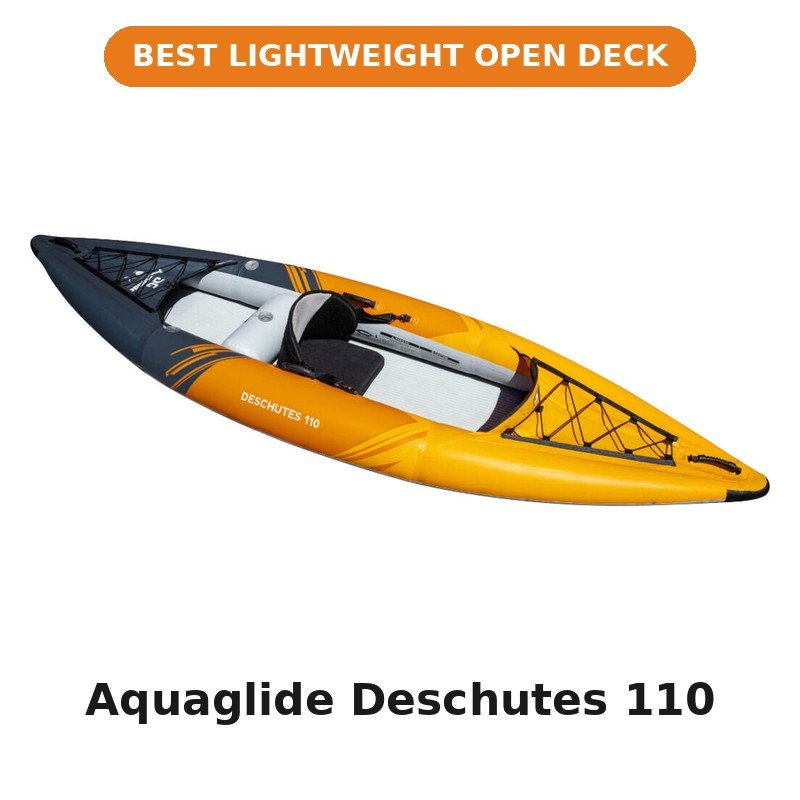
Best for: Solo touring with minimal bulk and easy access.
At a manufacturer-listed 18.1 lb hull weight, the Deschutes 110 is the clearest low-carry-burden option in this set. Aquaglide positions its 11 ft open-deck hull for one-person touring and supplies a quick-release fin, seat, carry bag, adapter and repair kit. It is particularly relevant when getting the kayak to the water is the hard part.
You must still budget for a compatible pump, paddle and PFD, because the manufacturer explicitly omits those. The exposed cockpit is less protective in chop or cold spray than a covered touring boat. The official product listing currently shows sold out, so this is an option to compare with available stock elsewhere, not a claim that Aquaglide has it ready to ship.
Construction: Open-deck Duratex construction; quick-release fin. Package: Seat, fin, carry bag, valve adapter, repair kit; no pump/paddle. Availability: Manufacturer listing sold out.
12. Aquaglide Chelan 120
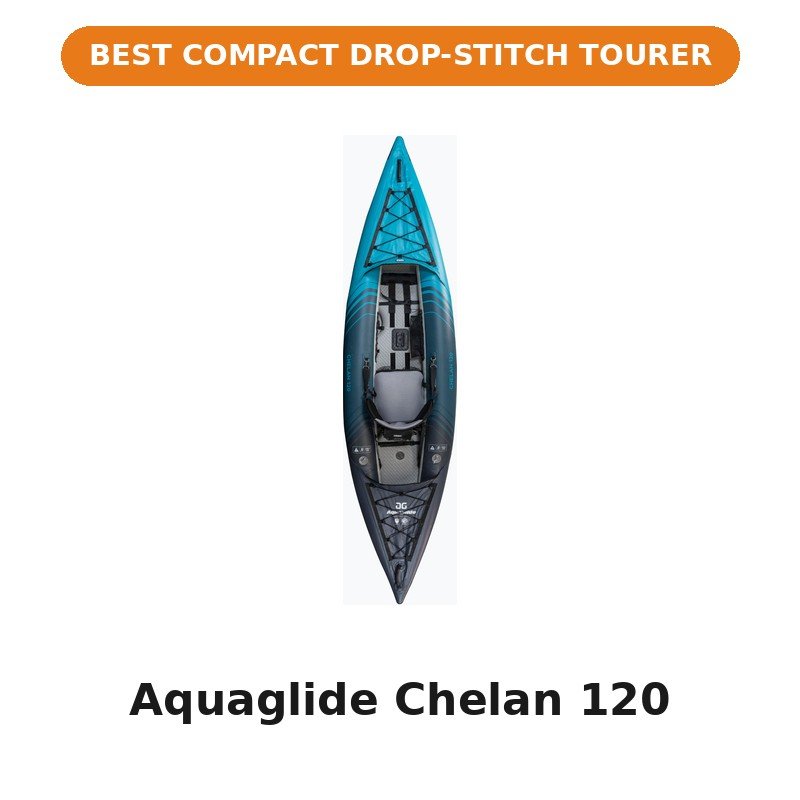
Best for: Solo paddlers prioritizing a hard-floor feel.
The Chelan 120 is the middle path between a budget soft-bottom boat and a slim full-drop-stitch touring hull. Aquaglide verifies an 11 ft 3 in length, 32.5 in width, 28.3 lb hull, 300 lb capacity and a drop-stitch hard-bottom floor. That combination makes sense for single paddlers who value floor rigidity without dropping into an especially narrow boat.
Two hidden limitations matter. First, a rigid floor does not automatically mean rigid sidewalls or a zero-maintenance boat; inspect the tube-to-floor channel during clean-up. Second, the manufacturer's included-item list excludes a pump, paddle and PFD. Aquaglide currently marks the model sold out, so verify dealer availability before treating it as a purchase option.
Construction: Duratex tubes and hard-bottom drop-stitch floor. Package: Seat, fin, bag, valve adapter, repair kit; pump/paddle extra. Availability: Manufacturer listing sold out.
13. Aquaglide Chelan 155
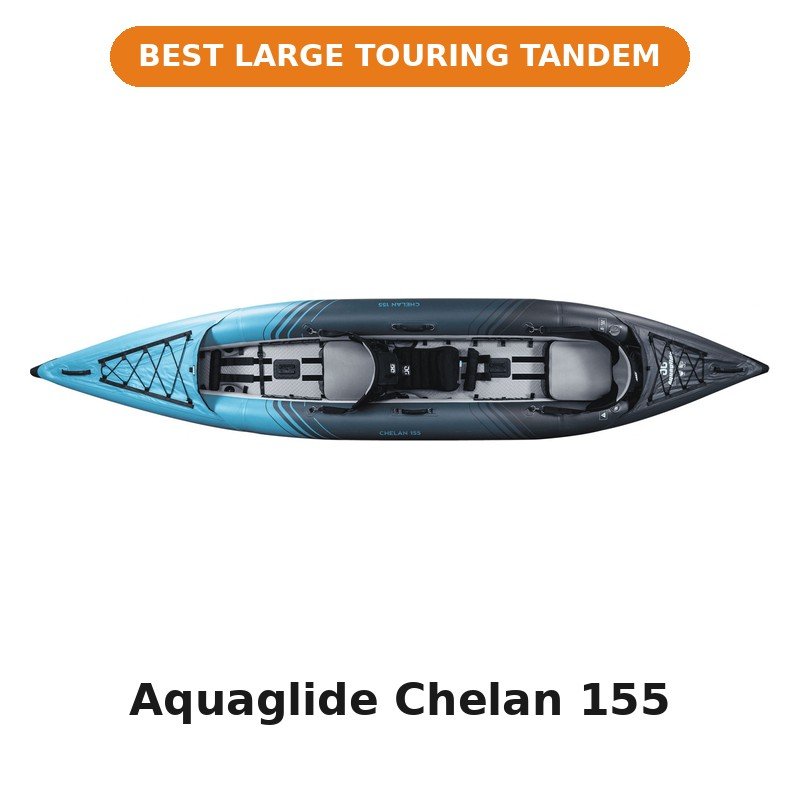
Best for: Two paddlers carrying camping gear on flatwater.
A genuine touring tandem should provide more than a second inflatable cushion. Aquaglide's 15 ft 1 in Chelan 155 has a 600 lb rated capacity, 36 in beam, 38 lb hull weight and two included adult seats, with a child seat also listed. It is the more credible choice here when longer paddling days and dry-bag volume outrank compact setup.
That length also creates a practical problem in a small home. Drying a 15 ft inflatable with a separate floor and fittings requires covered floor space and time, and the purchase still needs a pump and two paddles. Aquaglide currently marks it sold out. Do not force a substitute shorter tandem if your combined carried weight or legroom requires the larger hull.
Construction: Open touring tandem, drop-stitch bottom. Package: Two seats plus child seat, fin, bag, adapter and repair kit; no pump/paddles. Availability: Manufacturer listing sold out.
14. BOTE Zeppelin Aero 10
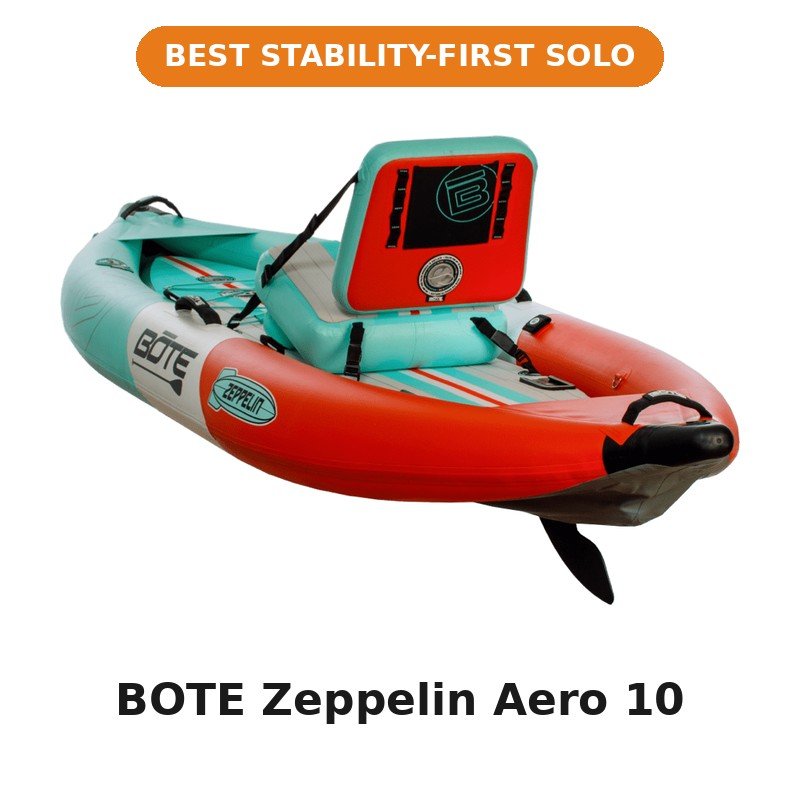
Best for: Recreation paddlers wanting a broad deck and raised seat.
The Zeppelin Aero 10 puts ease of sitting, moving and relaxed recreation ahead of low-weight touring. BOTE's own comparison guide gives the solo 10 ft model a 37.5 lb boat weight and 300 lb load rating. The broad open-deck concept and raised seat are the selling points for users who prize accessible entry and a less cramped seating position.
Its weight is the overlooked drawback: a ten-foot boat can still be tiring to haul solo. If your commute includes three flights of stairs, an 18.1 lb Deschutes is in a different carry category. The Zeppelin is also not the logical pick for keeping a narrow, efficient track across a breezy reservoir. Confirm the contents of the precise package and season before purchase.
Construction: Inflatable drop-stitch floor; raised Aero seat; self-draining hull. Package: Kit varies; verify actual seat, fin, paddle and pump. Availability: Check seller.
15. BOTE Zeppelin Aero 12 ft 6 in
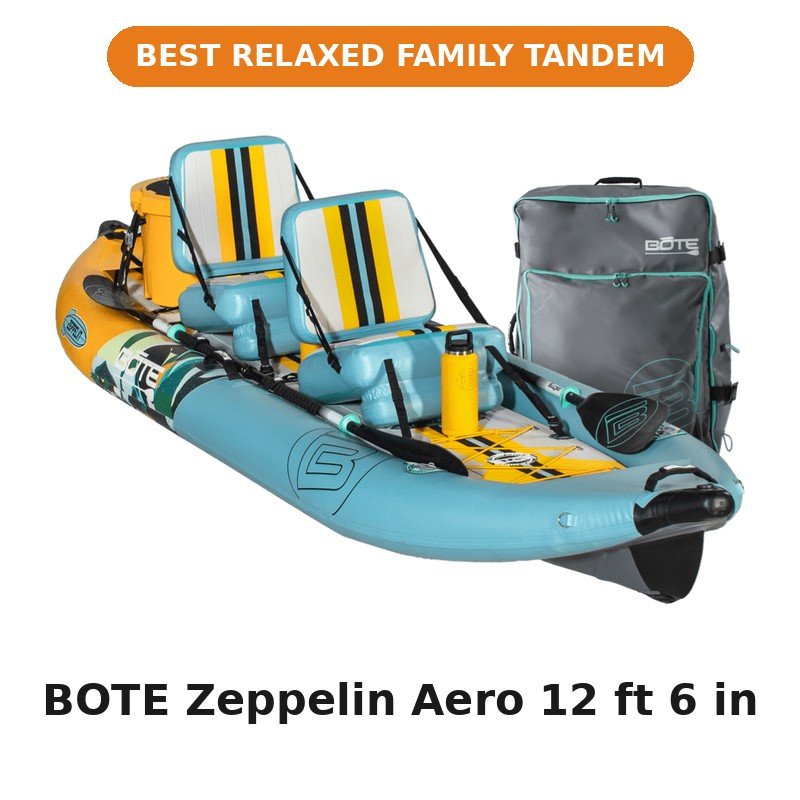
Best for: Flexible solo/tandem recreational paddling.
The 12 ft 6 in Zeppelin offers an easy-to-understand alternative to narrow tandems: a 38 in wide, 41 lb inflatable with a 600 lb rated load. BOTE's cited package includes two adjustable seats, two paddles, a hand pump and a removable center fin. The floor and side pontoons have notably different published working pressures.
It is the family-friendly design pick for sheltered conditions, not a technical whitewater raft or fast touring hull. Width and raised seating work against the goal of low wind exposure, and the fully loaded bag is heavier than the hull figure alone. Double-check which seller's package you have selected because accessories differ substantially across listings.
Construction: Removable floor chamber; raised seats; self-draining. Package: Package example has two seats, two paddles, pump, fin, bag; check configuration. Availability: Check seller.
16. NRS STAR Raven I
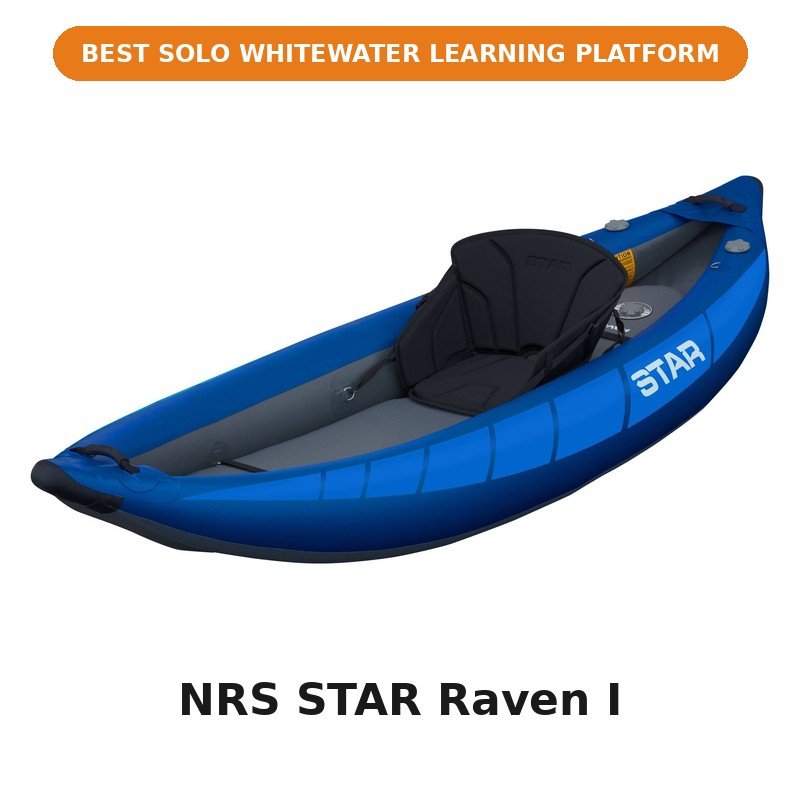
Best for: Trained paddlers on suitable river routes.
The Raven I is a clear example of why an overall 'fastest kayak' rating misses the point. NRS builds the 9 ft 10 in, 38 in wide boat with self-bailing drainage, an 8-10 psi drop-stitch insert and river-oriented rocker. Those are sensible whitewater attributes, not features chosen to cruise a long still-water loop.
At 37 lb and a 275 lb rated load, it is also not automatically light or roomy because it carries just one paddler. For new river paddlers, formal instruction, route selection and appropriate protective equipment matter more than the manufacturer's river suitability statements. Take a touring kayak instead if you chiefly want tracking in calm conditions.
Construction: Self-bailing welded PVC; Leafield C7 valves. Package: High-back seat, carry bag, pump and repair kit. Availability: Check seller.
17. NRS STAR Raven II
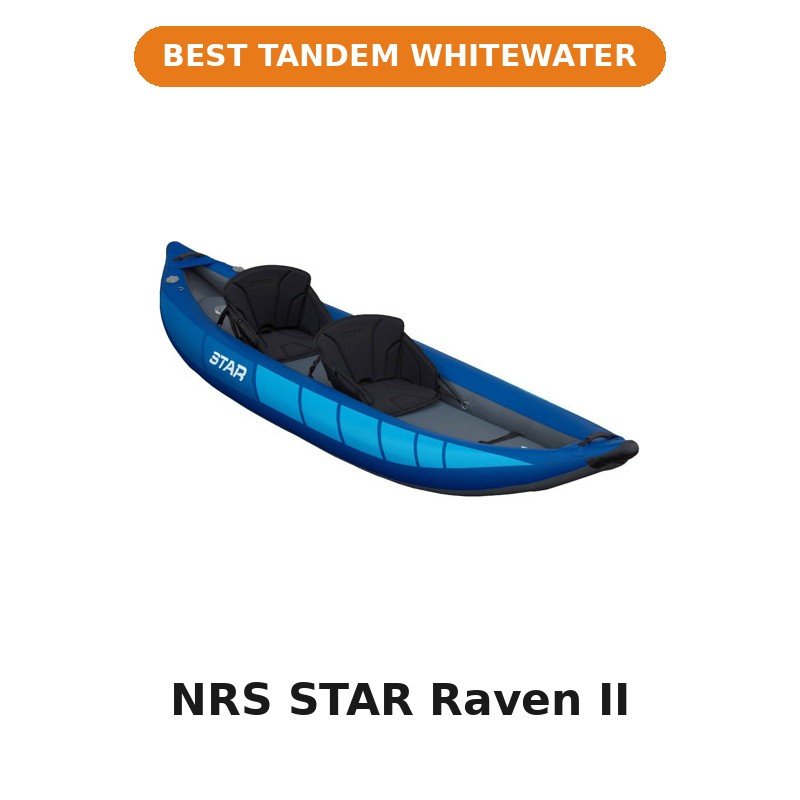
Best for: Two river paddlers needing a self-bailing tandem.
The tandem Raven II applies the same river-first logic to a 12 ft 2 in boat with two high-back seats, a 38 in beam and 8-10 psi removable floor insert. NRS lists a 44 lb boat weight and 400 lb load limit. For paddlers sharing rapids within their skill level, self-bailing drainage is a more relevant feature than a sleek touring outline.
That 400 lb limit is not generous once two adults, rescue equipment, dry clothes and water are counted. Nor does the river hull make sense for long flatwater distances or everyday solo loading. Check actual route classifications with qualified local sources and develop rescue skills before taking any tandem into moving water.
Construction: Self-bailing PVC with removable floor insert. Package: Two seats, bag, pump and repair kit. Availability: Check seller.
18. Tributary Tomcat Solo
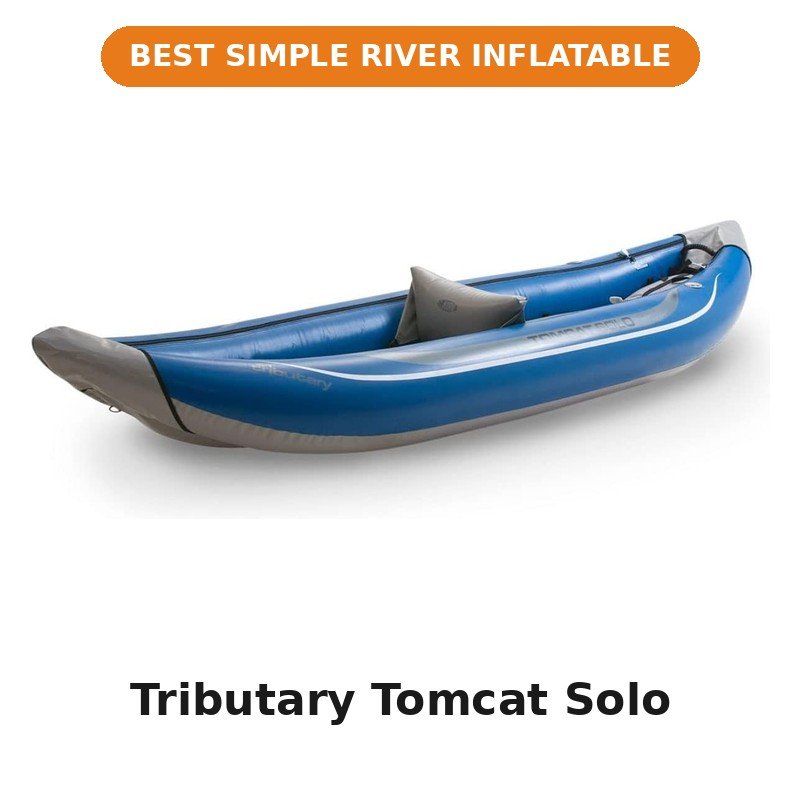
Best for: Solo paddlers wanting low-complexity river gear.
The Tomcat Solo occupies a useful space between a very lightweight recreation boat and a premium technical river kayak. NRS lists a 10 ft 3 in length, 36 in width, 32 lb weight and recommended 375 lb capacity. Its mesh-draining self-bailing floor, Summit II valves and inflatable thwart seat target approachable river paddling.
The trade-off is not just speed. NRS describes an outer PVC shell around an internal AIREcell bladder, so drying and inspection may require more attention than with a single exposed-material hull. The current manufacturer page notes backorder, and the listed kit needs to be checked carefully. It is not a substitute for a long skegged kayak when your main goal is lake mileage.
Construction: Self-bailing PVC with internal bladder; Summit II valves. Package: Repair kit; verify seat/pump bundle. Availability: Manufacturer indicates backorder.
The Hidden Costs of an Inflatable Kayak
The kayak advertised at 25 lb may not be a 25 lb trip
The manufacturer's hull-only weight does not necessarily include seat, high-pressure hand pump, paddles, carry bag, skeg or repair kit. On tandem boats you may need two paddles and two properly fitting PFDs. When comparing brands, make a second tally for the weight from your home to the launch and include the size of the packed bag. This distinction is why Intex packaged weights are not presented as comparable hull weights here.
Not every 10 psi label applies to every air chamber
For example, Sea Eagle lists up to 10 psi in the 385ft floor but only 3.5 psi in the side chambers. On a cited BOTE Zeppelin package the published range is 10-15 psi for the floor and 2-3 psi for pontoons. Inflating a soft side tube to the floor rating can damage the craft. A simple high-volume inflation pump may also be unable to reach a drop-stitch floor target. Read the exact model manual before inflating.
After-trip drying is an ownership requirement
Rinse grit, salt and organic debris, inspect valve bases and seams, remove any detachable fin and floor panel as the manual allows, then dry all reachable surfaces before long storage. Shell-and-bladder or fabric-covered designs can trap water under a separate skin. Community owners repeatedly identify drying access as an apartment-living deal-breaker. Do not store a wet folded kayak in a sealed bag for the season.
Skegs, rocker and drainage need route-specific choices
A removable skeg helps on calm deeper lakes but can snag in shallow gravelly water. Self-bailing floor drains are useful for river waves, but a recreational lake paddler may prefer drains closed when manufacturer instructions permit. A pronounced rockered whitewater profile can sacrifice tracking. Decide where you will paddle most of the time rather than buying the single most feature-rich spec sheet.
What to pack before the first launch
For the land side of the trip, work through our camping gear checklist so the rest of the kit is settled before you launch.
- Approved and correctly fitted PFD for every paddler, worn on the water
- Pump compatible with your valves and the specific pressure required, plus working gauge
- Paddle for each paddler, spare/backup strategy where appropriate
- Fin/skeg and its attachment parts, if appropriate for the launch depth
- Repair kit, appropriate adhesive/patches, and the product-specific manual
- Dry bag with phone/communications, clothing and basic emergency items
- Weather, wind, water temperature, route and return-time plan shared with someone ashore
Content roadmap: Additional paddling guides covering kayak paddles, life jackets and launch-day safety are planned. They are not yet published, so this article does not link to nonexistent pages.
Reader Poll: What Is the Biggest Problem You Want Your Inflatable Kayak to Solve?
The Bottom Line: Which Inflatable Kayak Should You Buy?
For everyday lake outings with occasional tandem use: Start with the Sea Eagle 385ft FastTrack V-bottom. Its current 31 lb hull and 635 lb two-person rating make the setup unusually adaptable. For efficient solo distance: choose the narrower 393rl RazorLite, provided you are comfortable with its balance demands. For travel-light solo use: compare the 25 lb EZLite10 with the 18.1 lb Deschutes 110, while checking the latter’s current stock status.
For low-cost first attempts: the Intex Challenger K1 or Explorer K2 can make sense on sheltered water only when the load limit and water conditions fit. For two-person touring and gear: the Chelan 155 is the longer technical fit, although Aquaglide currently lists it sold out. For river paddlers: the 380x Explorer or NRS Raven and Tributary options deserve attention, but choose only models and trips appropriate to your training and water conditions.
Final buying rule: eliminate unsuitable water types, overloaded seating layouts and impossible drying/storage situations first. Then buy the best-tracking, easiest-to-own kayak still on your shortlist, with the correct pump, paddle(s) and PFDs budgeted.
Editorial method: Published sources are manufacturers or REI. No boats were tested by our team for this article. Quantified facts come from cited product listings; commentary and 1-10 scores are editorial analysis. Shipping weights were not mislabeled as hull weights, and seller availability is not guaranteed.
Related reading on The Bridge: the complete camping gear checklist, camping hammocks for waterside stops, camping pillows that pack small