Sleep Systems / Sleeping pad selection / A bed for two
Shared space · Separate preferences · Tent fit
Build a bed that fits both sleepers.
Compare one double sleeping pad with two singles, then check the complete setup in the tent you will use.
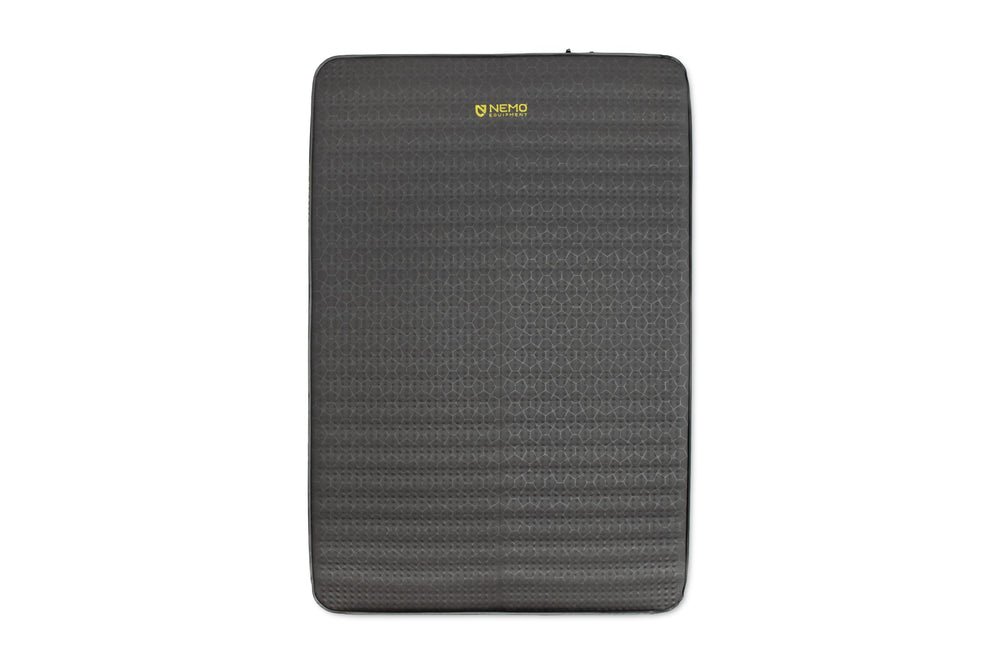
A double sleeping pad puts both sleepers on one pad. Two singles let you choose each pad separately. With two air or self-inflating pads, each person can adjust their own firmness; closed-cell foam has no pressure adjustment. The useful choice depends on your sleeping preferences, tent space and how you will carry the equipment.
The model examples below are self-inflating mattresses for camping near a vehicle. The layout checks also apply to lighter backpacking pads. For the broader selection process, start with how to choose a sleeping pad.
Double vs two single sleeping pads: the practical differences
| Decision | One double pad | Two single pads |
|---|---|---|
| Shared sleeping surface | A one-piece double removes the joint between two separate pads. | Check the centre seam, any gap and whether the edges move apart. |
| Firmness | Check whether the model has a shared air chamber or independently adjustable zones. | Air-supported pads can be adjusted separately. Foam pads cannot be inflated or softened by changing pressure. |
| Tent layout | Check the exact length and width. The word “double” does not define a standard footprint. | Add the widths, then account for shape, wall slope and access to the door. |
| Other trips | Consider whether you also want to carry the same pad when camping alone. | Each person can use or carry one pad on a separate trip. |
| Packing and setup | Assess one complete mattress bundle, its inflation equipment and its storage needs. | Assess both bundles, inflation equipment and any compatible joining system. |
Start with the preference that matters most to you. A couple who wants a continuous bed may accept one larger bundle. Two people with different firmness preferences may prefer separate pads and spend more attention on the seam. Try the whole arrangement with your usual bedding before deciding.
Compare the actual width, not just “single” or “double”
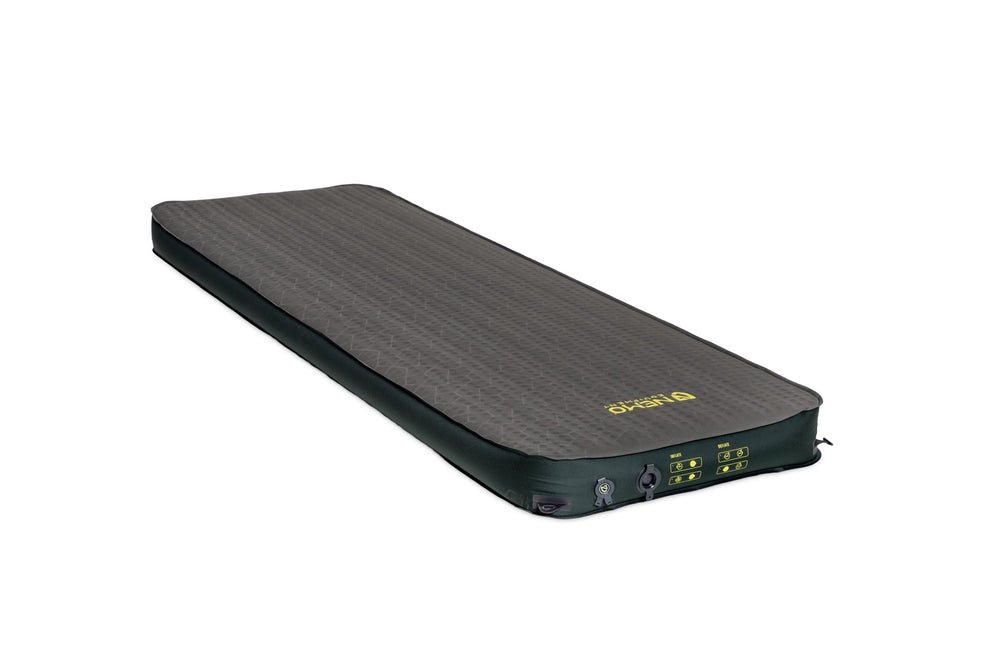
Even within one product family, the names describe different sizes. These current NEMO Roamer examples show why the exact variant belongs on your packing and tent-layout notes.
| Named variant | Length × width | What to compare |
|---|---|---|
| Roamer Single | 76 × 25 in 193 × 64 cm | One pad’s footprint. Two of these need the combined width of both pads. |
| Roamer Double | 78 × 40 in 198 × 102 cm | A shared pad that is narrower than two 25-inch singles side by side. |
| Roamer Double Wide | 78 × 52 in 198 × 132 cm | A different double size, with a different tent footprint. |
Imperial and metric figures above are reproduced as the manufacturer lists them, including its rounding. These are size examples, not a comfort ranking or a guarantee of compatibility with a particular tent.
Check the shared bed inside your actual tent
Begin with the tent floor dimensions and the outline of the inflated or unfolded pads. Include both people’s sleeping bags or shared bedding, pillows and a route to the door. If one pad is longer or wider than the other, draw the actual shapes rather than treating them as two identical rectangles.
Then check above the floor. Thick mattresses bring your head and shoulders closer to sloping walls. A pad that lies inside the floor outline can still leave the sleeper or bedding against the inner tent. Sit up and turn over in the intended sleeping positions.
Leave room for the way you enter and leave the bed. A pad filling the floor from wall to wall can make the route to a door awkward. Our camping tent size guide explains floor dimensions, wall slope and bedding layout. The stated person count is only a starting point for this check.
Firmness, movement and the centre gap need a trial
For an air-supported double, check the chamber arrangement in the model’s specifications or manual. Several valves do not, by themselves, establish separate firmness control for each sleeper. With two independently inflated pads, one person can change their own setting without changing the air pressure in the other pad.
Motion is a separate question. Try one person rolling over while the other lies still. Test the pad on the surface and with the bedding you intend to use. Two separate pads can still move on the tent floor, and a continuous double surface does not establish how much partner movement you will notice.
With singles, lie across the centre seam and turn towards it. Check for a gap, an uncomfortable step between different pad heights and edges that slide apart. Equal published thickness does not replace this check with both people on the pads.
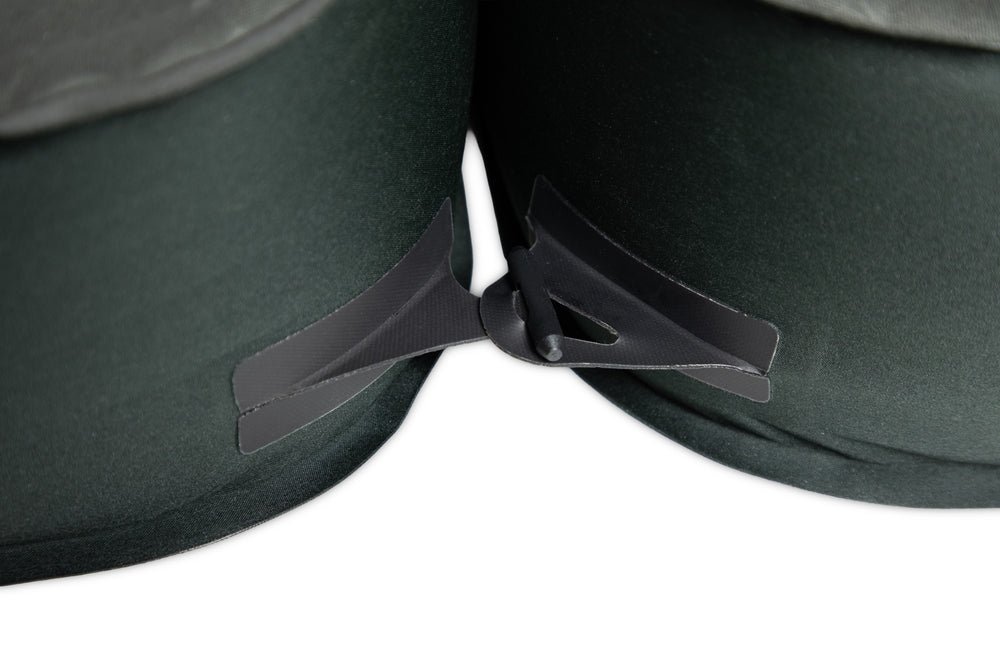
A joining system can help keep compatible pads together, but it does not remove every difference between their surfaces. NEMO equips its Roamer Single and Single Wide variants with connecting toggles and loops. That is a feature of those named models; check compatibility before assuming another pair can be joined the same way.
Try any connection according to the equipment’s instructions. Include the actual sleeping bag or quilt: its pad straps, sleeves or other attachments must also suit the arrangement. For individual cushioning and width priorities, see our sleeping pads for side sleepers.
Keep insulation and construction in the decision
Each sleeper needs appropriate insulation beneath them. R-values do not add when two pads lie side by side. Each person is supported by the pad under them. Stacking pads is a different arrangement, explained in sleeping pad R-value explained.
Check the exact double pad’s published rating, or each single pad’s rating, alongside your planned conditions and bedding. A shared width, thick appearance or two-person label does not supply an insulation rating.
Also keep construction in view. Air, self-inflating foam-and-air and closed-cell foam designs involve different inflation, packing and care routines. Our sleeping pad construction comparison covers those tradeoffs.
Compare the complete packed setup
Write down everything that will travel: the pad or both pads, carry sacks, inflation equipment, joining parts and relevant repair supplies. Compare packed weight with packed weight. A minimum or bare-pad figure may omit accessories you will actually carry.
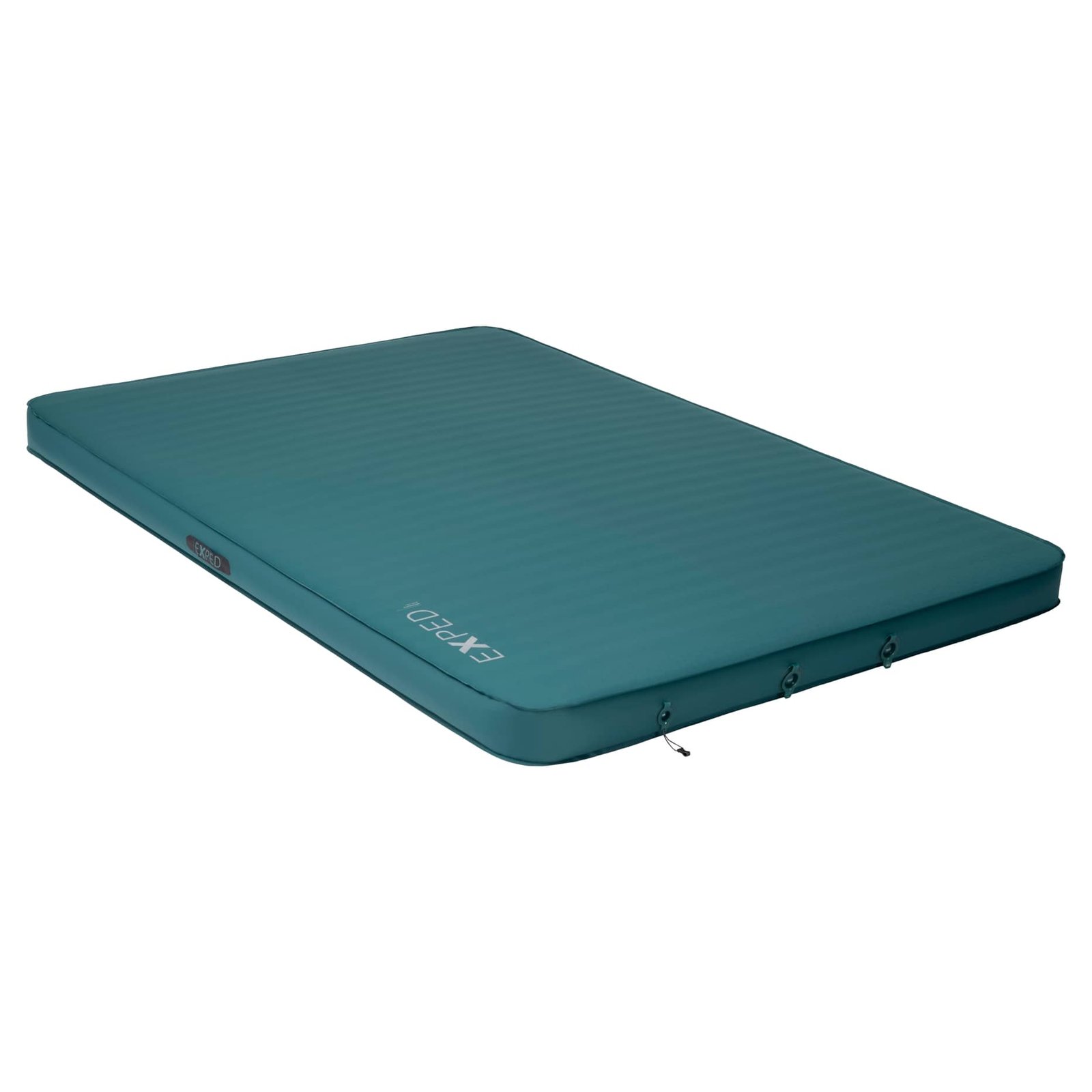
A shared mattress is one bundle to move and store. Two singles are two bundles that can be divided between people. Neither arrangement guarantees the smaller total kit. Compare the exact products, and try fitting the packed equipment into your vehicle, pack and storage space at home.
For vehicle-access camping, our camping mattress comparison gives individual size and packed-kit examples. Use those figures alongside this choice between one shared pad and two separate ones.
A five-step setup check for two sleepers
- Record the exact sizes. Write down the variant name, pad shape, length, width and thickness.
- Lay out the tent. Position the pads, bedding and pillows with a usable route to the door.
- Try both sleeping positions. Roll towards the centre, turn away from it and sit up beneath the walls.
- Adjust and connect as intended. Try the firmness controls and any approved joining parts with both sleepers present.
- Pack the complete arrangement. Include inflation, connection and repair items, then confirm that it fits your transport and storage.
If the gap is your main problem, start by testing a compatible joining arrangement. If separate firmness or solo use is the priority, begin with individual pads. If a continuous shared bed is the priority, begin with a double whose exact dimensions fit the tent. Keep the result on your car camping checklist.
Questions about sleeping pads for couples
Is a double sleeping pad wider than two singles?
It depends on the exact sizes. Two 25-inch singles total 50 inches before gaps or clearance. In the Roamer examples above, Double is 40 inches wide and Double Wide is 52 inches wide. Compare the named variant.
Can two single sleeping pads be joined?
Some models have a manufacturer-designed connection or compatible accessory. Check the exact pair and follow its instructions. A connection helps retain the layout; you still need to try the centre seam and pad heights.
Does a double pad stop partner movement?
The double label does not establish motion isolation. Check the chamber arrangement and try one sleeper moving while the other lies still, using your intended bedding and surface.
Do side-by-side sleeping pad R-values add together?
No. Each sleeper gets the insulation of the pad underneath them. Adding ratings for stacked pads describes a different layout.
Sources and method: Model dimensions and connection features come from NEMO’s Roamer product information; the additional double-mattress photograph is supplied by EXPED. General pad-selection and insulation guidance draws on REI’s sleeping-pad buying guide. Checked November 18, 2026. The width calculation and setup checklist are editorial aids. We have not field-tested the illustrated equipment.