Sleep Systems / Sleeping pad selection / R-value
Insulation · Test method · Layering
Read the warmth number before choosing the pad.
Understand R-value, use weather categories as a starting point and check what changes when you stack two pads.
A sleeping pad’s R-value describes its resistance to heat flow. A higher number means more insulation under comparable test conditions. It does not measure softness, create heat or give a guaranteed outdoor sleeping temperature. Look for an ASTM-tested value for the exact pad you are considering.
This guide explains the insulation decision. For dimensions, sleeping position, packed size and the rest of the buying process, start with how to choose a sleeping pad.
What ASTM testing tells you
ASTM F3340-22 describes a laboratory method for measuring the thermal resistance of camping mattresses. The pad sits between a heated plate and a cold plate under controlled compression. This gives a repeatable way to compare insulation through the pad’s thickness.
The number describes that measured property. It does not rate the entire tent, sleeping bag or sleeper. ASTM also identifies differences between the controlled test and real use, including heat loss around exposed areas and changes in sleeping posture.
Sea to Summit’s testing explanation notes that some published values changed when the standardized protocol arrived. A changed number did not necessarily mean the physical pad had become warmer or colder. Keep the model generation and test method together when reading an older review.
A sleeping pad R-value chart for an initial shortlist
The following bands are REI’s general weather categories, checked November 18, 2026. They help organize a comparison; they are not a universal temperature conversion or a complete trip recommendation.
| Published R-value | REI’s category |
|---|---|
| Below 2.0 | Warm weather |
| 2.0–3.9 | Cool weather |
| 4.0–5.4 | Cold weather |
| 5.5 and above | Extremely cold weather |
Use a category to narrow the conversation, then verify the actual model. “Three-season” and “winter” are broad labels. A campsite in one region or month can present different ground conditions from another place with the same seasonal name.

Why R-value does not convert directly into degrees
A forecast describes air temperature; the surface beneath the tent can be different. Moisture and the way an air pad moves under a sleeper also affect the real arrangement. Sea to Summit explains why it does not publish an air-temperature rating for its mats from the R-value alone.
Your sleeping bag and clothing are separate parts of the system. A bag’s temperature label cannot supply a missing pad specification. NEMO’s explanation of pad insulation describes why heat can still escape beneath a sleeper even when the bag insulates well above them.
For a practical check, write down the planned campsite, expected overnight conditions and the bag and clothing you intend to use. Compare that complete setup with current product guidance. If the only information you have is “R4,” the missing details still matter.
Insulation
Use the tested R-value to compare resistance to heat flow.
Cushioning
Try the sleeping surface in your usual position. R-value does not describe how it feels.
Trip suitability
Check the full kit and the actual conditions rather than assigning a personal temperature limit to one number.
Can you add the R-values of two sleeping pads?
Yes: R-values are additive when pads are layered. Both Sea to Summit and NEMO explain this principle. A pad rated R3 over a pad rated R2 gives a nominal combined R-value of 5. This is insulation arithmetic, not a new temperature rating or a laboratory test of your particular stack.
R3+Lower pad
R2=Nominal total
R5
Check the physical overlap before using that total for your layout. If one pad is shorter or narrower, the uncovered area does not have both layers beneath it. Put the intended stack inside the tent and check that the layers stay aligned when you turn. Follow the pads’ instructions for inflation and any required orientation.
REI describes closed-cell foam beneath an inflatable pad as a way to add insulation and help protect the inflatable. The foam also remains usable if the air pad is damaged. Its own rating still determines the insulation available after that loss; an R2 backup is not the intact stack’s R5.

Compare the carrying and setup consequences in foam vs inflatable sleeping pads. Adding a second pad also adds a second item to pack and a different sleeping height. Use the camping tent size guide to check the space around the complete arrangement.
Five checks before you buy or reuse a pad
- Identify it: record the exact model, version and size from the manufacturer’s current page or your original documentation.
- Keep the evidence: note the published R-value and named test method together. Save the source so you can revisit the specification.
- Describe the trip: include the intended campsite and ground conditions, not only a month or a marketing season label.
- Check the whole bed: consider the bag, clothing, usable pad dimensions and any overlapping second layer.
- Try the packed and erected setup: compare the kit you will carry with the space and sleeping surface you will actually use.
For example, when updating an older kit, establish the existing pad’s documented value before buying a second one. If that value is unknown, you cannot calculate a verified numerical total by adding an assumed rating. You can still compare the bulk and physical fit while you ask the manufacturer for the missing information.

Sleeping pad R-value questions
Is a thicker sleeping pad always warmer?
Thickness alone does not establish insulation. Compare the exact pads’ tested R-values, then assess cushioning separately. Different internal constructions can produce different insulation figures even when the pads look similarly thick.
Is R4 enough for every three-season trip?
R4 sits within REI’s general cold-weather band. Check the actual trip and complete sleeping kit before deciding whether it meets your needs.
Can I use a high-R-value pad in summer?
Yes. A higher-R pad provides more insulation rather than generating heat. It can be part of a mixed-season kit, but choose the bag and clothing for the night as well. More insulation does not promise that the complete setup will stay cool.
Do two pads side by side add their R-values?
No. The addition applies to layers beneath the same sleeping area. Placing two pads next to each other increases the available width; it does not put both pads between one sleeper and the ground.
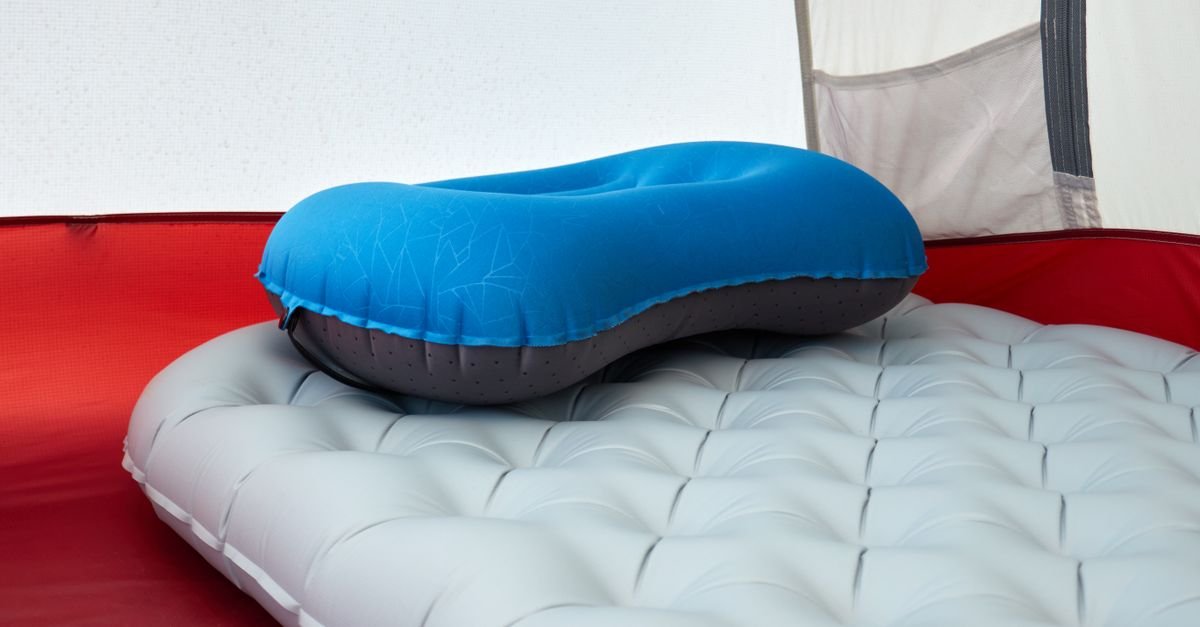
Sources and method: This explanation uses the public ASTM F3340-22 scope and the linked REI, NEMO and Sea to Summit guidance, checked November 18, 2026. The checklist and layout checks are editorial decision aids. We have not laboratory-tested these pads or established personal sleeping-temperature limits. Stock photos illustrate camping setups; their appearance does not establish an R-value.